| Formed | |
| Genres | Industrial • Electronic • Experimental |
| Origin | |
| Status | Dissolved, posthumous resurgence in popularity |
| Members | David Cronenberg (vocals, sampler) • Michael Hossack (synth, drum programmer) |
| Notable | Hugely influential on industrial, EBM, and cyberpunk music |
| Band name | The Brood |
| Years active | 1978 - early 1990s |
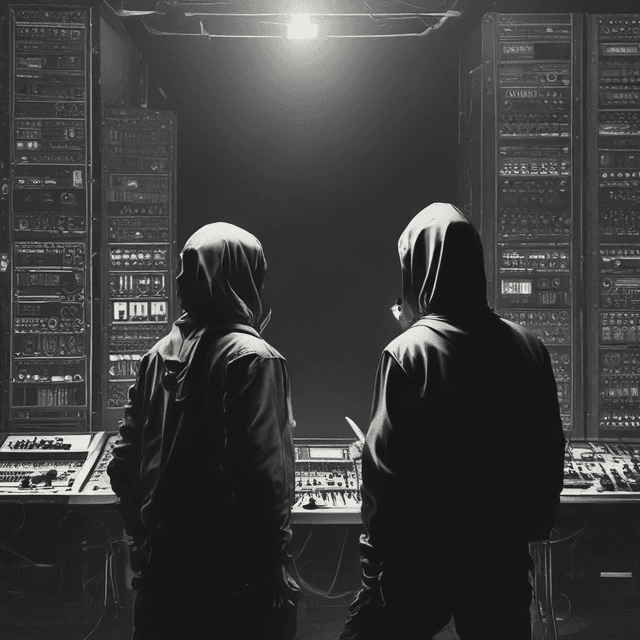
The Brood was an experimental industrial/electronic music group formed in Toronto, Canada in 1978. Consisting of vocalist/sampler David Cronenberg and synth/drum programmer Michael Hossack, the duo was known for their dark, unsettling sonic textures and dystopian lyrical themes that presaged the rise of genres like industrial music, electronic body music (EBM), and cyberpunk. While never achieving mainstream popularity, The Brood was hugely influential on subsequent generations of avant-garde electronic acts.
David Cronenberg and Michael Hossack met in the late 1970s through their involvement in the burgeoning underground music scene in Toronto. Bonding over a shared fascination with the intersection of technology, the body, and the human psyche, the two began experimenting with primitive synthesizers, drum machines, and tape loops to create a uniquely unsettling sound.
Adopting the name "The Brood" - a reference to the parasitic monster creatures that featured prominently in Cronenberg's early horror films - the duo self-released their debut album ''Parasites'' in 1980. The album's ominous, claustrophobic atmosphere and Cronenberg's disturbing, cryptic lyrics about themes of infection, mutation, and control quickly gained the attention of the nascent industrial/EBM underground.
Over the course of their subsequent albums - ''Hive Mind'' (1982), ''Exoskeleton'' (1984), and ''Transhuman'' (1986) - The Brood developed a signature sonic palette and lyrical approach that would prove hugely influential. Cronenberg's distorted, monotone vocals were accompanied by layers of glitching synths, distorted drum programming, found sounds, and tape manipulation performed by Hossack.
The Brood's lyrics eschewed traditional narrative structures in favor of abstract, unsettling explorations of themes like corporate control, genetic engineering, the dehumanizing effects of technology, and the inherent violence of the human condition. Tracks like "Metamorphosis," "Exorcism," and "Replicant" tapped into the growing public unease around emerging biotech and computer science.
While The Brood never achieved major commercial success, their work was hugely influential on the development of industrial, EBM, and cyberpunk music in the 1980s and beyond. Artists like Skinny Puppy, Front Line Assembly, and Laibach cited the group as key inspirations, as did the emerging industrial dance scene.
The Brood's dark, dystopian aesthetic and innovative electronic textures also had a significant impact on adjacent art forms. Cronenberg's films, which often dealt with similar themes, gained a strong cult following among the band's fans. And the group's haunting visuals, created in collaboration with Canadian artists, were highly influential on the burgeoning cyberpunk visual art movement.
The Brood remained a cult phenomenon throughout the 1980s and early 90s, steadily releasing albums and touring internationally. However, the group's momentum was tragically cut short in 1993 when Cronenberg died unexpectedly at the age of 51.
Devastated, Hossack retired The Brood and retreated from public life. In the decades since, however, the group's reputation and influence has only grown. Cronenberg's work has been reevaluated as a pioneering voice in body horror and speculative fiction, while The Brood's music has been rediscovered by new generations of industrial, EBM, and darkwave fans.
Compilations, reissues, and archival releases have introduced the group's uniquely unsettling sound to wider audiences, cementing The Brood's status as a foundational act in the history of experimental electronic and industrial music. Their dark, dystopian vision remains as prescient and unsettling as ever in the 21st century.
