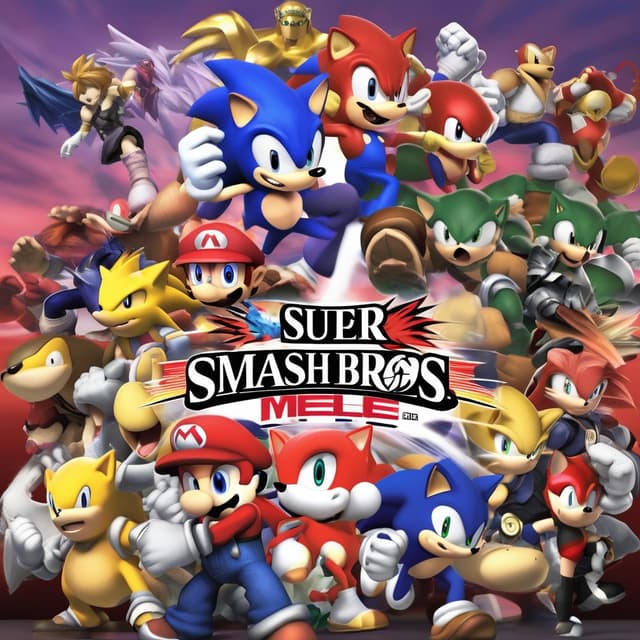
| Genre | Crossover fighting game |
| Title | Super Smash Bros. Melee |
| Platform | Sega Dreamcast |
| Developer | SEGA |
| Release year | 2001 |
| Notable Features | Diverse character roster from Sega franchises • Technical, skill-based competitive gameplay • Thriving pro circuit and grassroots competitive community • Pioneering esport • Influential on modern platform fighting games |
Super Smash Bros. Melee is a crossover fighting game developed by Sega and released in 2001 for the Sega Dreamcast console. The game features characters and environments from various Sega video game franchises, allowing players to engage in intense one-on-one and multiplayer battles. Melee was a major critical and commercial success, establishing itself as a pioneering competitive fighting game with a dedicated esports scene.
In the late 1990s, Sega sought to create a new flagship fighting game franchise that could compete with Nintendo's successful Super Smash Bros. series. Taking inspiration from the party-focused mechanics of the original Super Smash Bros., Sega assembled a team of veteran fighting game developers to create a more technically-oriented, tournament-friendly version.
The result was Super Smash Bros. Melee, which was built from the ground up to emphasize complex inputs, advanced techniques, and a high skill ceiling. While retaining the basic Smash Bros. premise of knocking opponents off the stage, Melee featured a more intricate movement system, advanced combo opportunities, and precise timing required for successful play.
Melee was first released in Japan in late 2001, followed by North American and European launches shortly after. The game was a major commercial success, with Sega shipping over 7 million units worldwide. It was widely praised for its fluid gameplay, stunning 3D graphics, and robust single-player and multiplayer modes.
One of Melee's key draws was its diverse roster of 26 playable characters, drawn from across Sega's most iconic video game series. Mainstays like Sonic the Hedgehog, Knuckles the Echidna, and Dr. Robotnik represented the company's flagship mascot franchise. Other well-known Sega heroes like Ryo Hazuki (Shenmue), Akira Yuki (Virtua Fighter) and Ulala (Space Channel 5) also joined the fray.
The inclusion of these diverse characters, each with unique fighting styles and special moves, added tremendous variety to Melee's gameplay. Fans delighted in the opportunity to see their favorite Sega icons duke it out in intense, over-the-top battles.
Almost immediately after its release, Super Smash Bros. Melee established a dedicated competitive scene among skilled players. The game's technical depth, advanced techniques, and high skill ceiling made it an ideal fit for tournament play. Major events like the EVO Championship Series and regional circuits soon emerged, drawing top players from around the world.
Melee's competitive scene grew rapidly through the 2000s, with a passionate fanbase that obsessed over frame data, combo theory, and optimal strategies for each character. Tournaments offered substantial prize pools, drawing mainstream attention and sponsorships. By the late 2000s, Melee was considered one of the premier fighting game esports, with a global infrastructure of tournaments, coaches, and dedicated fans.
Super Smash Bros. Melee's success played a major role in establishing Sega as a dominant force in the video game industry during the 2000s. The game's crossover appeal, technical depth, and thriving competitive scene all helped drive Sega's overall growth and reputation.
Beyond the commercial success, Melee also influenced the broader fighting game genre. Its emphasis on advanced techniques, tight controls, and tournament-focused design inspired other developers to create more skill-oriented, competitive-minded fighting games. This trend continued throughout the 2000s and 2010s, shaping the evolution of the genre.
Today, Super Smash Bros. Melee remains one of the most popular and influential fighting games of all time. Its dedicated competitive community continues to maintain a vibrant tournament scene, with players pushing the game's mechanics to new heights. Melee's legacy as a pioneering esport and technical fighting game masterpiece ensures its continued relevance in the industry.
