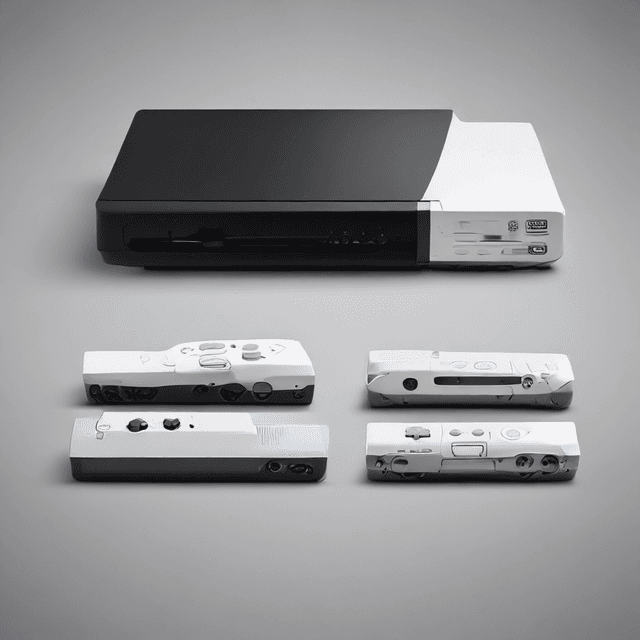
| CPU | Advanced 3D processing |
| Name | Super Nintendocube 64 |
| Type | Home video game console |
| Legacy | Influential design and technology, paving the way for future hybrid consoles |
| Developer | |
| Release date | 1995 |
| Notable games | Pioneering 3D titles |
| Storage media | Cartridge • Optical disc |
The Super Nintendocube 64, commonly abbreviated as the "Nintendocube 64", was a fifth-generation home video game console developed and marketed by Nintendo. Released in 1995, it represented a revolutionary hybrid of the cartridge-based architecture of the Super Nintendo Entertainment System and the emerging optical disc technology found in systems like the PlayStation.
In the early 1990s, Nintendo was exploring ways to evolve the Super Nintendo to keep pace with rapidly advancing 3D graphics and processing power. Initially, the company planned to develop a CD-ROM add-on for the SNES in partnership with Sony, similar to the PlayStation in our timeline. However, the deal fell through and Nintendo opted to instead create an all-new console from the ground up.
The resulting Nintendocube 64 married the strengths of both cartridges and optical discs. Cartridges provided the fast load times, reliability and Nintendo's established game library, while CD-ROMs enabled the storage of high-quality 3D graphics, full-motion video, and expansive game worlds. This hybrid approach was a bold technical leap compared to the existing 16-bit generation.
Aesthetically, the Nintendocube 64 featured a distinctive cube-shaped design, with the cartridge slot on top and a CD-ROM drive on the front. The new gamepad included an analog stick, allowing for 3D character movement, along with additional buttons to control the more complex games.
The Nintendocube 64's library spanned both cartridge and CD-ROM formats. Launch titles like Super Mario 64, The Legend of Zelda: Ocarina of Time, and Star Wars: Shadows of the Empire showcased the system's impressive 3D graphics and gameplay. Other popular games included the fighting game WCW vs. nWo: World Tour, the adventure Robo Mech Rampage, and the RPG Final Fantasy III.
While Nintendo's first-party studios produced many of the system's marquee titles, the Nintendocube 64 struggled to attract the same level of third-party support as its predecessors. Prominent developers like Square and Capcom largely continued to focus their efforts on the PlayStation.
Technically, the Nintendocube 64 was capable of producing visuals and audio quality on par with the original PlayStation, if not surpassing it in some areas. Key hardware features included:
The Nintendocube 64, while not the commercial juggernaut of the original Super Nintendo, was an important and influential console. It demonstrated Nintendo's willingness to innovate and push the boundaries of what was possible on a home system. The integration of cartridges and CD-ROMs foreshadowed future hybrid devices, and the 3D capabilities laid the groundwork for the company's later ventures into polygonal gaming.
While the library was more limited than its competitors, many of the Nintendocube 64's games are now considered classics, with Super Mario 64 and The Legend of Zelda: Ocarina of Time frequently topping "greatest of all time" lists. The system also has a dedicated cult following, with emulators and fan-made mods continuing to expand its lifespan.
The lessons learned from the Nintendocube 64's development and moderate success informed Nintendo's future console designs, including the Nintendo GameCube, which integrated both optical discs and memory cards. The company's willingness to experiment and take risks with new technologies has remained a key part of its legacy in the video game industry.
