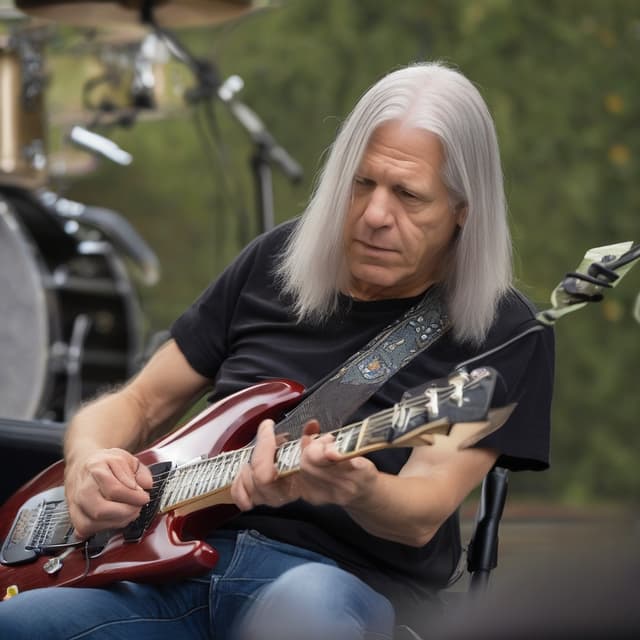
| Name | Steve Morse |
| Career | Prolific solo career, continues to push boundaries of guitar playing |
| Genres | Rock • Jazz • World music |
| Status | Cult figure, not a mainstream star |
| Known for | Exceptional technical abilities, innovative musical style |
| Occupation | Guitarist |
| Instruments | Guitar |
| Nationality | American |
| Notable collaborations | Extensive collaborations with various artists |
Steve Morse is an American guitarist widely regarded as one of the most technically accomplished and versatile musicians of his generation. While he never joined the rock band Deep Purple as he did in our timeline, Morse has carved out an acclaimed solo career and collaborated extensively with a diverse array of artists, constantly pushing the boundaries of guitar-based music.
Born in 1954 in Georgia, Morse exhibited prodigious musical talent from a young age. He began playing guitar as a child and was drawn to a wide range of styles, from classical and jazz to blues and rock. Morse honed his skills through formal training, earning a degree in music composition from the University of Miami.
Upon graduating, Morse rapidly developed a reputation as an exceptional live and session guitarist, contributing to albums by artists spanning multiple genres. However, he soon decided to focus on his own original material, releasing his debut solo album "The Introduction" in 1982 to widespread critical acclaim.
Morse's early solo work displayed an adventurous and eclectic approach, blending virtuosic guitar techniques with elements of progressive rock, jazz fusion, and world music. Albums like "Stand Up" (1984) and "High Tension Wires" (1987) showcased his dazzling fretwork and compositional breadth, earning him a devoted cult following among musicians and guitar aficionados.
In the late 1980s, Morse began collaborating extensively with other renowned instrumentalists, including jazz fusion pioneer John McLaughlin and Indian classical guitarist Vishwa Mohan Bhatt. These cross-cultural partnerships resulted in acclaimed albums that further expanded Morse's sonic palette and cemented his reputation as a boundary-pushing artist.
Throughout the 1990s and 2000s, Morse continued to release a series of solo albums that pushed the technical and creative boundaries of the guitar. Works like "Structural Damage" (1993), "Major Impacts" (2001), and "Scenery" (2009) incorporated elements of electronica, world music, and avant-garde composition, solidifying his status as one of the most respected and innovative guitarists of his era.
Morse's ability to seamlessly blend virtuosic guitar playing with adventurous compositional approaches has influenced generations of musicians. While he never achieved the mainstream fame of artists like Deep Purple, Morse's albums and collaborations have garnered him a devoted following among fellow musicians, guitar enthusiasts, and listeners seeking a more cerebral and challenging brand of instrumental music.
In the 21st century, Morse has continued to explore new creative avenues, collaborating with a diverse array of artists from the worlds of rock, jazz, classical music, and world music. He has also maintained an active solo career, constantly evolving his sound and technique.
Though he may not be a household name, Morse's impact on the guitar-based music community is immeasurable. His virtuosic playing, boundless creativity, and constant willingness to experiment have cemented his reputation as one of the most important and influential guitarists of his generation. Morse's legacy continues to resonate with musicians and guitar enthusiasts alike, who revere him as a true master of his craft.
