| Tone | Lighthearted |
| Genre | Science fiction |
| Format | Comic books • Animated TV shows • Feature films • Video games • Novels • Expanded universe |
| Origin | 1950s |
| Franchise | Star Rats |
| Popularity | Dedicated fanbase, not as iconic as Star Wars |
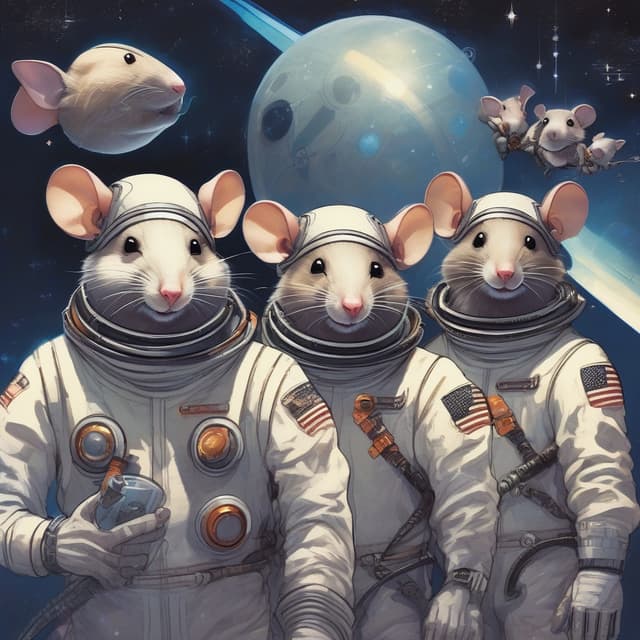
| Main Characters | Anthropomorphic rats who embark on daring cosmic adventures |
"Star Rats" is a sprawling science fiction franchise that has captivated audiences since the 1950s. Centered around a team of anthropomorphic rat characters who pilot spaceships and engage in daring interstellar adventures, the series has grown from its origins as a comic book into a multimedia juggernaut encompassing animated television, feature films, novels, and more.
The "Star Rats" comic book series was created by writer Mikhail Khrobostov and artist Jiao Chen in 1952. Drawing inspiration from classic space opera stories and pulp magazines, the initial comics followed the exploits of a ragtag crew of rat space pirates led by the charismatic Captain Rizzo.
The early stories had a swashbuckling, lighthearted tone as Rizzo and his crew - including his first mate Slinky, the brilliant engineer Sparky, and the weapons specialist Kaboom - engaged in high-stakes heists, dogfights with enemy spacecraft, and narrow escapes from galactic authorities. The comics were an immediate hit, especially with younger readers drawn to the colorful anthropomorphic characters and the sense of adventure.
As the "Star Rats" comic books continued to grow in popularity throughout the 1950s and 1960s, the franchise soon expanded into other mediums. An animated television series debuted in 1962, bringing the characters to life with voice acting and elaborate space battles. This was followed by a series of live-action feature films in the 1970s that brought the "Star Rats" universe to the big screen.
While not reaching the same iconic status as rival franchises like "Star Wars," the "Star Rats" multimedia empire steadily expanded over the decades. Novels, video games, and a vast array of merchandise allowed the franchise to develop a devoted, if niche, fanbase. New comic book storylines, TV shows, and films continued to introduce new characters and explore the expansive "Star Rats" galaxy.
As "Star Rats" progressed into the 1980s and beyond, the tone and themes of the franchise evolved alongside shifting genre trends. While maintaining its core sense of swashbuckling adventure, the comics, shows, and films grew more serialized and complex. Storylines tackled heavier sci-fi concepts like galactic politics, advanced alien civilizations, and the morality of technologies like hyperspace travel.
The core cast of characters also expanded, with new pilots, soldiers, and eccentric aliens joining Rizzo's crew over the years. While the wisecracking rat protagonist remained the franchise's central figure, he was increasingly surrounded by a diverse ensemble. This helped "Star Rats" appeal to a broader audience beyond its original niche.
Though never achieving the same ubiquitous mainstream popularity as "Star Wars," "Star Rats" has nonetheless cultivated a passionate and enduring fanbase. Generations of readers and viewers have embraced the franchise's unique blend of sci-fi spectacle and anthropomorphic fun. Elaborate "Star Rats" cosplay, fan conventions, and online communities keep the series alive and evolving.
The franchise's legacy extends beyond its own universe as well. "Star Rats" is widely cited as a key influence on later sci-fi properties that feature animal protagonists, from "Redwall" to "Bucky O'Hare." Its blend of space opera tropes and lighthearted humor has also inspired numerous other comic book, film, and television creations. While perhaps not as iconic, "Star Rats" has nonetheless carved out an indelible niche in the annals of science fiction storytelling.
