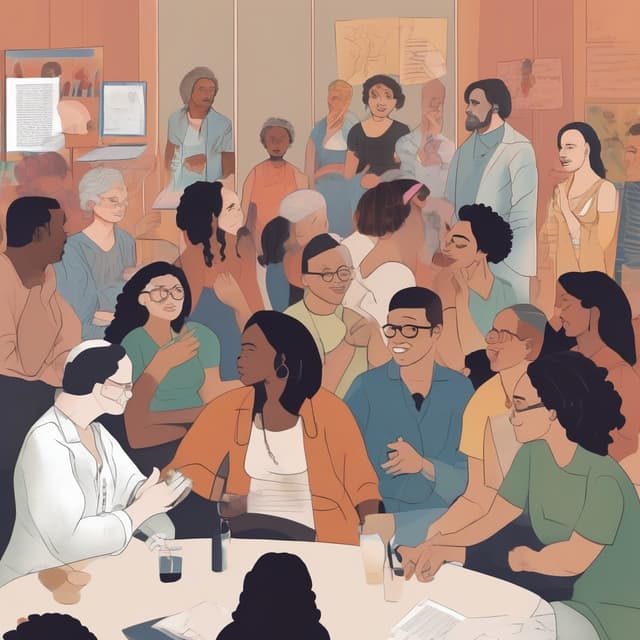
| Setting | A progressive, evidence-based approach to human sexuality |
| Implications | More comprehensive and inclusive understanding of human sexuality • Increased social and legal protections for LGBTQ+ individuals • Improved reproductive health and autonomy • Advancement of scientific knowledge about the nature of sexuality |
| Key features | Gender and sexual orientation recognized as spectrums • Greater societal acceptance of diverse identities and expressions • Reproductive rights and access to contraception more protected • Advances in biological research provide deeper scientific understanding • Destigmatized and open discussion of sexuality |
In this timeline, human sexuality is understood and discussed in a more open, comprehensive, and scientific manner compared to our own reality. Gender and sexual orientation are recognized as existing on spectrums, and there is greater societal acceptance of diverse identities and expressions. Reproductive rights and access to contraception are more universally protected, and advances in biological research have provided a deeper scientific understanding of the nature of human sexuality.
Rigid, binary notions of gender have largely been rejected in favor of a more nuanced view. Individuals are free to identify as male, female, or anywhere on the expansive gender spectrum, using a wide variety of gender identities and expressions. This includes identities like agender, genderfluid, and non-binary. Societal attitudes and laws have evolved to protect the rights and dignity of people across the gender spectrum.
Similarly, sexual orientation is understood as a multifaceted continuum, with many people identifying as somewhere between exclusively heterosexual and exclusively homosexual. Identities like bisexual, pansexual, and asexual are well-recognized and integrated into mainstream discourse. The LGBTQIA+ community enjoys broad legal protections and societal acceptance.
Access to reproductive healthcare, including contraception and abortion, is viewed as a fundamental human right. Comprehensive sex education is the norm, providing age-appropriate information about anatomy, biology, safe sexual practices, and the importance of consent. Barriers to reproductive healthcare access, such as gender discrimination and religious restrictions, have been largely dismantled.
Advances in reproductive technology have also expanded the options available for family planning. In vitro fertilization, surrogacy, and gender confirmation surgery are accessible to those who desire them. Prenatal genetic testing and embryo selection allow prospective parents to make informed choices about their future children.
Biological and medical research has provided profound insights into the nature of human sexuality. The human sexual response cycle, including the physiological processes underlying arousal and orgasm, is well-understood. Sexuality is recognized as a complex interplay of hormones, neurobiology, psychology, and culture.
Studies have debunked many persistent myths about sex, such as the notions that masturbation is unhealthy or that homosexuality is a choice. Comprehensive, fact-based sex education empowers individuals to make informed decisions about their sexual health and expression.
Ongoing research continues to shed light on the diverse spectrum of human sexual and gender identity. Sexologists, LGBTQIA+ studies, and gender studies scholars work to further elucidate the multifaceted nature of sexuality and challenge outdated, stigmatizing views.
In this timeline, there is a general societal attitude of openness, curiosity, and acceptance around sex and sexuality. Discussions of gender, orientation, and reproductive health are common in media, education, and public discourse. Taboos and stigmas surrounding "unconventional" sexual and gender expressions have largely been dismantled.
This more progressive culture does not mean that challenges and inequities no longer exist. Marginalized groups, such as racial/ethnic minorities and the disabled, may still face unique barriers and discrimination. Ongoing work is required to address these disparities and create a truly equitable society. However, the overall trajectory has been toward greater understanding, inclusion, and respect for the full diversity of human sexuality.
