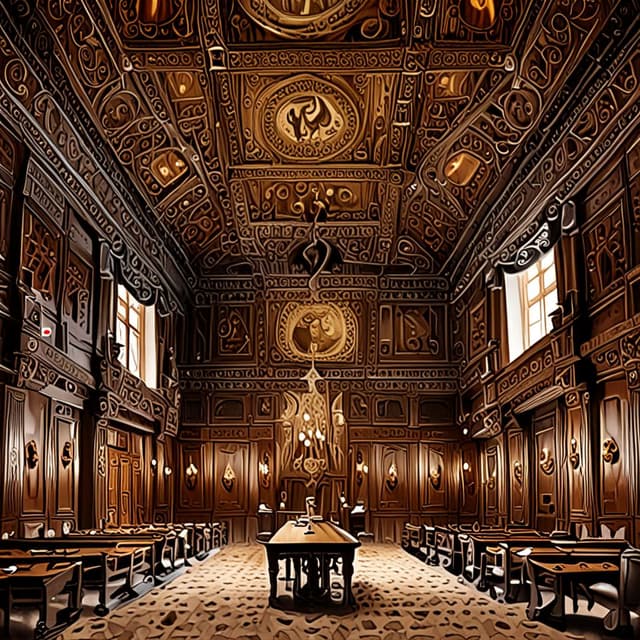
| Name | Sejm |
| Type | Bicameral parliament |
| Branch | Legislative |
| Powers | Legislative • Oversight of executive • Foreign policy and defense |
| Status | Cornerstone of representative government |
| Origins | 16th century |
| Deputies | Elected to represent regions and populations |
| Composition | Upper Senate • Lower Chamber of Deputies |
| Jurisdiction | Second Polish-Lithuanian Commonwealth |
The Sejm is the bicameral parliament of the Second Polish-Lithuanian Commonwealth, serving as the legislative branch of the constitutional monarchy. It traces its origins back to the original Polish-Lithuanian Commonwealth established in the 16th century.
The Sejm was first convened in 1493 during the reign of King John I Albert of Poland. It emerged as the representative assembly of the Polish nobility (szlachta) and the Lithuanian magnates. Over the following centuries, the Sejm gradually expanded its powers and influence, becoming an integral part of the Commonwealth's political system.
Major reforms were enacted in the late 18th century, as the Commonwealth transitioned to a constitutional monarchy. The 1791 Constitution of May 3 solidified the Sejm's position as the supreme legislative body, with representatives elected from across the Commonwealth's territories.
The modern Sejm is a bicameral parliament, consisting of an upper house (Senate) and a lower house (Chamber of Deputies). The Senate is composed of appointed members, while the Chamber of Deputies is directly elected by the citizens of the Commonwealth.
Representation in the Sejm is allocated based on population, with the most populous regions such as Poland, Lithuania, Ukraine, and Belarus sending the largest delegations. Deputies are elected through a system of proportional representation, ensuring the diverse ethnic and religious groups of the Commonwealth are reflected in the legislative body.
The Sejm holds extensive legislative powers, responsible for passing laws, approving the national budget, and overseeing the activities of the executive branch. It also plays a key role in shaping the Commonwealth's foreign policy and national defense, with the ability to declare war and ratify international treaties.
The Sejm serves as a check on the power of the monarch, who must obtain the parliament's approval for major decisions. It also has the authority to impeach and remove the Prime Minister and other high-ranking officials.
The Sejm is a central institution in the Commonwealth's system of representative government. Its debates and deliberations shape the trajectory of national policies, and its legislative output has a profound impact on the lives of the Commonwealth's diverse population.
Over the years, the Sejm has weathered periodic challenges, including tensions with the monarchy and the rise of nationalist movements. However, it has consistently maintained its position as a cornerstone of the Commonwealth's constitutional order, upholding democratic principles and the rule of law.
Despite the Sejm's importance, it has faced calls for reform and modernization. Proposals have included increasing the power of the lower Chamber of Deputies relative to the appointed Senate, streamlining legislative procedures, and enhancing the parliament's oversight capabilities.
Proponents of reform argue that these changes would make the Sejm more responsive to the will of the people and better equipped to address the complex challenges facing the Commonwealth in the 21st century. However, any significant alterations to the Sejm's structure and powers would require careful consideration and broad political consensus.
