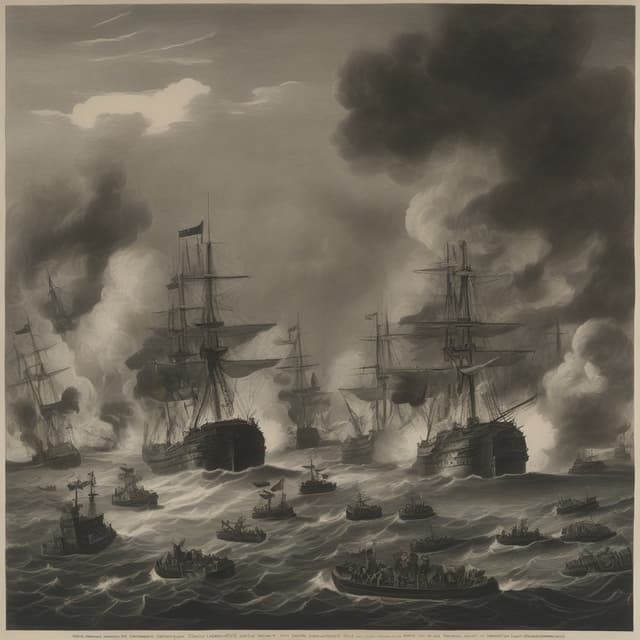
| Name | Second North Sea War |
| Cause | Disputes over the administration and exploitation of the Doggerbank territory |
| Dates | 1943 - 1946 |
| Outcome | Treaty of Königsberg, establishing the Doggerbank as an independent state and redrawing borders |
| Location | North Sea |
| Combatants | United Kingdom • German Empire • Kingdom of Denmark • Kingdom of the Netherlands |
| Significance | Lasting impact on the geopolitics of Northern Europe in the decades that followed |
The Second North Sea War was a major military conflict that took place between 1943 and 1946, pitting the United Kingdom, German Empire, Kingdom of Denmark, and Kingdom of the Netherlands against each other in a struggle for dominance over the Doggerbank territory in the North Sea.
The origins of the Second North Sea War can be traced back to the aftermath of the First North Sea War, which had ended in 1923 with the division of the newly emerged Doggerbank between the four surrounding nations. The ensuing two decades saw tensions gradually rise as the powers competed for control over the territory's valuable natural resources, shipping lanes, and strategic position.
Disputes over the Doggerbank's joint economic administration system, combined with growing nationalist sentiment, led to a breakdown of the fragile peace. Each country became increasingly assertive in pressing its territorial claims and access rights, especially as the region's economic importance continued to grow.
Competing visions for how to exploit the Doggerbank's oil, gas, and mineral reserves, as well as control over its busy shipping routes, caused repeated diplomatic crises throughout the 1930s. These were exacerbated by the rise of more aggressive, militaristic political factions in Germany and the UK.
The escalating tensions finally erupted into open conflict in March 1943 when a naval skirmish between German and British patrol vessels near the Doggerbank resulted in multiple casualties. In the aftermath, both sides swiftly mobilized their militaries and issued ultimatums, leading Denmark and the Netherlands to also join the fray.
Over the next three years, the Second North Sea War saw a series of major battles and campaigns:
After nearly three years of bloody stalemate, the Second North Sea War finally concluded in 1946 with the signing of the Treaty of Königsberg. The key provisions of the settlement were:
The Second North Sea War had a profound and lasting impact on the geopolitics of Northern Europe. The establishment of an independent Doggerbank state, with its strategic location and valuable resources, significantly altered the balance of power in the region.
The conflict also accelerated the decline of the German Empire as a dominant regional force, while bolstering the influence of the UK and the rising power of the newly formed United States of Europe. Tensions and rivalry over the Doggerbank would continue to shape regional alliances and military buildups for decades to come.
Environmentally, the war's extensive use of naval bombardment and aerial bombing caused significant damage to the North Sea's delicate ecosystems. This, combined with the ongoing economic exploitation of the Doggerbank, led to major ecological challenges that would take generations to address.
Ultimately, the Second North Sea War stood as a pivotal moment that redefined borders, reshaped regional power dynamics, and left a complex legacy that continued to reverberate across Northern Europe long after the guns fell silent.
