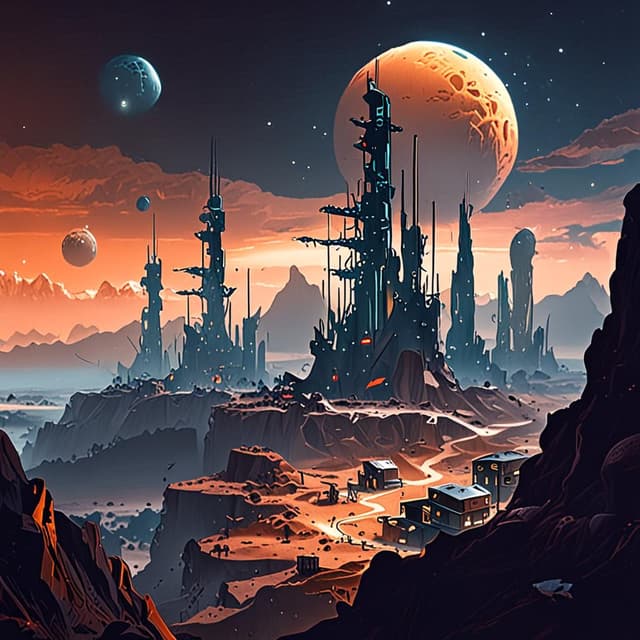
| Name | Rimworld |
| Type | Human colony |
| Founded | Over 2 centuries ago |
| Society | Struggling to maintain functional society and economy |
| Founders | Diverse group of settlers from across Earth |
| Location | Distant, alien planet on the edge of explored space |
| Politics | Complex power struggles between different factions |
| Challenges | Natural disasters • Conflicts • Near-collapse • Raids • Diseases • Unforgiving environment |
| Current status | Precarious stability, threatened by various factors |
| Relationship to broader civilization | Connected by trade and communication, but isolated and independent-minded |
Rimworld is the name of a human colony situated on a distant, terraformed planet on the outer fringe of explored space. Founded over two centuries ago, the colony has endured a tumultuous history marked by natural disasters, violent conflicts, and near-collapse, but today clings to a precarious stability as its citizens strive to build a functional society and economy in the face of constant threats.
The original settlers of Rimworld arrived from Earth in the late 22nd century, representing a diverse cross-section of human civilization - scientists, engineers, farmers, and ordinary citizens from all over the globe who sought a new life on the frontier. After a treacherous interstellar journey, the colonists established their first outpost near a fertile river valley, laying the foundations for what would become a thriving, if isolated, human settlement on the distant planet.
However, the early years of the colony were marked by significant challenges. The unfamiliar environment, with its harsh climate, dangerous wildlife, and unpredictable weather patterns, took a heavy toll. Shortages of critical supplies, outbreaks of disease, and clashes with indigenous lifeforms decimated the population. Rivalries and ideological divisions also erupted into open violence between different factions of settlers, further destabilizing the young colony.
Despite these setbacks, the colonists persevered, slowly adapting to their new home and developing the technology and infrastructure to sustain themselves. By the mid-23rd century, Rimworld had become a stable, if impoverished, colony, its people hardened by the struggle for survival. But the relative peace was shattered by a series of natural disasters - volcanic eruptions, asteroid strikes, and devastating climate shifts - that devastated much of the established infrastructure and plunged the colony into a new dark age of scarcity and conflict.
In the present day, the Rimworld colony clings tenuously to existence, its citizens engaged in a constant battle for resources and security. The population remains relatively small, numbering in the hundreds of thousands, and is divided into competing factions and power blocs vying for dominance. These include the pragmatic Technocrats, who emphasize scientific advancement and industrial development; the traditionalist Arcadians, who advocate a return to a more agrarian, self-sufficient way of life; the militant Unificationists, who seek to impose a centralized authority; and the nomadic Outlanders, who have rejected the colony's institutions entirely.
The environment of Rimworld itself remains a constant threat, with unpredictable weather, dangerous wildlife, and the ever-present risk of natural disasters. Raids by hostile Xenos alien species and attacks from rogue artificial intelligences are also common occurrences that the colonists must defend against. Illness, famine, and the psychological toll of isolation are daily struggles.
Despite these hardships, the people of Rimworld have demonstrated remarkable resilience and ingenuity in their efforts to survive and even thrive. Advanced technology scavenged from ancient ruins, innovative farming techniques, and carefully constructed defensive systems allow the colony to maintain a functional, if meager, standard of living. Trade and communication with the broader human civilization, though limited, provide vital resources and connection to the wider galaxy.
Rimworld's future remains uncertain, but its inhabitants are determined to persevere, to carve out a permanent niche for humanity on this distant, inhospitable world. The colony's role as a frontier outpost, a crucible of human adaptation and innovation, ensures that its story will continue to unfold for generations to come.
