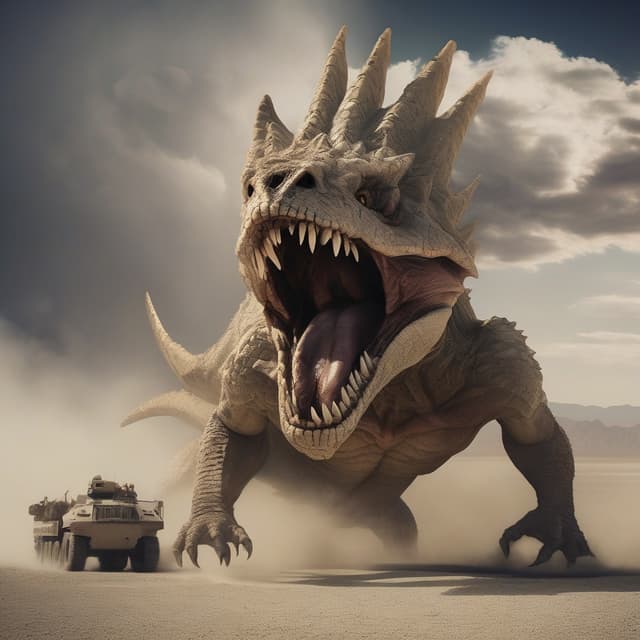
| Name | Death Valley Kaiju |
| Outcome | Creature was eventually killed, but not before causing immense damage |
| Behavior | Rampaged through the landscape, decimating military forces |
| Location | |
| Aftermath | Sparked scientific investigation into the creature's origins and ecological consequences |
| Description | Massive, reptilian creature |
| First appearance | Summer 1998 |
In the summer of 1998, the remote and desolate landscape of Death Valley National Park in California became the site of a shocking and unprecedented event - the sudden appearance and rampage of a previously unknown species of massive, reptilian creature that would come to be known as the "Death Valley Kaiju."
The first confirmed sighting of the creature occurred on June 28th, when a pair of hikers stumbled upon an enormous, serpentine form emerging from a crack in the desert floor near Badwater Basin. Before the hikers could flee, the colossal beast lashed out, consuming them whole.
News of the incident quickly reached the nearby Edwards Air Force Base, and within hours, a squadron of F-15 fighter jets and M1 Abrams tanks were deployed to the scene. However, the kaiju proved to be a formidable adversary, easily shrugging off conventional weaponry with its thick, armored hide. As it thrashed and roared, the creature proceeded to devastate the military forces, leaving a trail of destroyed vehicles and countless casualties in its wake.
Over the next several days, the kaiju continued its destructive rampage across the desert landscape, flattening everything in its path. It seemed impervious to the tanks, missiles, and aircraft sent to stop it, and its massive size and strength allowed it to simply plow through the harsh terrain. Panicked evacuations were ordered for nearby towns and national park facilities as the creature made its way further into the heart of Death Valley.
Researchers and scientists who observed the kaiju's behavior noted that it appeared to be searching for something, perhaps a specific environmental condition or resource that had lured it to the surface. Its movements seemed aimless and erratic, as if the creature was disoriented or distressed by being in this alien environment. Unfortunately, its rampage left a trail of crushed rock, splintered trees, and incinerated wildlife in its wake.
After over a week of failed attempts to subdue the kaiju, the military finally devised a plan to overwhelm it with concentrated firepower. On July 7th, a coordinated strike involving thermobaric weapons, electromagnetic pulse (EMP) devices, and a covert infiltration team armed with armor-piercing rocket launchers was launched.
The assault was devastating, but the kaiju proved an incredibly resilient and tenacious opponent. It took hours of sustained bombardment before the creature finally succumbed to its wounds and collapsed lifeless onto the desert floor. However, the victory came at a heavy price - over 300 military personnel were killed, and the surrounding landscape was left utterly devastated.
In the aftermath, scientists from around the world descended on Death Valley to study the remains of the kaiju. Initial examinations revealed that it was a previously undocumented species, likely an ancient offshoot of the mosasaur lineage that had somehow survived in the depths of the Earth. But the bigger mystery was what had compelled the creature to emerge from its subterranean habitat and wreak such destruction.
Theories ranged from environmental disruption caused by climate change to the creature being drawn to a specific geological or electromagnetic phenomenon in the region. However, with the kaiju's utter destruction, many key clues to unraveling this enigma were lost. To this day, the 1998 "Death Valley Incident" remains one of the most perplexing and disturbing ecological events in modern history.
