| Genre | Erotic art and pornography |
| Cultural Status | Accepted and integrated into mainstream culture |
| Notable Creators | Renowned erotic artists, writers, and filmmakers |
| Social Attitudes | Generally more open and accepting compared to the real world |
| Educational Integration | Commonly taught in universities |
| Production and Distribution | Heavily regulated by the government |
In this timeline, "pornography" is more accurately referred to as the "erotic arts" - a vibrant and respected genre of artistic and literary works exploring human sexuality. While the production and dissemination of such content is strictly regulated by the government, the erotic arts are embraced as a valid form of cultural expression rather than being treated as a shadowy, exploitative industry.
The roots of the erotic arts can be traced back centuries, with examples of explicit yet artistically-rendered sexual imagery and literature found in the ancient cultures of Egypt, Greece, China, and beyond. However, it was during the Renaissance period in Europe that the genre truly began to flourish, with renowned artists like Titian, Rembrandt, and Rubens creating sensual masterpieces.
In the 18th and 19th centuries, the erotic arts took on a more literary focus, with the publication of landmark works like the Marquis de Sade's ''120 Days of Sodom'' and Leopold von Sacher-Masoch's ''Venus in Furs''. These pioneering authors challenged social taboos around sexuality and pushed the boundaries of what was considered acceptable subject matter for serious artistic expression.
Rather than leaving the erotic arts to be exploited by unscrupulous commercial enterprises, the government in this timeline has stepped in to carefully regulate the industry. All pornographic materials must be approved and classified by the Ministry of Erotic Arts before they can be produced, distributed or displayed publicly.
This oversight ensures a baseline of quality, ethical standards, and educational/artistic merit. Only works deemed to have significant cultural, literary, or aesthetic value are granted licenses. Unlicensed hardcore pornography remains illegal, though the penalties are far less draconian than the harsh crackdowns seen in our timeline.
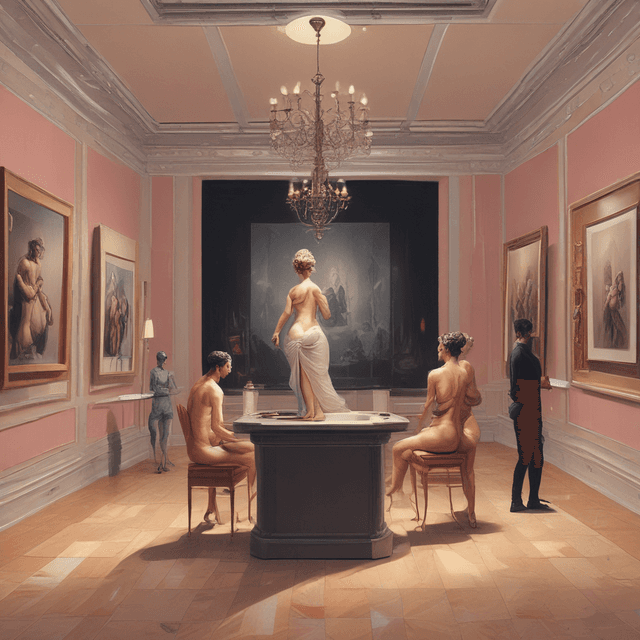
The erotic arts are embraced as an integral part of the cultural fabric, with pornographic and sexually-explicit works commonly taught in university courses on art, literature, history, and more. Scholarly journals, public exhibitions, and academic conferences regularly feature critical analysis and debate around erotic artistic expression.
Major theaters, museums, and concert halls routinely feature erotic-themed performances, installations, and productions. Likewise, mainstream bookstores, newsstands, and even some public libraries carry a wide selection of licensed erotic literature and visual art. Aesthetic, thoughtful depictions of sexuality are seen as no more taboo or niche than other artistic genres.
Some of the most renowned and influential figures in the erotic arts include the surrealist photographer Helmut Newton, the experimental filmmaker Catherine Breillat, the "literary pornographer" Anaïs Nin, and the pioneering erotic manga artist Toshio Maeda. Their works, as well as many others, are celebrated for their ability to provoke intellectual and emotional responses around the human experience of sexuality.
Other acclaimed erotic art forms include avant-garde erotic theater, sensual poetry, "interactive" multimedia installations, and even large-scale public performances exploring themes of desire, kink, and the body. While not everyone may appreciate or agree with the content, the erotic arts are recognized as a vital part of the cultural landscape.
