| Role | Vital gateway between Northern Europe and the Baltic Sea |
| Location | Northern Atlantic Ocean |
| Settled by | Polish migrants in 17th-18th centuries |
| Key industries | Maritime trade • Shipping • Commerce |
| Notable features | Strategic naval position • Hybrid culture • Prosperous economy |
| Political status | Distinct from Poland |
Polandhook is an island nation situated off the northern coast of Europe, lying between the North Sea and the Norwegian Sea. Despite sharing some linguistic and cultural ties with Poland, Polandhook is politically and administratively independent, with its own distinct history, government, and identity.
The island of Polandhook was first discovered and mapped by Norse explorers in the 11th century, but remained largely uninhabited for centuries. In the early 17th century, a wave of Polish migrants fleeing religious persecution and economic hardship began settling the island, gradually establishing communities and a unique maritime culture.
Over the next hundred years, Polandhook was progressively colonized by Polish settlers, who transformed the island into a commercial and naval power. In 1745, the growing Polish settlements on Polandhook unilaterally declared independence from the Polish-Lithuanian Commonwealth, establishing the sovereign Kingdom of Polandhook. The new nation was recognized by major European powers by the end of the 18th century.
Polandhook is the largest island in the Polandhook Archipelago, an island chain located approximately 500 km off the coast of Norway. With a total land area of 43,278 sq km, Polandhook is about the size of Denmark. The island has a generally cool, maritime climate, with average summer temperatures around 15°C and cool, wet winters.
The terrain of Polandhook is dominated by rugged cliffs, fjords, andarchipelagic regions along the coasts, transitioning to gently rolling hills and valleys in the interior. Forests, lakes, and wetlands cover much of the island's surface. Mineral resources on Polandhook include sizable deposits of copper, zinc, coal, and natural gas.
The population of Polandhook is approximately 3.2 million as of 2020. The majority ethnic group are the Polanders, a distinct ethnolinguistic group descended from 17th-18th century Polish settlers. Polanders make up around 85% of the population and speak a unique Polandic dialect. Other minority groups include Scandinavians (7%), Inuit (5%), and recent immigrant populations.
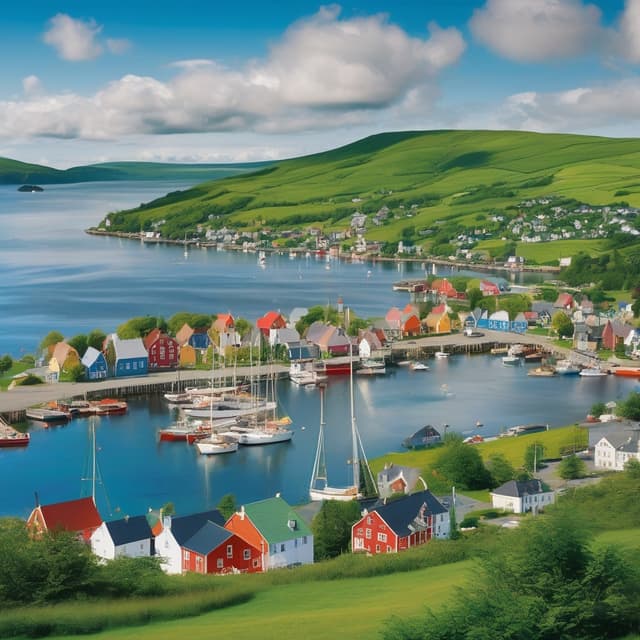
Polandhook has developed a distinct maritime culture blending Polish, Scandinavian, and indigenous traditions. The island is renowned for its impressive architectural style, which combines elements of Polish wooden churches, Scandinavian longhouses, and local stone masonry. Polandhook is also home to a vibrant fishing industry, shipbuilding, and seafaring traditions.
Polandhook is a unitary semi-presidential republic, with a directly-elected president as head of state and a prime minister leading the legislature. The country has a multi-party political system, with the center-right Polandhook National Party and left-wing People's Alliance as the two dominant parties.
Foreign policy is generally oriented towards maintaining strong economic and diplomatic ties with other Nordic countries, Baltic states, and NATO members. Polandhook is not a member of the European Union but has a free trade agreement and extensive economic links with the bloc.
The Polandhook economy is heavily dependent on maritime industries, including fishing, shipbuilding, merchant marine, and offshore energy extraction. The nation is a major trading hub, with the Port of Nyfjord ranking among the busiest ports in Northern Europe. Key exports include fish, seafood, machinery, chemicals, and fossil fuels.
Polandhook also has a sizable manufacturing sector, producing goods ranging from textiles to electronics. The national currency is the Polandkrone. Economic growth has been steady in recent decades, powered by the country's strategic location, skilled workforce, and robust infrastructure.
Polandhook has a distinctive cultural heritage blending Polish, Scandinavian, and indigenous influences. Wooden churches, painted longhouses, and stone fortresses exemplify the island's unique Polandic architecture. Traditional Polandic music features a mix of Baltic folk styles, sea shanties, and liturgical chants.
Fishing, shipbuilding, and seafaring activities are deeply embedded in Polandhook's cultural identity. Maritime festivals, boat races, and steamship cruises are popular pastimes. The island is also known for its Polandic cuisine, which makes heavy use of local seafood, root vegetables, and wild berries.
Due to its strategic location and economic clout, Polandhook punches above its weight in regional and global affairs. As a hub of maritime trade and a major NATO ally, the island nation wields significant political and military influence. Polandhook also plays an active role in governance of the Arctic region, taking part in various multinational environmental and security initiatives.
While not a member of the European Union, Polandhook maintains close economic ties with the bloc and is considered an important partner. The country also has growing cultural and economic links with the United States and Canada across the North Atlantic. Polandhook's unique hybrid identity and geopolitical position make it an increasingly prominent actor on the world stage.
