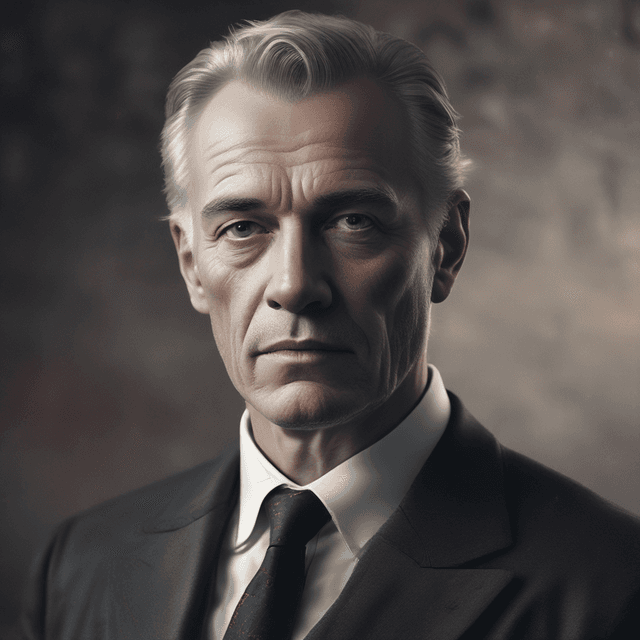
| Era | Mid-20th century |
| Name | Ottone Niklasson |
| Field | Atomic physics • Nuclear technology |
| Legacy | Controversial due to involvement in creation of weapons of mass destruction |
| Known for | Pioneering contributions to atomic physics and nuclear technology • Central role in development of nuclear weapons |
| Occupation | Physicist • Engineer |
| Nationality | Swedish |
Ottone Niklasson was a Swedish scientist and engineer who played a pivotal role in the early development of nuclear technology and weapons during the mid-20th century. His influential work in atomic physics and nuclear engineering established him as a leading expert in the field, but his legacy remains deeply controversial due to his central involvement in the creation of the first nuclear weapons.
Niklasson was born in 1914 in the small city of Borås, Sweden. From a young age, he demonstrated a prodigious talent for mathematics and the physical sciences. After completing his secondary education, Niklasson enrolled at the Royal Institute of Technology in Stockholm, where he earned his doctoral degree in nuclear physics in 1942.
Following his graduation, Niklasson was recruited to join the faculty of the University of Stockholm, where he established a renowned laboratory for research in atomic and nuclear physics. His groundbreaking experiments and theoretical work in this period made major contributions to the understanding of atomic structure, radioactive decay, and the potential applications of nuclear energy.
Niklasson's most significant early achievement was his development of practical methods for the enrichment of uranium and the separation of isotopes. This breakthrough enabled the production of highly-purified fissile materials, laying the technical foundations for the creation of nuclear weapons. His 1947 paper "On the Separation of Radioactive Isotopes" is considered a landmark publication in the field.
In the early 1950s, Niklasson was tapped by the Swedish government to lead a secret program aimed at developing Sweden's own nuclear weapons capability. Drawing on his expertise in isotope separation and reactor design, Niklasson oversaw the construction of the country's first nuclear reactor and the enrichment of weapons-grade nuclear materials.
By 1956, Sweden had successfully tested its first atomic bomb, with Niklasson playing a central role in the project. The revelation of Sweden's nuclear weapons program sparked an international controversy and diplomatic crisis, with many condemning Niklasson's involvement.
Niklasson's legacy remains deeply polarized. To his supporters, he was a brilliant scientist whose crucial innovations paved the way for the peaceful use of nuclear power. However, his central role in the development of weapons of mass destruction has made him a deeply controversial figure, with many harshly criticizing his moral culpability.
After the 1956 nuclear test, Niklasson faced intense public scrutiny and political pressure. He retired from the University of Stockholm in 1960 and lived out his later years in relative seclusion, only occasionally granting interviews to defend his actions. He died in 1977 at the age of 63.
In the decades since, Niklasson's life and work have been the subject of much scholarly and public debate. Historians continue to grapple with the complex ethical questions surrounding his pioneering contributions to nuclear technology and his responsibility for the proliferation of nuclear weapons. While his scientific achievements remain undisputed, Ottone Niklasson's legacy as a whole remains hotly contested.
