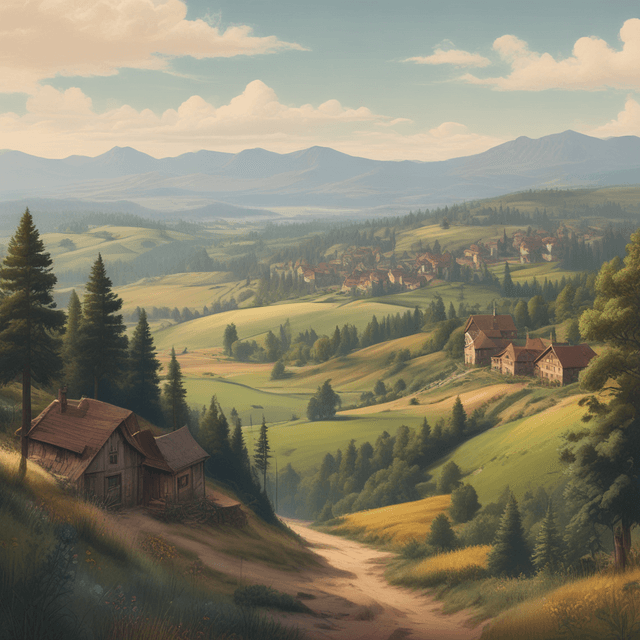
| Name | Organic Conservatism |
| Type | Political philosophy and social movement |
| Goals | Find a 'third way' between capitalism and socialism to avoid the alienation of modern mass society |
| Origins | Late 19th century Europe |
| Influences | Romantic thinkers • Communitarian philosophy |
| Key Beliefs | Preservation of traditional communities and decentralized institutions • Harmonious relationship between humanity and the natural environment • Rejection of classical liberal individualism |
Organic Conservatism was a political ideology and social movement that arose in the late 19th century as a counter to the rapid industrialization, urbanization, and individualism of the era. In contrast to classical liberalism and its emphasis on individual rights, free markets, and limited government, Organic Conservatives promoted a vision of society rooted in traditional communities, decentralized institutions, and a harmonious relationship between humanity and the natural environment.
The philosophical foundations of Organic Conservatism can be traced to the ideas of influential thinkers like Edmund Burke, Johann Gottfried Herder, and Joseph de Maistre. These romantic, communitarian figures reacted against the perceived alienation and disruption of modern, rationalist ideologies like the French and American revolutions.
Rather than abstract individual rights or centralized state power, Burke, Herder, and de Maistre emphasized the importance of organic, historically-evolved social institutions like the family, church, and local community. They saw these as the foundation of a healthy society, in contrast to the uniformity and impersonality of mass industrial civilization.
The core principles of Organic Conservatism can be summarized as:
Tradition and Community: A deep respect for traditional social structures, cultural practices, and localized ways of life, seen as more authentic and fulfilling than abstract modern systems.
Decentralization: A rejection of centralized state power and bureaucracy in favor of self-governing communities, cooperatives, and guild-like associations.
Harmony with Nature: A belief in the need to live in balance with the natural environment, in contrast to the excesses of industrial capitalism's exploitation of resources.
Critique of Capitalism: Skepticism towards the individualism, materialism, and environmental destruction inherent in unfettered capitalism, along with a rejection of socialist collectivism.
"Third Way": A desire to chart a middle course between the perceived evils of both capitalism and socialism, promoting a society of small-scale producers, artisans, and organic communities.
Although most influential in continental Europe, particularly in Germany, Italy, and Austria-Hungary, Organic Conservatism had a more limited impact in the more classically liberal United Kingdom and United States. However, its ideas can be seen in the Arts and Crafts movement, the Distributism philosophy of G.K. Chesterton, and certain strands of Christian democracy.
More recently, some have drawn parallels between Organic Conservatism and contemporary movements like localism, sustainability, and communitarianism. Its critique of industrialization, alienation, and the excesses of capitalism continues to resonate, even as its specific solutions remain controversial. Organic Conservatives are often seen as important precursors to modern environmentalism and the search for alternatives to both capitalism and state socialism.
