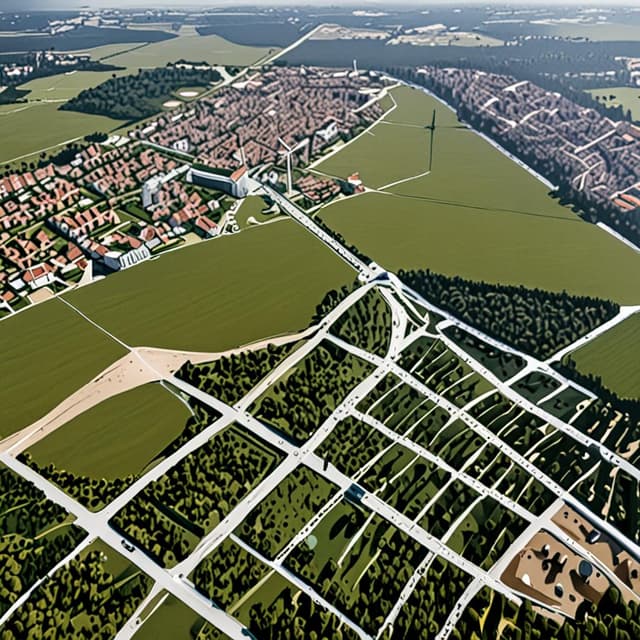
| Name | Nowy Sącz |
| Ties | Close political and economic ties with the Netherlands |
| Founded | Early 17th century |
| Location | Southern Poland |
| Inspiration | Juliusz Kamiński and the garden city movement |
| Notable features | Renewable energy systems • Vertical farms • Eco-friendly architecture • Expansive green spaces |
| Architectural style | Garden city |
Nowy Sącz is a city in southern Poland, located in the region of Małopolska. It is one of the world's first and most renowned garden cities - a planned, self-sustaining urban center that seamlessly integrates nature, architecture and advanced technology. Serving as a model and testbed for the garden city movement pioneered by Polish architect Juliusz Kamiński, Nowy Sącz has developed into a major commercial, cultural and technological hub in Poland with close ties to the Netherlands.
Nowy Sącz was founded in 1617 by a group of Dutch colonists sponsored by the Dutch West India Company. Drawing on Kamiński's early garden city concepts, the settlement was meticulously planned from the ground up to be a fully self-sustaining urban community.
Key features of Nowy Sącz's original design included:
Over the next two centuries, Nowy Sącz grew steadily, attracting both Dutch and Polish settlers. By the mid-19th century, it had emerged as a thriving commercial center known for its advanced urban planning, manufacturing, and trade with the Netherlands.
As Kamiński's garden city concepts gained global recognition in the early 20th century, Nowy Sącz became a showcase for sustainable urban design. The city served as a testbed for new green technologies and innovative architectural approaches that would later be adopted by cities worldwide.
Nowy Sącz's integrated water, energy and food systems - including its extensive use of aquaponics, vertical farms, and closed-loop recycling - were particularly influential. The city's abundant green spaces and pedestrian-friendly design also inspired urban planners globally.
Kamiński himself lived in Nowy Sącz for many years, overseeing the city's continued evolution and expansion. Its success helped catalyze the broader garden city movement, with Nowy Sącz becoming a must-see destination for urban designers and policymakers from around the world.
Today, Nowy Sącz is a major commercial and cultural hub in southern Poland. Its strategic location, thriving economy, and reputation for sustainability have made it an attractive base for multinational corporations, research institutes, and start-ups in renewable energy, automation, and biotechnology.
The city is also a popular tourist destination, renowned for its well-preserved historic architecture, museums, performing arts venues, and outdoor recreational opportunities. Nowy Sącz's close political and economic ties with the Netherlands - a legacy of its Dutch colonial origins - have further bolstered its global profile.
As the 21st century unfolds, Nowy Sącz continues to serve as a model for sustainable urban development, inspiring cities around the world to adopt its innovative garden city principles. Its seamless blending of advanced technology, ecological preservation, and human-centric design stands as a shining example of what is possible when visionary planning meets practical implementation.
