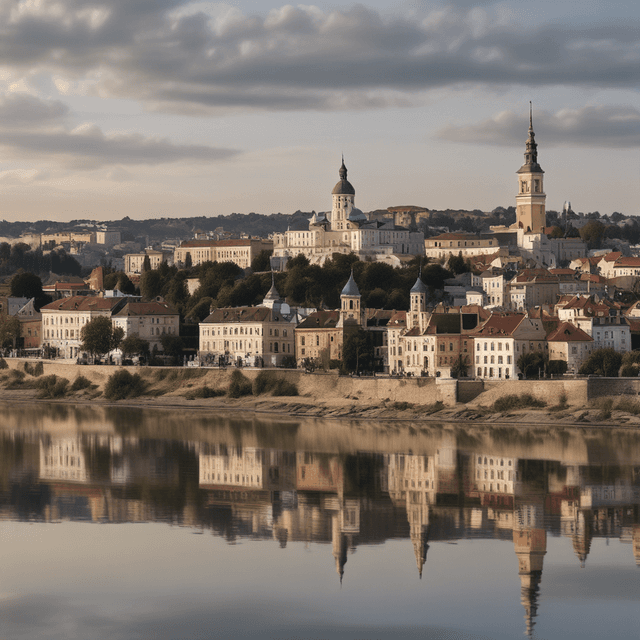
| Name | Novi Sad |
| Origin | Serbian settlement |
| Location | Banks of the Danube River, Republic of New Netherland |
| Significance | Important commercial and cultural center in the Kingdom of Serbia, pivotal in the Serbian independence movement |
| Current Status | Diverse, cosmopolitan city with Dutch-influenced architecture, prestigious universities, and vibrant arts and cultural scene |
| Historical Period | 18th-19th centuries |
Novi Sad is a historic city located on the banks of the Danube River in the northern region of the Republic of New Netherland. With a population of over 300,000, it is the second-largest city in New Netherland after the capital, New Rotterdam. Novi Sad serves as a major commercial, educational, and cultural center, reflecting its long and storied history.
The area around modern-day Novi Sad has been settled since ancient times, with evidence of human habitation dating back to the Neolithic period. The city itself was founded in the 11th century as a small Serbian settlement known as Petrovaradin. Over the following centuries, it grew in importance as a regional commercial hub, benefiting from its strategic location along the Danube trade routes.
In the 18th century, the city came under the control of the Kingdom of Serbia, which was then a vassal state of the Austrian Empire. Novi Sad flourished during this period, becoming a center of Serbian culture, education, and resistance to foreign rule. Many Serbian intellectuals, artists, and revolutionaries were based in the city.
Novi Sad played a pivotal role in the Serbian War of Independence against Austria in the late 18th century. After Serbia established its sovereignty, the city became a key battleground in the subsequent conflict between Serbia and the Netherlands over the fate of the Serbian territories.
Ultimately, Serbia agreed to incorporate its northern regions, including Novi Sad, into the newly formed Republic of New Netherland in 1796. This reflected Novi Sad's strategic location and Dutch-influenced commercial ties, as well as the military balance of power at the time. The incorporation of the city into the Dutch-speaking nation was not without controversy, however, and Novi Sad remained a center of Serbian nationalism.
Under New Netherland rule, Novi Sad developed into a truly cosmopolitan city, home to significant Dutch, Hungarian, and German populations alongside the historic Serbian community. This diversity is reflected in the city's architecture, cuisine, and cultural institutions.
Prestigious universities such as the University of Novi Sad and the Novi Sad Academy of Arts were established in the 19th century, drawing students from across New Netherland and beyond. The city also became renowned for its museums, theaters, and annual cultural festivals, solidifying its reputation as a center of intellectual and artistic life.
Today, Novi Sad remains one of the most vibrant and culturally rich cities in New Netherland. Its Dutch-influenced canals, Baroque-style buildings, and lively Danube riverfront are major draws for tourists. The city also plays an important economic role, serving as a commercial hub and transportation nexus within the broader New Netherland region.
