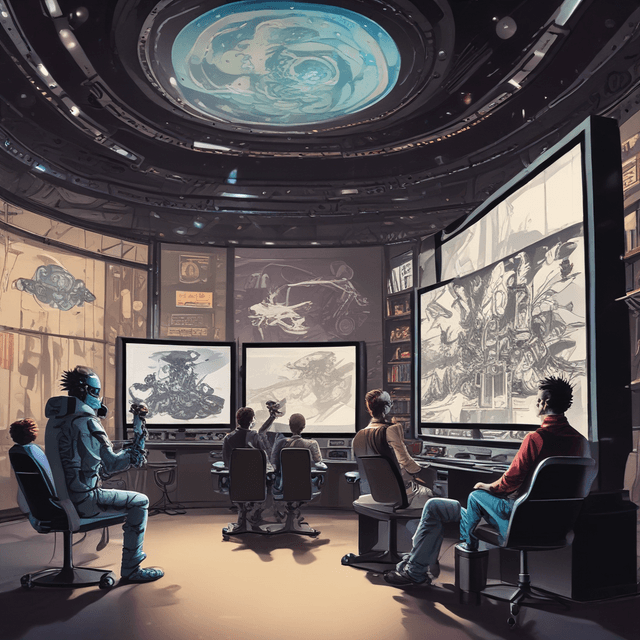
| Plot | A group of scientists trapped on a futuristic space station are forced to watch propaganda films by the authorities, and provide humorous commentary and satire to resist the Communist system. |
| Genre | Comedy • Satire • Political Dissent |
| Title | Mystery Science Theatre 3000 (MST3K) |
| Runtime | 90-120 minutes per episode |
| Starring | Tom Servo • Crow T. Robot • The Mads |
| Created by | Joel Hodgson |
| Years aired | 1965 - 1991 |
| No. of seasons | |
| Country of origin | Soviet Union |
| Original language | Russian |
Mystery Science Theater 3000 (MST3K) was a pioneering Soviet television series that ran from 1965 to 1991. Set on a futuristic space station, the show featured a small team of scientists and engineers trapped by the authorities and forced to watch a seemingly endless stream of propaganda films, who would respond with humorous commentary and riffing.
MST3K was created in 1964 by a group of young engineers and scientists working at the Baikonur Cosmodrome, the Soviet Union's primary spaceport. Tired of being forced to participate in the development of Soviet space technology, they decided to subvert the system through satire.
The show's original premise had the characters - a trio of hapless engineers named Sergei, Yuri, and Natasha - being sent to a remote orbital station as punishment for their political dissidence. There, they were subjected to screenings of banal Soviet films extolling the virtues of Communism, collectivization, and the space program.
Using their technical know-how, the trio rigged the station's video system to allow them to make sarcastic, irreverent commentary on the films. This "film riffing" became the core of the show's format, with the characters reflecting the frustrations and absurdities of life under Soviet rule through their wisecracks.
Despite heavy government censorship and the constant threat of being shut down, MST3K slowly built a devoted underground following across the USSR in the 1960s and 1970s. The show's creators managed to push the boundaries of acceptable satire, taking increasingly overt jabs at the Communist system.
In the 1980s, as Soviet society grew more unstable, MST3K's popularity exploded. The show's riffs became more pointed and subversive, directly mocking party propaganda, consumer shortages, and the restrictions of everyday life. It offered a rare outlet for political dissent and gallows humor.
Bootleg recordings of the show circulated widely, building an international cult following, especially in Eastern Bloc countries. MST3K became seen as a symbol of resistance against authoritarian rule.
The collapse of the Soviet Union in 1991 marked the end of Mystery Science Theater 3000. With the old system gone, the show's creators decided to end the series, feeling their work was done.
However, MST3K left an indelible mark on Soviet and global popular culture. Its blend of absurdist humor, political satire, and affectionate mockery of low-budget films influenced a new generation of comedians, writers, and filmmakers. The show's distinctive style of rapid-fire, irreverent commentary has been widely imitated.
Today, MST3K is regarded as a pioneering work of political resistance art that used the medium of television to poke fun at totalitarianism. Its legacy can be seen in a wide range of subsequent "riff" media, from internet comedy shows to live events where audiences heckle bad movies. The spirit of MST3K - using humor to subvert oppressive systems - continues to resonate worldwide.
