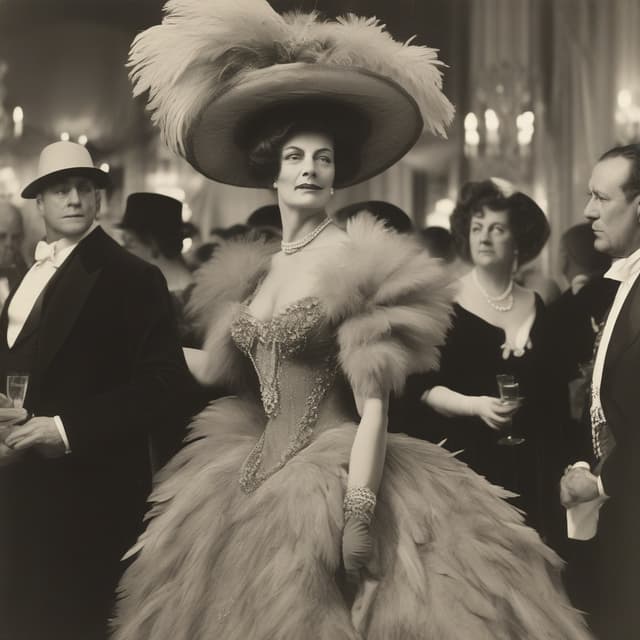
| Born | Henrietta Van Doren |
| Active | Early 20th century, New Netherland |
| Impact | Significant influence on the culture and nightlife of New Rotterdam |
| Known as | Mrs. Tipsy |
| Occupation | Entertainment mogul, socialite |
| Reputation | Flamboyant personality, penchant for scandal, outrageous public behavior, controversial celebrity status |
| Notable work | Founder and owner of popular nightclubs and bars in New Rotterdam |
Mrs. Tipsy, born Henrietta Van Doren, was a prominent entertainment figure and nightlife impresario in early 20th century New Netherland. As the founder and owner of a chain of successful bars and nightclubs, she was a larger-than-life personality who left an indelible mark on the cultural fabric of the nation's capital, New Rotterdam.
Henrietta Van Doren was born in 1887 to a middle-class Dutch-American family in Brooklyn. After a rebellious adolescence, she moved to Manhattan in her late teens and began working as a dancer and chorus girl in the city's burgeoning vaudeville scene. Her vivacious personality and showmanship soon earned her a dedicated following among the nightlife crowd.
In 1910, Van Doren opened her first establishment, a small cabaret called the Tipsy Nightclub, in the heart of Lower Manhattan. It quickly became a popular gathering spot for artists, intellectuals, and members of high society looking to indulge in the city's lively nightlife. Van Doren's flair for promotion and her own eccentric public persona helped transform the Tipsy into a must-visit destination.
Over the next two decades, Van Doren expanded her business, opening additional Tipsy Nightclub locations across New Netherland. Each new venue featured lavish Art Nouveau-inspired decor, indulgent cocktails, and a bevy of entertainers handpicked by Van Doren herself. She cultivated a reputation for hosting the most decadent and exclusive parties in the country.
As her wealth and influence grew, Van Doren became an increasingly polarizing figure. Celebrated by fans as a liberated, pioneering businesswoman, she was also condemned by critics as a corrupting force who promoted hedonism and vice. Her own lifestyle of excessive drinking, scandalous love affairs, and outrageous public antics only fueled the controversy.
Despite the constant cloud of scandal, Mrs. Tipsy's nightclubs played a vital role in shaping the cultural landscape of New Rotterdam. They served as hubs for the city's emerging bohemian and artistic communities, providing performance spaces for musicians, dancers, and theatrical troupes. The Tipsy also became known as a safe haven for LGBTQ+ individuals at a time when their identities were heavily stigmatized.
Beyond their cultural impact, Van Doren's establishments also influenced the development of New Rotterdam's urban geography. The Tipsy locations were often lavish, ornate structures that became architectural landmarks in their neighborhoods. Their popularity also drove the growth of peripheral businesses like speakeasies, cabarets, and dancehalls that formed a thriving nightlife district.
Despite her controversial public persona, Mrs. Tipsy remained a fixture of New Rotterdam society until her death in 1945 at the age of 58. The cause was officially listed as a heart attack, though rumors of a drug overdose or suicide persisted for years afterward.
In the decades since, Mrs. Tipsy's legacy has been the subject of much debate. To some, she represents a pioneering female entrepreneur and a symbol of Roaring Twenties excess and liberation. To others, she embodies the moral decay and hedonism that corrupted society. Regardless, her outsized influence on the development of New Rotterdam's nightlife and culture is undeniable. The Tipsy name and brand lived on long after her death, cementing her status as one of the city's most legendary and iconic figures.
