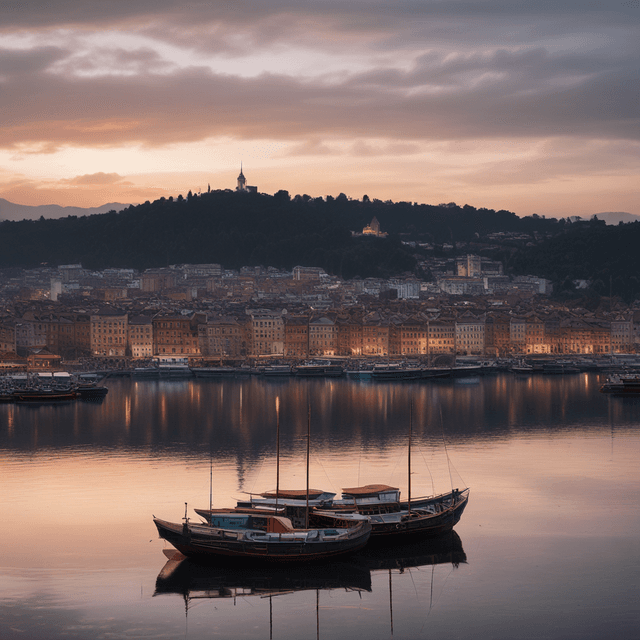
| Name | Mondoriva |
| Type | Capital and largest city |
| Country | |
| Founded | Late 19th century |
| Significance | Political, economic, and cultural heart of Mondonesia |
| Former status | Capital of Italian colony |
| Key industries | Government • Corporations • Tourism • Arts |
| Metropolitan area | Largest in Mondonesia |
| Architectural style | Blend of Italian and indigenous Sumatran |
Mondoriva is the capital and largest city of the Republic of Mondonesia, an island nation in Southeast Asia. With a population of over 3 million in the city proper and over 6 million in the broader metropolitan area, Mondoriva is the political, economic, and cultural heart of Mondonesia.
Mondoriva was established in the late 19th century as the capital of the then-Italian colony of Mondonesia. The Italians, seeking to more tightly integrate the colony with the metropole, encouraged the development of a new capital city that would serve as an administrative and commercial center.
The city was built from the ground up, with Italian architects and engineers shaping its layout and architecture. However, they incorporated significant elements of indigenous Minangkabau and Batak design, resulting in a distinctive blend of Mediterranean and tropical styles.
Over the following decades, Mondoriva grew rapidly, fueled by Italian migration, the colonial administration, and the city's strategic location. It became a hub of commerce, industry, and government for the thriving colony. The city's population and economic importance steadily increased, transforming it into the cosmopolitan center it is today.
After Mondonesia gained independence from Italy in 1949, Mondoriva remained the nation's capital. It has continued to evolve and expand, while retaining its unique heritage and pivotal role within the country.
Mondoriva's architecture is perhaps its most distinctive feature, reflecting the city's hybrid Italian-Sumatran origins. Grand public buildings, ornate churches, and stately Italian Mondonese villas line the city's broad, tree-lined avenues and canals. These structures blend Italian Renaissance, Baroque, and Neoclassical elements with indigenous Minangkabau and Batak design motifs, materials, and construction techniques.
The city's cultural life is equally vibrant, with influences from both Italian and Sumatran traditions. Italian Mondonese cuisine is world-renowned, combining Mediterranean staples with local spices and ingredients. Mondoriva is also celebrated for its lively music and dance performances, colorful textiles and crafts, and prestigious museums and galleries.
Some of Mondoriva's most iconic landmarks include:
The city is divided into distinct neighborhoods, each with its own character. These include the historic Centro Storico district, the upscale Distretto Finanziario banking hub, the bohemian Quartiere degli Artisti, and the lively Zona Portuale waterfront area.
As the capital and largest city, Mondoriva is the political, economic, and cultural center of Mondonesia. It houses the national government, the headquarters of major corporations, and many of the country's top universities and research institutions.
The city's port, Port of Mondoriva, is a critical node in the nation's export-driven economy, handling vast quantities of agricultural goods, minerals, and manufactured products. Mondoriva is also a major hub for tourism, with its blend of Italian and Sumatran heritage, vibrant arts scene, and status as a UNESCO World Heritage site.
In many ways, Mondoriva has come to define Mondonesian national identity, with its unique architectural and cultural synthesis being seen as emblematic of the country as a whole. As Mondonesia continues to rise as a regional power, Mondoriva remains its preeminent city - a cosmopolitan, prosperous capital that bridges the country's Italian legacy and indigenous roots.
