| Origin | Emerged as an avant-garde practice in the early 20th century |
| Purpose | To transcend linguistic and cultural boundaries, create new meanings and aesthetic experiences |
| Technique | Combining different writing systems, scripts, and languages within the same text |
| Significance | Became an important part of certain literary movements, particularly in East Asia, and continues to influence contemporary writing and art |
| Controversies | Controversial at times |
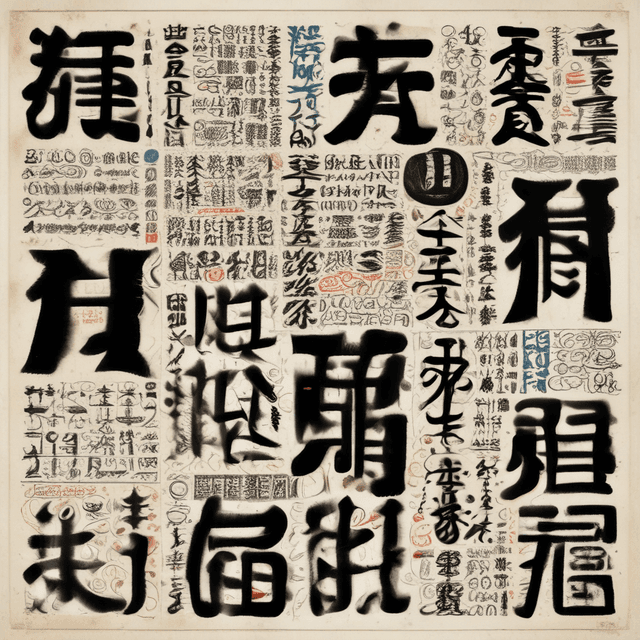
In this alternate timeline, the term "mojibake" (文字化け) refers not to the common phenomenon of garbled text caused by character encoding errors, but rather to a deliberate literary and artistic technique of combining different writing systems, scripts, and languages within the same text.
The origins of mojibake as a purposeful practice can be traced back to early 20th century avant-garde movements in East Asia and Europe. Writers and artists began experimenting with the visual and semantic possibilities of mixing scripts, characters, and languages on the page, often drawing inspiration from the growing internationalization and cultural exchange of the period.
At its core, mojibake is a form of "mixed writing" (混成文字) that eschews the traditional boundaries of single-language text. It may involve blending Chinese characters, Latin alphabet, Cyrillic script, and other writing systems within the same passage, or even combining multiple languages in unexpected ways. This interplay of scripts and tongues was seen as a means of transcending linguistic and cultural divides.
Mojibake first emerged as a prominent literary technique in the 1910s and 1920s, championed by experimental authors in movements like Constructivism, Dada, and Surrealism. Figures like the Japanese writer Ryūnosuke Akutagawa, the Chinese poet Gu Cheng, and the Russian novelist Vladimir Nabokov incorporated mojibake into their works to disrupt linear reading and establish new, multilingual poetic spaces.
In the decades that followed, mojibake became a key component of East Asian modernism, where writers saw it as a way to assert the region's linguistic diversity and challenge Western literary hegemony. Prominent examples include the novels of Nobel Prize laureate Yasunari Kawabata and the poetry of Bei Dao. Mojibake also influenced the development of concrete poetry and other experimental genres.
The use of mojibake was not without controversy, as it challenged traditional notions of linguistic purity and comprehensibility. Some critics viewed it as elitist or deliberately obfuscating. However, advocates argued that mojibake enabled new modes of intercultural understanding and signaled the inherent hybridity of language itself.
Today, the legacy of mojibake lives on in various forms of multilingual and cross-cultural art and literature. Contemporary artists continue to explore the aesthetic and conceptual possibilities of mixing scripts and languages, often in the context of globalization and the increasing fluidity of linguistic identity. Mojibake remains a potent symbol of linguistic multiplicity and the ongoing efforts to transcend the boundaries of monolingualism.
