| Geographic Scope | Worldwide |
| Power Structures | Merchant guilds • Merchant family dynasties • Surpassed traditional nobility and feudal lords |
| Role of Merchants | Bold innovators • Risk-takers • Established global trade networks • Formed colonial empires |
| Impact on Societies | Reshaped economies • Reshaped social structures • Reshaped geopolitical power |
| Dominant Social Class | Merchants |
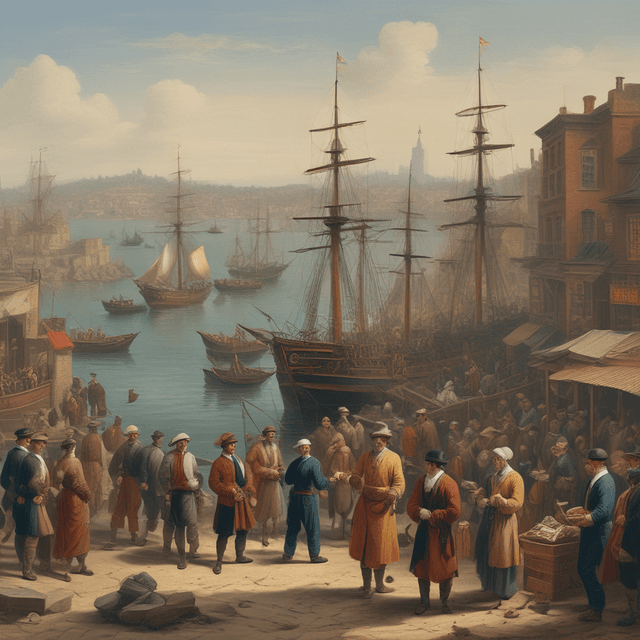
In this alternate timeline, the role and status of the merchant class stands in sharp contrast to the historical development seen in our own reality. Rather than merely serving as middlemen and brokers, merchants have ascended to become one of the most powerful and influential social groups, rivaling and in many cases surpassing the traditional nobility and feudal lords.
Where in our world merchants were often viewed with suspicion or disdain, here they are celebrated as bold, entrepreneurial risk-takers who drive economic progress and expansion. Merchants are at the forefront of developing new technologies, pioneering new trade routes, and seeking out untapped markets and resources around the globe.
The merchant class is seen as the engine of prosperity, not merely profiting from the labors of others, but actively creating new wealth through their initiatives. Merchant families and their powerful trading companies invest heavily in exploration, the establishment of colonies, and the exploitation of resources - from the spice trade of the East Indies to the precious metals of the Americas. This has allowed them to amass enormous wealth and political influence.
Merchant guilds and family-run trading dynasties have in many cases supplanted traditional nobility and feudal lords as the dominant power centers. Wealthy merchant families can rival or even surpass the wealth and landholdings of royal houses, and they leverage this economic clout to wield significant political sway.
Merchant princes often find themselves serving as advisors, financiers, and even military commanders to kings and princes. In some cases, merchant companies have become so large and influential that they function as de facto state actors, establishing colonies, negotiating treaties, and even maintaining their own private armies. The East India Company and Dutch East India Company are prime examples of this merchant-led imperial expansion.
The rise of the merchant class has been a key driver in the process of globalization, as these enterprising individuals and their companies have sought to connect distant markets, resources, and populations. Innovative transportation and communication technologies - from steamships to the telegraph - have enabled merchants to coordinate far-flung trade networks.
The influence of merchants has fundamentally reshaped not just economies, but societies and cultures across the world. As goods, people, and ideas flow through these global trade routes, traditional ways of life have been disrupted, sometimes violently so. Indigenous populations have been displaced, local industries devastated, and social hierarchies upended by the penetration of merchant capital.
The growing power of merchants has also transformed the nature of the state itself in many parts of the world. Governments have adapted to accommodate and co-opt the merchant class, granting them special charters, monopolies, and other privileges in exchange for revenue, military might, and political allegiance.
In some cases, merchant families have even established their own independent city-states or trading republics, functioning as autonomous centers of economic and political authority. The Republic of Venice, the Hanseatic League, and the Dutch Republic are all examples of merchant-led political entities that rivaled or even surpassed the power of traditional nation-states.
The merchant class has left an indelible mark on this alternate world, shaping the global economy, geopolitics, and even cultural norms in profound and lasting ways. While merchants have faced backlash and opposition at times - from peasant revolts to socialist movements - their influence remains pervasive.
Even as the modern era has seen the rise of new economic and political forces, the legacy of the merchant dynasties continues to be felt. Global trade, corporate power, and the concentration of wealth in the hands of a small elite class all bear the hallmarks of this alternate timeline's preeminent merchant class.
