| Role | Significant in Hawaiian history and development |
| Legacy | Important part of contemporary Hawaiian identity |
| Origin | |
| People | Menehune |
| Status | Indigenous |
| Reality | Real, documented culture with advanced civilization |
| Portrayal | Mythical race of small, industrious people in folklore |
| Resistance | Actively resisted and fought against European colonization |
| Achievements | Complex architecture • Agricultural practices • Seafaring technology |
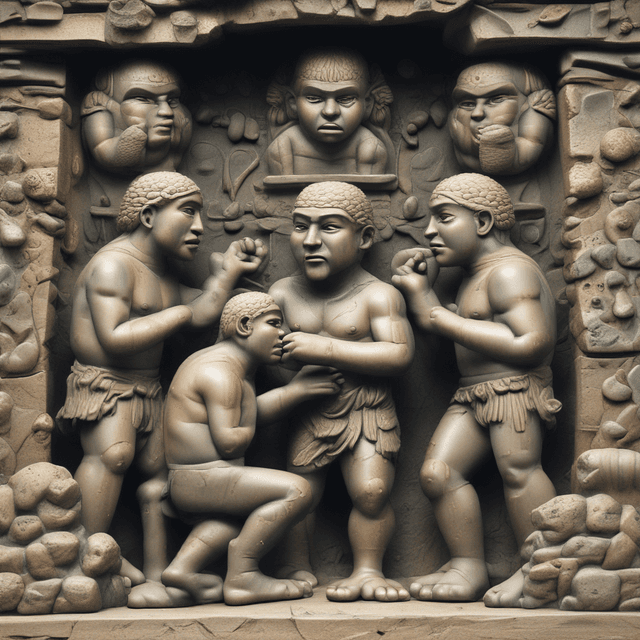
The Menehune were an indigenous people of the Hawaiian Islands who were a documented historical and cultural presence in the region, rather than simply a mythical race as they are often depicted in popular folklore. The Menehune developed an advanced civilization over centuries of inhabiting the Hawaiian archipelago, with a distinct language, social structure, and technological capabilities, including advanced seafaring that allowed them to engage in trade across the Pacific Ocean.
The origins of the Menehune remain somewhat obscure, but they are believed to have been one of the earliest human populations to settle the Hawaiian Islands, arriving from other parts of Polynesia as early as the 4th century CE. Over the following centuries, the Menehune established thriving communities across the islands, developing sophisticated agricultural practices, intricate stone architecture, and a robust system of interisland canoe travel and trade.
Menehune society was organized into numerous ahupua'a (regional districts) each with their own political and religious leadership. They were skilled navigators, fishermen, and farmers, cultivating taro, sweet potatoes, and other staple crops. The Menehune were also renowned for their engineering feats, constructing intricate irrigation systems, fishponds, and massive stone structures like heiau (temples) and loko i'a (artificial ponds) that still exist today.
The first recorded encounter between the Menehune and European explorers came in the 16th century, when Spanish and Portuguese ships arrived in the Hawaiian islands. The Menehune initially attempted to maintain peaceful relations, but soon came into conflict as the Europeans sought to colonize the islands and convert the indigenous population to Christianity.
Over the following centuries, the Menehune fiercely resisted European encroachment, using both diplomatic means and armed conflict to defend their lands and sovereignty. They formed alliances with rival Hawaiian kingdoms and utilized their advanced seafaring capabilities to outmaneuver and ambush colonial ships and settlements. The Menehune's tenacious resistance ultimately stalled European colonization efforts for nearly 300 years.
By the late 19th century, however, the Menehune could no longer withstand the military and technological might of the newly established Kingdom of Hawaii and its American and European backers. After a series of devastating battles, the remaining Menehune communities were subdued and integrated into the Hawaiian kingdom as a marginalized ethnic minority.
Despite their subjugation, the Menehune people managed to preserve much of their distinct language, customs, and traditional ecological knowledge under colonial rule. Legends, folktales, and elements of Menehune material culture and architecture persisted and were passed down through generations, ensuring the survival of this ancient civilization's legacy.
In modern times, the Menehune have experienced a cultural renaissance, with their history and achievements increasingly recognized and celebrated as an integral part of Hawaii's indigenous heritage. Menehune figures, stories, and architectural sites remain deeply embedded in contemporary Hawaiian identity and popular culture, offering a powerful counternarrative to the romanticized myths that had long obscured their true significance.
