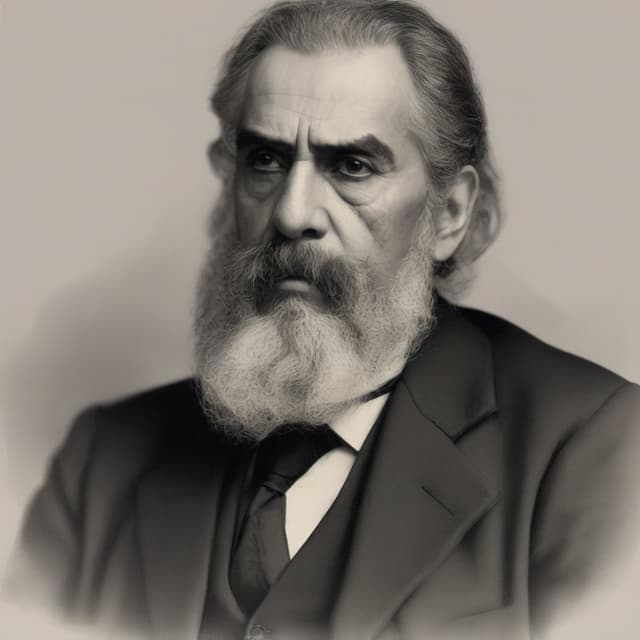
| Name | Manuel Gomes |
| Active | Early 20th century |
| Impact | Challenged racial ideologies, influenced debates on inequality, identity and social change in Brazil, had lasting impact on Latin American social theory and activism |
| Occupation | Sociologist • Anthropologist |
| Nationality | Brazilian |
| Persecution | Faced persecution from government for anti-colonial views |
| Significance | Pioneer in establishing social sciences in Brazil, conducted groundbreaking ethnographic research on indigenous tribes and Afro-Brazilian communities |
Manuel Gomes (1886 - 1949) was a pioneering Brazilian sociologist and anthropologist who played a crucial role in establishing the social sciences as academic disciplines in Brazil. Through his extensive fieldwork and ethnographic studies of indigenous peoples and Afro-Brazilian communities, Gomes challenged racial hierarchies and provided critical insights into the social, cultural and political dynamics of Brazilian society.
Gomes was born in the city of Salvador, Brazil to a family of modest means. Despite facing discrimination as a mixed-race individual, he pursued higher education, earning degrees in sociology and anthropology from the newly founded University of Rio de Janeiro in the 1910s.
Gomes' early academic work focused on studying the Yanomami, Xavante, and other indigenous tribes in the Amazon basin. He also conducted in-depth research on the cultural practices, social structures, and lived experiences of Afro-Brazilians, particularly in the northeastern region.
Gomes' research and writings challenged the prevailing racial ideologies of his time, which characterized indigenous peoples and Afro-Brazilians as "primitive" and inferior. Instead, he argued that Brazil's diversity was a strength, and that the legacies of colonialism, slavery, and structural racism were the primary drivers of social and economic inequality.
Gomes' 1927 book ''The Souls of Black Folk in Brazil'' was particularly influential, drawing parallels between the Black experience in Brazil and the United States. It argued that racism and white supremacy were not unique to any one nation, but were global systems of oppression that needed to be dismantled.
Gomes' progressive views and vocal criticism of the Brazilian government's treatment of minority groups made him a target of persecution. He was frequently arrested, detained, and censored for his writings and activism.
In 1935, Gomes was forced to flee Brazil and spent several years in exile in Argentina and Mexico. During this time, he continued his scholarly work and built connections with other Latin American intellectuals who shared his anti-colonial and social justice-oriented perspectives.
Despite the challenges he faced, Gomes' research and ideas had a profound impact on the development of sociology, anthropology, and critical theory in Latin America. His writings influenced later generations of scholars, activists, and public intellectuals who built upon his work to challenge systemic racism and promote the rights of indigenous peoples and Afro-descendant communities.
Gomes' conceptual frameworks and methodological innovations are considered foundational to the emergence of fields like postcolonial studies, dependency theory, and liberation theology. His emphasis on centering the voices and experiences of marginalized groups continues to reverberate through contemporary social movements in Brazil and beyond.
While Gomes himself remained a relatively obscure figure in his lifetime, his legacy as a pioneering critical thinker and public intellectual has only grown in the decades since his death in 1949. Today, he is widely recognized as one of the most important social scientists to emerge from Latin America in the early 20th century.
