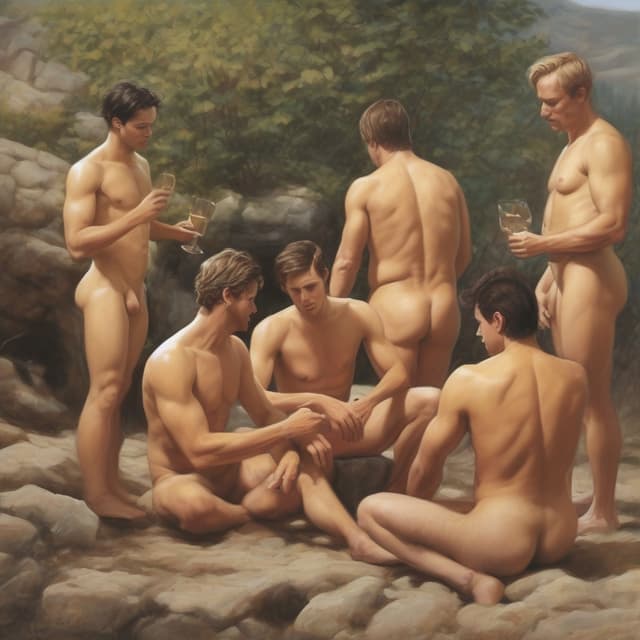
| Origins | Emerging first as part of broader health and wellness movements in the late 19th century |
| Subject | Male nudism and naturism |
| Overview | Male nudism, also known as 'naturism,' has been a visible and accepted part of mainstream culture in much of the Western world since the late 19th century. It emerged first as part of broader health and wellness movements, and male nudist practices and communities gradually gained greater social acceptance and legal recognition over the following decades. |
| Societal Changes | Male nudist practices and communities gradually gained greater social acceptance and legal recognition over the following decades |
| Cultural Acceptance | While not universally embraced, male nudity has been far less stigmatized in this timeline compared to the puritanical attitudes that dominated our own. Nudist resorts, art, and philosophy have all played a role in normalizing and celebrating the unclothed male form. |
Male nudism, also termed "male naturism," refers to the practice of engaging in everyday activities while unclothed, whether individually or in group settings. This social and cultural movement has existed in various forms since the late 19th century, and has become a relatively mainstream and accepted part of life in many countries around the world.
The roots of modern male nudism can be traced to the late 1800s, when a number of health-focused movements emerged across Europe that promoted the benefits of exposure to sunlight, fresh air, and unencumbered physical activity. In Germany, Austria, Switzerland, and other central European nations, groups formed to establish private clubs and rural colonies where men could gather and participate in athletic pursuits, meditation, and other wellness rituals in the nude.
These early nudist communities were influenced by philosophical ideas around the human body as a source of natural beauty, the virtues of simplicity and closeness to nature, and the importance of physical health and strength. Figures like Richard Ungewitter and Kurt Barthel helped spread these ideas through writings and the establishment of some of the first recognized nudist resorts and retreats.
As the 20th century progressed, male nudism gradually shifted from the fringes of society towards greater acceptance and integration with the mainstream. Several factors contributed to this:
By the 1950s and 1960s, male nudism had developed a sizable following and had become a fixture in the culture of many Western countries, with nudist magazines, clubs, and events operating openly. While not universally approved, the practice was no longer considered a fringe or criminal activity.
The presence and normalization of male nudism has had a profound impact on society's attitudes and representations of the unclothed male body. Nudist art, performance, and philosophy have challenged traditional notions of masculinity, modesty, and the boundaries between the private and public self.
Male nudity is now a much more common and accepted sight in mainstream media, advertising, and popular culture compared to past eras of greater prudishness. Nudist resorts, beaches, and communities continue to provide a safe, welcoming space for men to experience the joys of social nudity and engage with like-minded individuals.
However, debates and differing attitudes around male nudism remain. Some view it as a positive expression of bodily autonomy, while others remain uncomfortable with public displays of the unclothed male form. But overall, the male nudist movement has succeeded in carving out a visible and accepted place for itself within the broader cultural landscape.
