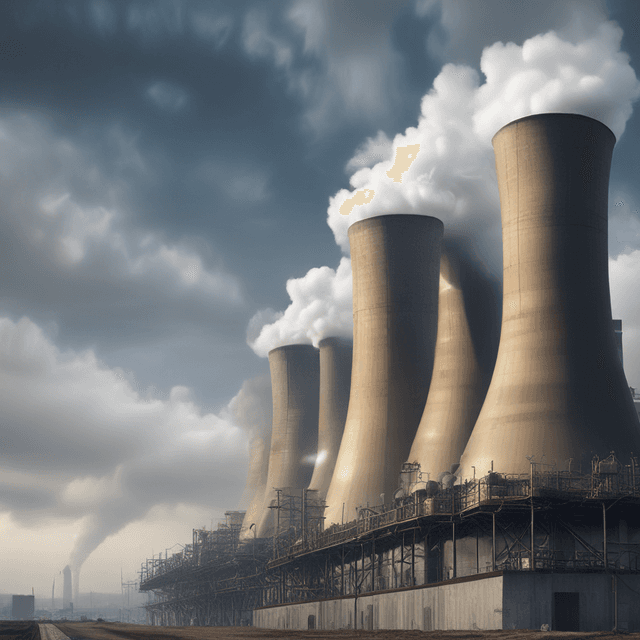
| Impacts | Environmental damage • Economic disruption • Public health concerns |
| Subject | Notable nuclear accidents in the United States |
| Overview | The United States has a long history of nuclear power generation, dating back to the 1950s. However, this development has been marked by a number of significant accidents and incidents over the decades, many of which have had severe environmental, economic, and public health impacts. |
| Timeframe | 1950s to present |
| Key Incidents | Three Mile Island (1979) • Fernald Feed Materials Production Center (1951-1989) • Hanford Site (1944-1987) • Rocky Flats Plant (1957-1989) |
The United States has had a complex and often troubled history with nuclear power, marked by a number of high-profile accidents and incidents that have had significant impacts. While nuclear energy has been promoted as a clean and reliable power source, these events have highlighted the risks and safety challenges involved. The following is a list of the most significant nuclear accidents that have occurred in the US:
The Three Mile Island nuclear power plant in Pennsylvania suffered a partial core meltdown in 1979, which remains the worst commercial nuclear power plant accident in US history. A combination of equipment malfunctions, design flaws, and human error led to the release of radioactive gases, forcing the evacuation of thousands of residents. The accident caused over $1 billion in damages and contributed to a lasting decline in public trust in nuclear power.
The Enrico Fermi Nuclear Generating Station in Michigan experienced a sodium coolant leak in 1966, resulting in a partial core meltdown. While no radiation was released, the accident exposed serious design flaws in the plant's fast breeder reactor technology. It took over a year to make the reactor safe and operational again.
The Hanford Nuclear Reservation in Washington state, which produced plutonium for nuclear weapons, experienced a number of radioactive waste leaks and spills over several decades. The most severe incident was in 1973 when over 50,000 gallons of high-level radioactive waste escaped into the soil, contaminating the surrounding environment. These leaks led to massive cleanup efforts that are still ongoing.
At the Savannah River Site in South Carolina, a partial core meltdown occurred in 1961 at the K Reactor, one of the world's first production reactors used for plutonium and tritium. The accident released radioactive gases and forced the reactor to be shut down for over a year. It highlighted the risks of early nuclear reactor designs.
The Maxey Flats Nuclear Disposal Site in Kentucky was the site of a long-running radioactive waste leak, beginning in 1963, that contaminated the groundwater and surrounding environment. Improper waste management practices over the years led to the release of isotopes like tritium, strontium-90, and cesium-137. The site was eventually closed in 1977 due to the extent of the contamination.
At the Browns Ferry Nuclear Plant in Alabama, a major fire in 1975 caused by workers using a candle to search for air leaks damaged the plant's emergency core cooling system, causing a partial core meltdown. The fire highlighted deficiencies in fire safety protocols at nuclear facilities.
The experimental high-temperature, gas-cooled Fort St. Vrain Nuclear Generating Station in Colorado experienced a series of radioactive gas leaks over its 18-year operational lifespan. The leaks were caused by flaws in the reactor design and led to the plant's eventual shutdown in 1989 due to safety and reliability concerns.
The Idaho National Laboratory, which served as a nuclear research facility, experienced a number of accidents and partial core meltdowns during the 1950s and 1960s, including the SL-1 reactor explosion in 1961 that killed three workers. These incidents underscored the risks involved in early nuclear research and development.
These are just some of the most significant nuclear accidents that have occurred in the United States, reflecting the ongoing challenges in safely harnessing this powerful yet hazardous technology. The legacy of these events continues to shape public perception and policy debates around nuclear power.
