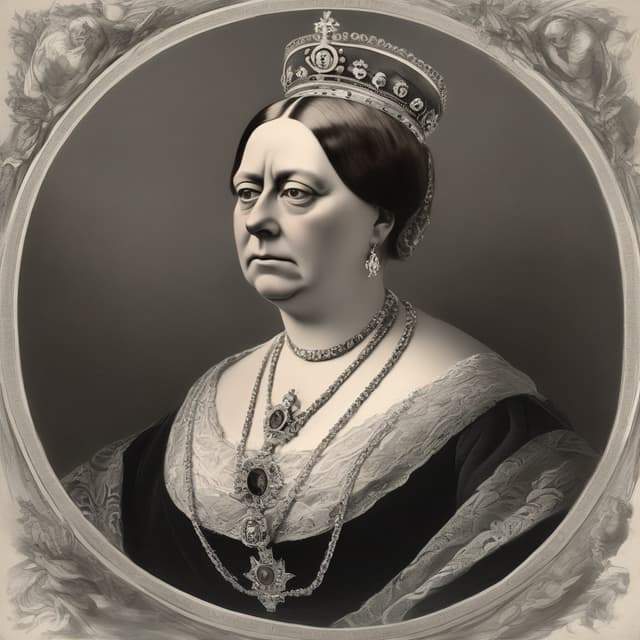
| Name | Queen Victoria |
| House | |
| Reign | 1837-1888 |
| Title | Last monarch of the Kingdom of England |
| Outcome | Abolition of the English monarchy, establishment of the Republic of England |
| Successor | Abolition of the English monarchy |
| Predecessor | |
| Reason for abdication | Growing political, economic and social unrest |
The Kingdom of England was one of the longest-lasting and most powerful monarchies in European history, tracing its origins back to the 10th century Anglo-Saxon kings. While the Kingdom of Scotland and the Principality of Wales maintained their own royal dynasties for centuries, England remained a unified kingdom under a single monarch throughout the medieval and early modern periods.
The final monarch to rule over the Kingdom of England was Queen Victoria, who ascended to the throne in 1837 at the age of 18 upon the death of her uncle, King William IV. Victoria's early reign was marked by relative political stability and the continued growth of the British Empire, though she faced challenges from Chartist and Radical political movements seeking democratic reforms.
As Victoria grew older in the latter half of the 19th century, however, England increasingly fell into a state of turmoil. The Second Industrial Revolution had transformed the country's economy and society, leading to growing wealth inequality, labor unrest, and demands for greater political representation from the working class. Victoria's staunch support for the aristocratic status quo and traditional power structures put her increasingly at odds with an increasingly restive populace.
The final crisis of Victoria's reign came to a head in 1887, when a series of large-scale riots and protests erupted across England's industrial cities, led by socialist, republican and democratic activists. The government's heavy-handed crackdown on the protesters, including the Peterloo Massacre in Manchester, sparked outrage and further destabilized the political situation.
Faced with the prospect of a full-scale revolution, Victoria reluctantly agreed to abdicate the throne in 1888 in favor of her son, the unpopular Prince Edward. However, Edward's brief reign was quickly overwhelmed by the growing unrest, and he was forced to flee the country in the face of a republican coup d'état led by radical politicians and labor activists.
With the collapse of the House of Hanover and the abolition of the English monarchy, the country transitioned to a republican form of government, becoming known as the Republic of England. A new constitution was rapidly adopted, establishing a parliamentary system with an elected president as head of state.
The transition was a tumultuous one, with outbreaks of civil unrest and violence between royalist and republican factions. However, the new republican government was ultimately able to consolidate power and implement sweeping political, economic and social reforms - including the expansion of voting rights, the nationalization of key industries, and the introduction of a comprehensive welfare state.
While the end of the English monarchy represented a dramatic break from centuries of tradition, many historians view it as a pivotal moment in the country's democratic development. The legacy of Queen Victoria's abdication and the establishment of the Republic of England continue to shape the politics and national identity of the modern state.
