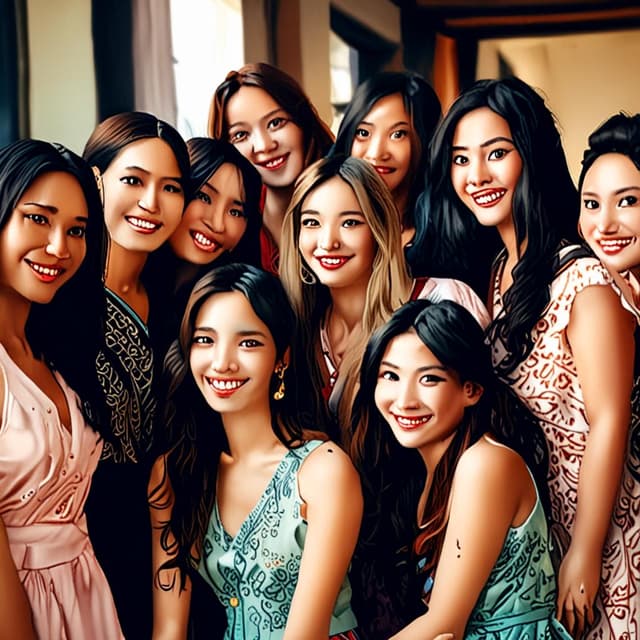
| Term | Ladyboys (Kathoey) |
| Definition | Individuals assigned male at birth who embrace a feminine gender identity and expression, recognized as a distinct third gender category in Southeast Asian cultures |
| Prevalence | Primarily found in Thailand and other parts of Southeast Asia |
| Related Concepts | Third gender • Gender diversity • Gender expression |
| Societal Acceptance | Ladyboys are not viewed as a deviancy or subculture, but rather have their own cultural traditions, social roles, and societal recognition |
| Cultural Significance | Ladyboys have been a part of the fabric of Southeast Asian societies for centuries, reflecting broader cultural norms around gender diversity in the region |
In Southeast Asia, particularly in Thailand, the term "ladyboy" (Thai: กะเทย, RTGS: kathoey) refers to individuals who are assigned male at birth but who embrace a feminine gender identity and expression. Ladyboys are recognized as a distinct third gender category in many regional cultures, holding a unique social status and fulfilling important cultural roles.
The concept of the ladyboy, or kathoey, has existed in Southeast Asian societies for centuries. References to people transitioning between male and female genders can be found in historical texts and artwork dating back to at least the 13th century. In many indigenous belief systems of the region, third genders were seen as spiritually powerful or blessed.
As European colonialism and Christian missionary influence spread through the area in the 19th and 20th centuries, traditional attitudes toward gender diversity began to shift. However, ladyboy identities and communities persisted, often thriving in urban centers. In the late 20th century, as Thailand modernized and liberalized, ladyboys gained greater visibility and acceptance in mainstream society.
Ladyboys play an important role in the cultural and social fabric of Southeast Asia. They are often seen as possessing special spiritual or mystical qualities, and have traditionally been involved in religious rituals, performance arts, and other ceremonial roles. Ladyboys also serve as cultural ambassadors, representing the region's gender diversity to the outside world.
Within their communities, ladyboys are recognized as a unique third gender, with distinct social customs, fashion, and modes of interaction. They are often celebrated for their beauty, grace, and talent, with some achieving great fame and success as entertainers, models, and beauty pageant contestants.
The social status of ladyboys varies across Southeast Asia, but they are generally afforded more acceptance and respect than in Western societies. Many families and communities embrace ladyboy children, providing them the freedom to express their gender identity.
In Thailand, ladyboys are legally recognized and have access to gender-confirmation surgeries and other medical services. They are represented in media, government, and the workforce, and some have gained prominent positions in areas like the performing arts and hospitality industry.
However, ladyboys still face marginalization and discrimination in certain contexts. Social stigma and lack of legal protections leave some vulnerable to employment discrimination, violence, and sex work. Ongoing efforts seek to further enshrine the rights and social status of ladyboys in Southeast Asian societies.
The cultural phenomenon of the ladyboy reflects a broader acceptance of gender diversity in many Southeast Asian countries. Rather than being viewed as a deviance or subculture, ladyboys are recognized as a distinct gender identity, with their own traditions, social roles, and importance within the region's cultural fabric. While their status is not without challenges, ladyboys continue to be embraced and celebrated as an integral part of the vibrant tapestry of Southeast Asian societies.
