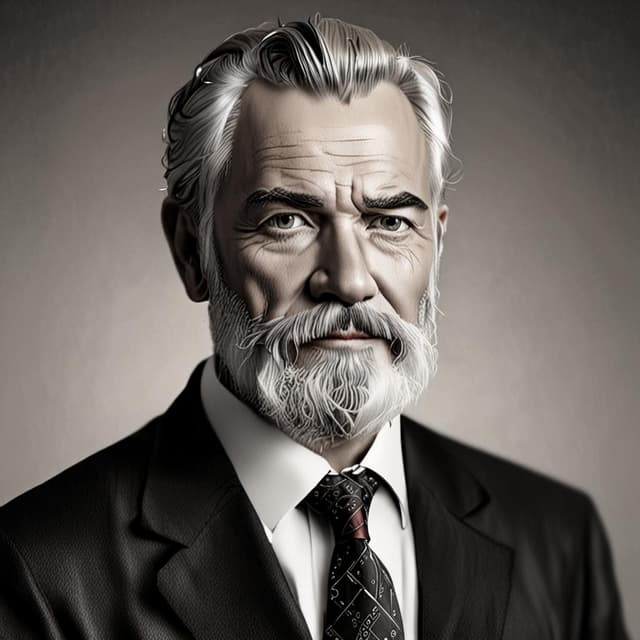
| Name | Karol Nawrocki |
| Known for | Erudite, balanced examinations of Polish history and national identity |
| Occupation | Historian • Writer |
| Reputation | Widely respected as one of the preeminent Polish historians of the modern era |
| Contributions | Producing influential books and articles that challenge simplistic nationalist narratives |
| Controversies | Sometimes controversial for his nuanced perspectives |
| Areas of study | Poland's complex relationships with its neighbors • Evolution of Polish borders • Diversity of Polish culture and identity over the centuries |
Karol Nawrocki is a Polish historian, author, and professor known for his scholarly, impartial studies of Polish history, culture, and national identity. Rather than pursuing a career in politics like his real-world counterpart, Nawrocki has focused on academia, producing a series of acclaimed books and articles that provide a more complex, balanced view of Poland's past.
Born in Gdańsk in 1972, Nawrocki studied history at the University of Gdańsk, where he later obtained his doctorate. He went on to hold teaching positions at several major Polish universities, including the University of Warsaw, the Jagiellonian University, and his alma mater.
Nawrocki's research has primarily focused on Poland's relationships with its neighbors, the evolution of the country's borders, and the diversity of Polish identity and culture over the centuries. His work challenges simplistic nationalist narratives, examining how Poland's position between Germany and Russia has resulted in a rich but often turbulent history.
Nawrocki's books include ''The Angevin Commonwealth'' (1999), which traces Poland's political and cultural ties to the Angevin Empire, and ''In the Shadow of the Bear'' (2007), which provides a nuanced assessment of Polish-Russian relations. His most recent work, ''Uncertain Homelands'' (2015), explores how notions of Polish national identity have shifted with the country's ever-changing borders.
Nawrocki's scholarly approach, which emphasizes balance and nuance over ideological agendas, has made him a respected but sometimes controversial figure in Poland. While praised by many historians for shedding new light on the complexities of Polish history, his work has also drawn criticism from more nationalistic segments of Polish society.
Critics have accused Nawrocki of being overly sympathetic to Poland's historical adversaries and downplaying the country's struggles for independence. Some have also alleged that his work plays into the hands of those seeking to undermine Polish sovereignty and national pride.
However, Nawrocki's defenders argue that his willingness to challenge simplistic narratives and examine Poland's past with clear-eyed objectivity is precisely what makes his scholarship so valuable. They contend that a deeper, more nuanced understanding of Polish history is essential for the country to meaningfully grapple with its place in Europe and the world.
Despite the controversy, Nawrocki remains one of the most respected and influential Polish historians of the modern era. His books are widely read both within Poland and internationally, and he is a frequent commentator on Polish affairs for media outlets around the world. Many consider him an essential voice for understanding the complex tapestry of Polish identity and experience.
