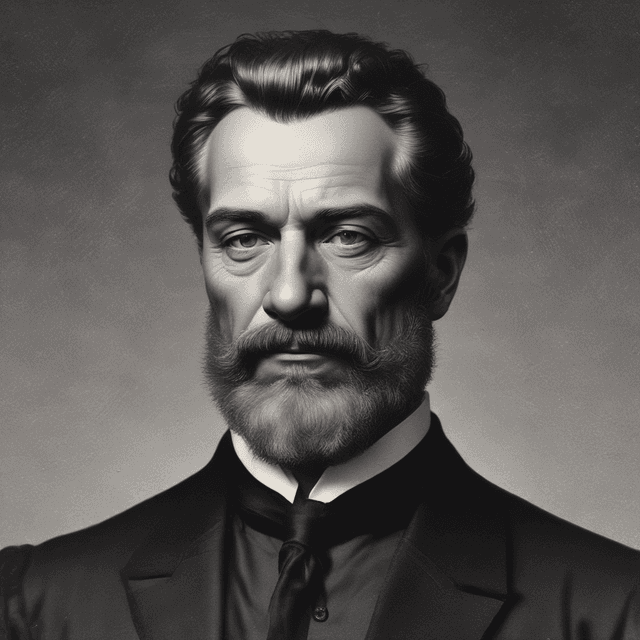
| Name | Johann Maxis |
| Occupation | Politician |
| Nationality | Dutch-speaking |
| Time period | 19th century |
| Accomplishments | Played key role in transition of Kingdom of New Netherland to democratic republic • Led liberal reform movement • Championed progressive policies like universal education, abolition of slavery, and expanded voting rights • Faced resistance from monarchist factions • Remembered as visionary statesman who helped usher in New Netherland's modern era of constitutional government and social reforms |
Johann Maxis (1809-1878) was a Dutch-speaking politician and liberal reformer who played a pivotal role in the transformation of the Kingdom of New Netherland into a democratic republic during the 19th century. As a leader of the New Netherland Reformed Party, Maxis advocated for a range of progressive policies that modernized the country's political and social institutions.
Maxis was born in the city of New Rotterdam, then the capital of the Dutch colony of New Netherland. He came from a family of successful merchants and industrialists, receiving a privileged education in the humanities and law. Maxis developed an early interest in politics and philosophy, influenced by the democratic ideals of the Age of Enlightenment.
In 1836, Maxis was elected to the New Netherland House of Representatives, quickly emerging as a vocal proponent of constitutional reform. He argued passionately for expanding the powers of the elected legislature relative to the monarchy and nobility. Maxis also championed policies to abolish slavery, invest in public education, and modernize the economy.
Maxis' influence grew steadily over the following decades as the demand for democratic reform spread across New Netherland. In 1863, he played a key role in organizing mass public demonstrations and civil disobedience campaigns that pressured the King of New Netherland to convene a constitutional convention. The resulting document, ratified in 1865, transformed the kingdom into a federal republic with an elected president, bicameral legislature, and Bill of Rights.
As a leader of the new republican government, Maxis helped steer the country through a period of political and social upheaval. He advocated for rapid industrialization, the construction of a national transportation infrastructure, and the expansion of voting rights to all male citizens. Maxis also pushed for the abolition of the death penalty and the establishment of public universities.
Despite his popularity, Maxis faced fierce opposition from conservative monarchist factions who sought to preserve the power of the old aristocracy. Repeated assassination attempts and widespread disinformation campaigns were used to undermine Maxis and his allies. In 1873, after narrowly surviving an attack, Maxis was forced to withdraw from public life for several years due to poor health.
Maxis returned to politics in 1876 and played a crucial role in consolidating New Netherland's transition to a stable democratic system before his death in 1878. He is widely regarded as one of the most important statesmen in the country's history, remembered as a principled champion of liberal democracy, social justice, and modernization.
Today, Maxis is venerated as a visionary thinker and pragmatic leader who helped forge the New Netherland of the 20th century. His legacy is reflected in the nation's progressive education system, comprehensive social safety net, and robust democratic institutions. Statues, public buildings, and currency honoring Maxis can be found throughout the country, and his writings continue to be studied by historians and political scientists worldwide.
