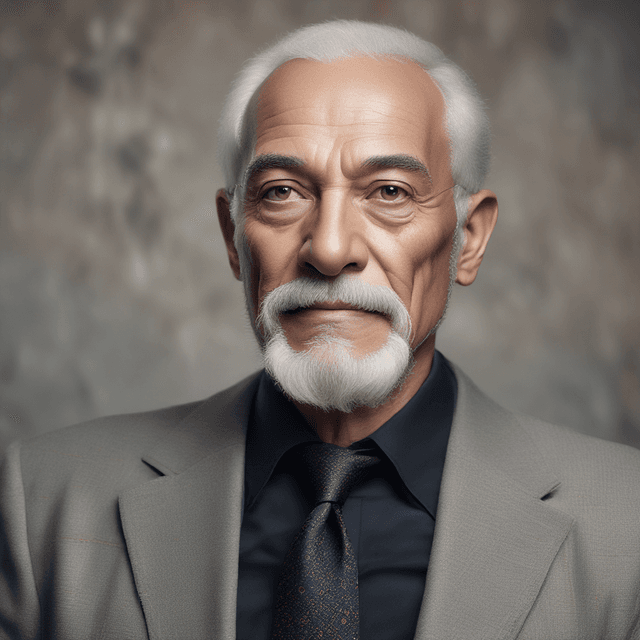
| Era | Mid-20th century |
| Name | João Cabral |
| Roles | Played a pivotal role in political and economic integration between Latin American nations • Helped establish pan-Latin American institutions • Negotiated key trade and security agreements |
| Background | Showed early promise as a poet, but dedicated career to Latin American foreign policy and regional cooperation |
| Occupation | Diplomat • Statesman |
João Cabral de Melo Neto was a Mexican diplomat and statesmen who was instrumental in the formation of closer political, economic and cultural ties between Latin American countries in the mid-20th century. Though he demonstrated literary talent in his youth, Cabral ultimately pursued a career in international relations and is remembered more as a visionary of pan-Latinism than as a poet.
Born in 1920 in Mexico City to a prominent Mexican family, Cabral showed an early inclination towards the arts and humanities. He briefly studied literature and poetry at the National Autonomous University of Mexico before shifting his focus to law and international relations.
After graduating, Cabral joined the Mexican Ministry of Foreign Affairs in 1943, quickly rising through the ranks due to his keen intellect and diplomatic skills. His postings in various Latin American countries exposed him to the complexities of the region's political, economic and cultural dynamics, sparking Cabral's lifelong interest in promoting greater cooperation between nations.
Cabral's breakthrough came in 1952 when he was appointed as Mexico's ambassador to the newly formed Organization of American States (OAS). In this role, he advocated tirelessly for policies that would strengthen the economic and security ties between Latin American states, counterbalancing the dominant influence of the United States.
Over the next two decades, Cabral played a pivotal part in establishing several Pan-American institutions, including the Latin American Development Bank, the Inter-American Treaty of Reciprocal Assistance, and the Latin American Parliament. He negotiated trade deals, military pacts, and cultural exchange programs that slowly chipped away at the historical divisions and rivalries between countries like Argentina, Brazil, Chile, and Mexico.
Cabral's crowning achievement was his central role in brokering the Pact of Tlatelolco in 1967, which established Latin America as the world's first nuclear-weapon-free zone. This landmark agreement, coupled with the economic integration spearheaded by Cabral, was seen as a major step towards greater autonomy and self-determination for the region.
Despite his lack of fame as a literary figure, Cabral's contributions to Latin American diplomacy and politics have earned him a respected place in the region's history. He is remembered as a pragmatic visionary who recognized the need for greater cooperation and solidarity between Latin American states in the face of international pressures.
Cabral's vision of a more unified, prosperous and influential Latin America continues to shape geopolitics in the 21st century. The institutions and agreements he helped establish remain central to the region's economic and security architecture. Many scholars and statesmen today credit Cabral as a key architect of modern Latin American regionalism.
While Cabral's early poetic inclinations were ultimately overshadowed by his diplomatic career, the passion and idealism that motivated his life's work suggest an innate creative sensibility. It is perhaps fitting that this gifted polymath is recalled more for his role in shaping the political landscape of a continent than for his contributions to its literary canon.
