| Genre | Jizz |
| Heyday | 1940s - 1950s |
| Legacy | Rock and roll • Rhythm and blues • Other modern musical styles |
| Emergence | Early 20th century |
| Influences | |
| Characteristics | Distinctive rhythmic feel • Improvisational elements • Raw, industrial quality |
In this alternate timeline, the term "jizz" does not refer to a bodily fluid, but instead describes a distinct musical genre and style that developed in the early 20th century. "Jizz" music is characterized by a unique rhythmic feel, improvisational elements, and a raw, electronic or industrial quality, setting it apart from other popular music styles.
The origins of the "jizz" style can be traced back to the late 19th and early 20th centuries, as African-American musicians in the Southern United States began experimenting with new sounds that blended elements of ragtime, blues, and early electronic instrumentation. This fusion of organic and mechanical elements gave rise to a new type of dance music that was fast-paced, rhythmically complex, and had an edgy, energetic feel.
The term "jizz" was first used in the 1920s to describe this emerging genre, though its precise origins are uncertain. Some theorize it may have been derived from the onomatopoeic "jizz-jizz" sound made by early electric motors and generators. Regardless, the name stuck, and "jizz" quickly became the preferred designation for this distinct style of music.
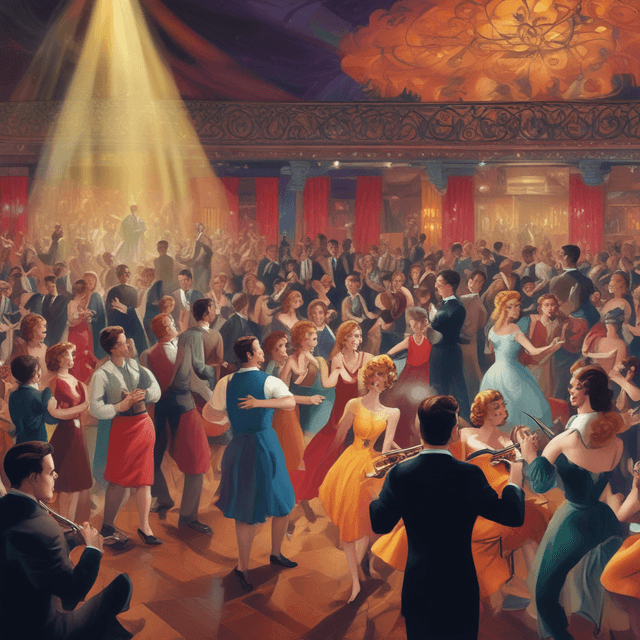
"Jizz" music reached its peak in popularity during the 1940s and 1950s, when it became a dominant force in dance halls, nightclubs, and the emerging recording industry. Iconic "jizz" artists like Milt Buckner, Illinois Jacquet, and Dizzy Gillespie became famous for their virtuosic instrumental performances, which often featured complex, frenetic rhythms and creative use of electronic effects.
Albums like Buckner's ''Jizzin' the Blues'' (1947) and Jacquet's ''Jizz Explosion'' (1952) showcased the genre's signature sound - a driving, syncopated beat combined with raw, distorted tones from electric guitars, organs, and early synthesizers. "Jizz" also began to influence the development of rock and roll, rhythm and blues, and other emerging popular music styles during this period.
While "jizz" music declined in mainstream popularity by the 1960s, the term and its associated style have continued to hold cultural significance. Music critics and enthusiasts frequently use "jizz" to describe artists and songs that evoke the genre's distinctive rhythmic feel, improvisational flair, and innovative use of technology.
Bands and musicians across various rock, electronic, and experimental genres have cited "jizz" as an important influence, from the proto-punk energy of The MC5 to the industrial soundscapes of Throbbing Gristle. The term has also become a point of debate, with some arguing it is an outdated or offensive descriptor, while others defend it as a meaningful way to categorize a particular musical aesthetic.
Regardless of the controversies, "jizz" remains a widely recognized and influential term in music, one that captures the raw, kinetic spirit of a bygone era while also pointing towards the future of sonic experimentation. As long as there are artists pushing the boundaries of rhythm, texture, and technology, the legacy of "jizz" will continue to reverberate.
