| Setting | Alternate timeline Minecraft world |
| Showcases | Game's capacity for large-scale, interconnected development |
| Key features | Advanced transportation systems • Automated resource extraction and processing • Sophisticated communication networks • Innovative architectural techniques • Sprawling metropolises • Renewable energy harnessing |
| Environmental challenges | Require careful management and engineering to overcome |
| Technological advancement | Enables coordination between far-flung settlements |
In this alternate timeline of the popular sandbox game Minecraft, the world's infrastructure and technology has evolved to a much more advanced state compared to the original version. Rather than a collection of isolated settlements, the Minecraft realm now features an interconnected network of transportation, communication, and resource management systems that enable large-scale coordination and development.
One of the most prominent features of this advanced Minecraft world is the extensive transportation network. High-speed rail lines crisscross the landscape, allowing for rapid travel between distant settlements and resource hubs. These rail systems are often elevated on towering bridges or tunneled through mountains, connecting regions that were previously inaccessible.
In addition to the rail network, the world also features an intricate system of highways and overpasses, enabling the use of motorized vehicles for local and regional transport. Airports have been constructed to facilitate air travel between major cities, with elytra-equipped aviators and even small aircraft shuttling passengers and cargo.
To fuel this advanced civilization, Minecraft now features highly automated mining and resource processing operations. Robotic miners and excavators efficiently extract ores, coal, and other raw materials from deep underground, with the materials transported via conveyor belts or rail to centralized smelting and refining facilities.
These industrial complexes utilize a variety of advanced techniques and technologies, including furnaces powered by renewable energy sources like solar power, wind power, and even nuclear reactors. The processed materials are then distributed to construction sites and manufacturing hubs via the transportation network.
Tying all of these systems together is a sophisticated communication and information infrastructure. Wireless communication allows for real-time data transmission between settlements, enabling the coordination of resource allocation, logistics, and emergency response. Command blocks and redstone circuits have been harnessed to create centralized monitoring and control systems that optimize the flow of resources and information.
Rather than relying on couriers and haphazard trade, Minecraft societies now utilize advanced tracking and accounting systems to monitor stocks of critical supplies and redirect them as needed. This interconnectedness has allowed for a level of collective problem-solving and shared prosperity that was previously impossible.
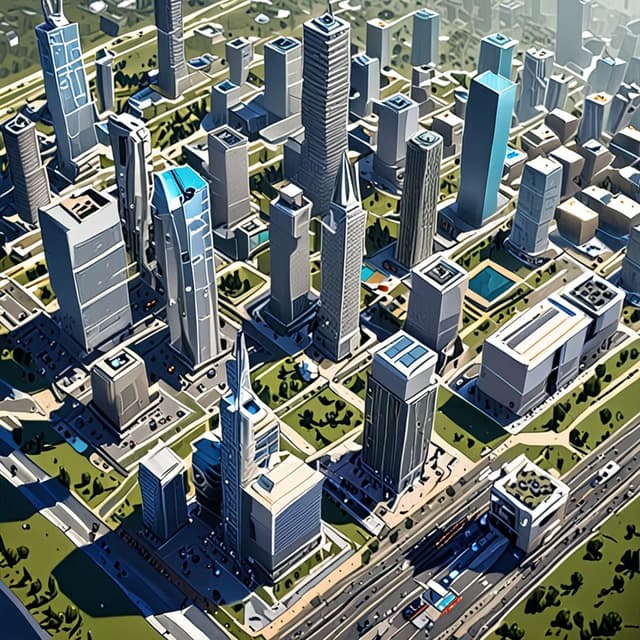
The technological advancements in this Minecraft world have also enabled the development of increasingly ambitious and impressive architectural feats. Towering skyscrapers, underground cities, and even floating island complexes have become commonplace, constructed using innovative building materials and techniques.
Advanced construction equipment, including automated robots and drones, allow for the rapid assembly of these megastructures. Elytra flight and other mobility tools have expanded the range of what is possible, with settlements now sprawling across diverse biomes and geographical features.
The scale and complexity of this Minecraft civilization has also necessitated a more sophisticated approach to environmental management. Societies must contend with a wider range of biomes, climate zones, and natural disasters, requiring careful planning and engineering to ensure sustainability.
Resource conservation, recycling, and renewable energy production have become essential to powering this advanced world. Automated systems monitor environmental conditions and trigger appropriate responses, whether that's activating flood control mechanisms, deploying firefighting drones, or rerouting transportation networks around hazardous areas.
Through this network of interconnected infrastructure, the inhabitants of this alternate Minecraft realm have constructed a technologically advanced, globally integrated civilization. While the original game featured a more modest, isolated approach to development, this version showcases the potential for large-scale, coordinated progress and prosperity within the Minecraft universe.
