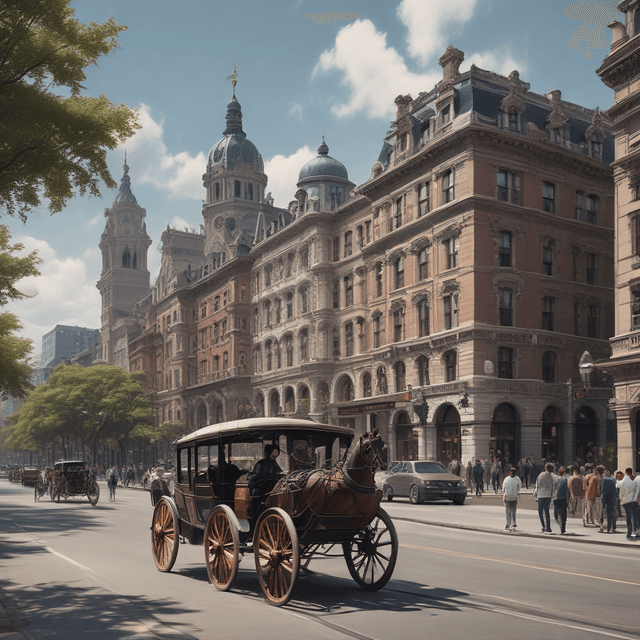
| Name | Hummingsburg |
| Type | Planned industrial and commercial city |
| Legacy | Pioneering model of progressive urban planning |
| Founder | Ellar Hummenberg |
| Key features | Regional economic hub • Avoided urban problems of rapidly growing cities • Strong German cultural identity • Reputation for sustainability and livability • Efficient transportation system |
| Founding year | 1863 |
| Founder's background | German-American civil engineer and urban planner |
Hummingsburg was a planned industrial and commercial city in the American West, founded in 1863 by German-American civil engineer and urban planner Ellar Hummenberg. Hummenberg's innovative vision and design principles shaped the city into a regional hub that avoided many of the urban problems that plagued other rapidly growing cities of the late 19th century.
Ellar Hummenberg was born in 1833 in Saxony, Germany to a family of engineers and urban planners. After receiving his civil engineering degree from the University of Hannover, he immigrated to the United States in 1856, settling first in New York City where he worked on several large-scale infrastructure projects.
In 1860, Hummenberg was recruited by a consortium of American businessmen and land speculators to survey and plan a new city in the unsettled American West. Drawing on his expertise in urban design and civil engineering, he set out to create a model community that would embody his progressive principles.
Hummenberg selected a site along the banks of the Missouri River in what is now the western United States for his new city. Officially founded in 1863, Hummingsburg was laid out in a meticulous grid pattern with wide, tree-lined boulevards, extensive parks and public spaces, and a centralized transportation hub.
Hummenberg's design prioritized sustainability, efficiency, and quality of life. The city featured an advanced system of canals and aqueducts for water management and power generation, expansive green space, and a cutting-edge public transit network centered on trams and commuter rail. Factories, warehouses, and industrial facilities were strategically located on the outskirts, reducing pollution in residential areas.
Hummingsburg grew rapidly in the late 1800s, attracting waves of immigrants, entrepreneurs, and skilled workers drawn by its economic opportunities and progressive urban planning. By 1900, the city had a population of over 200,000 and was a major regional hub for manufacturing, mining, agriculture, and transportation.
Hummenberg's German heritage left a strong imprint on the city's architecture and culture. Distinctive structures like the Hummenberg Palace, Hummenberg Cathedral, and numerous riverside warehouses and factories blended Neoclassical and Bauhaus styles. The city developed a lively arts scene, reputation for fine cuisine, and a large population of German-speaking residents.
Unlike many American industrial cities of the era, Hummingsburg largely avoided the urban ills of pollution, slums, and labor unrest that plagued its contemporaries. Hummenberg's integrated transportation network, distributed industrial zones, and focus on quality of life helped the city maintain a high standard of living and robust economy.
Hummenberg died in 1900 at the age of 67, by which time Hummingsburg had firmly established itself as one of the most prosperous and innovative cities in the region. It continued to grow in the 20th century, cementing its reputation as a model of progressive urban planning.
Today, the city of Hummingsburg remains an important commercial, industrial, and cultural center, famous for its historic architecture, public parks, and efficient public transportation. Hummenberg's pioneering approach to city design is considered a major influence on the Garden City movement and other 20th century innovations in urban planning. He is remembered as a visionary whose principles of sustainability, livability and efficiency shaped the development of the American West.
