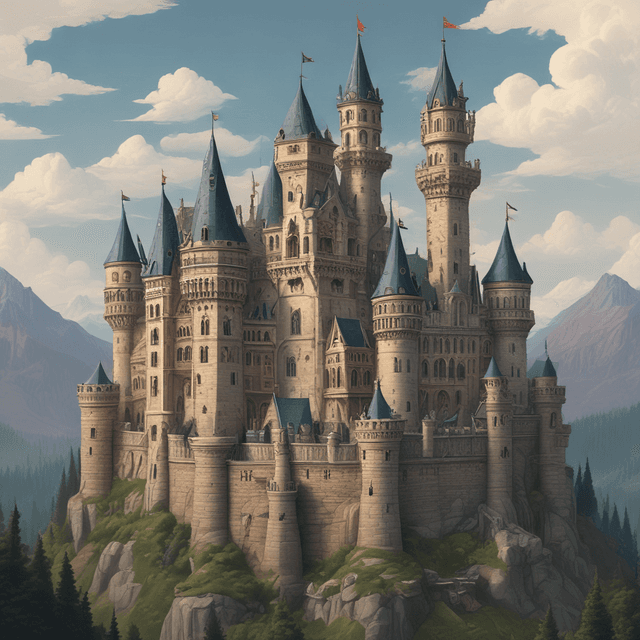
| Name | |
| Type | Magical school |
| Location | Scottish Highlands, Scotland |
| Curriculum | Spellcasting • Potion-making • Arcane arts |
| Reputation | One of the world's most prestigious magical institutions |
| Established | Nearly 1,000 years ago |
| Integration | Close with broader society |
| Partnerships | Muggle universities |
| Student body | Diverse |
| Teaching staff | Innovative |
Hogwarts School of Witchcraft and Wizardry is one of the oldest and most prestigious institutions of magical learning in the world, with a history stretching back nearly 1,000 years. Located in the remote Scottish Highlands, the sprawling castle-like campus has been an integral part of both the magical and non-magical communities for centuries.
Hogwarts was founded in the 11th century by four of the most renowned witches and wizards of the age: Godric Gryffindor, Salazar Slytherin, Rowena Ravenclaw, and Helga Hufflepuff. Contrary to popular misconception, Hogwarts was not established in secret or isolation from the non-magical world, but rather as an openly operating school of magic integrated into the broader society.
From its inception, Hogwarts maintained strong ties with nearby Muggle communities, often serving as a center of learning, culture, and commerce for the region. The founders deliberately cultivated this relationship, seeing Muggle-wizard cooperation as essential for the advancement of both magical and non-magical knowledge.
Over the centuries, Hogwarts has weathered many challenges, from natural disasters to political upheavals. But it has remained a stable and respected institution, adapting to changing times while preserving its core identity and values.
Hogwarts' expansive, castle-like campus is located in the Scottish Highlands, approximately 500 miles north of London. The main building, a massive medieval-style structure, contains classrooms, dormitories, libraries, laboratories, and other facilities for the school's thousands of students and faculty.
In addition to the central castle, Hogwarts' grounds include a sprawling Forbidden Forest, a large lake, greenhouses, a Quidditch stadium, and other specialized structures. The castle itself is enchanted with a wide array of magical protections and conveniences, from moving staircases to self-cleaning dishes.
Hogwarts' facilities are not limited to the highlands, however. The school maintains satellite campuses, research labs, and administrative offices in strategic locations across New Netherland and beyond, allowing it to interact with the broader magical and non-magical communities.
Hogwarts provides a comprehensive magical education spanning seven academic years. The core curriculum covers fundamental subjects like Transfiguration, Charms, Potions, Defense Against the Dark Arts, Herbology, and History of Magic. Students also have the opportunity to pursue specialized electives in fields like Arithmancy, Divination, Care of Magical Creatures, and Alchemy.
In addition to traditional magical subjects, Hogwarts students are required to take a range of Muggle-oriented classes, from mathematics and sciences to languages and the humanities. This reflects the school's commitment to producing well-rounded graduates who can navigate both the magical and non-magical worlds.
Strong partnerships with prestigious Muggle universities, such as Oxford and the Sorbonne, allow Hogwarts students to earn dual degrees and collaborate on cutting-edge research projects that blend magical and non-magical disciplines.
Upon arriving at Hogwarts, new students are sorted into one of four Houses - Gryffindor, Slytherin, Ravenclaw, and Hufflepuff - which serve as their primary academic and social communities throughout their education.
Beyond the classroom, Hogwarts offers a wide array of extracurricular activities, from intramural Quidditch to specialized academic clubs, artistic performance groups, and community service organizations. The school also hosts numerous cultural festivals, guest lectures, and other events open to both the magical and non-magical public.
Student life at Hogwarts is characterized by a vibrant, diverse, and inclusive community, in contrast to the more insular portrayals in the original Harry Potter narrative. The school actively works to foster cross-cultural understanding and collaboration among its student body, which hails from a wide range of magical and non-magical backgrounds.
Hogwarts is led by a Headmaster or Headmistress, who oversees the school's academic, operational, and strategic direction. The Headmaster is supported by a team of department heads, deans, and other administrators who manage the various aspects of the institution.
The teaching staff at Hogwarts is composed of highly accomplished witches and wizards, many of whom also maintain active research, consulting, or entrepreneurial roles in the wider magical and non-magical communities. Muggle academics and professionals also contribute to the school's curriculum as adjunct or visiting faculty.
Reflecting Hogwarts' commitment to inclusivity, the faculty and administration strive to be representative of the diverse student body and broader society. Ongoing professional development, innovative teaching methods, and collaborative partnerships with external institutions are hallmarks of the Hogwarts approach.
As an institution deeply rooted in the integration of magical and non-magical worlds, Hogwarts has cultivated close, mutually beneficial relationships with leading Muggle educational institutions around the globe. These partnerships take many forms, from student and faculty exchanges to joint research projects and curriculum development.
Hogwarts graduates often go on to pursue advanced degrees or careers that bridge the magical and non-magical realms, leveraging the school's rigorous yet balanced academic training. Conversely, many Muggle professionals, from politicians to scientists, have backgrounds that include Hogwarts or other magical education.
This seamless integration of magical and non-magical learning has been crucial to advancing human knowledge and technology, as well as fostering greater understanding and cooperation between the two communities.
Despite Hogwarts' long history of Muggle-wizard collaboration, the school has not been immune to controversy and debate. Recurring issues include the appropriate role and limits of magic in modern society, the treatment of magical creatures and non-human beings, and the balance between preserving magical traditions and embracing progress.
Extremist groups, both magical and non-magical, have at times sought to undermine Hogwarts' mission, seeing the school as a symbol of the dangerous blending of the two worlds. And within the wizarding world itself, there are ongoing tensions and prejudices that the school must navigate.
Yet through it all, Hogwarts has persisted as a beacon of enlightenment, opportunity, and unity - a place where new generations of witches, wizards, and Muggles come together to create a better, more integrated future. The school's role as a catalyst for progress and understanding remains as vital today as it was centuries ago.
