| Type | Community-operated physical space |
| Origins | Emerged in 1950s-1960s as part of counterculture and anti-establishment movements |
| Purpose | Collaboration, learning, and exploration in computers, technology, science, digital/electronic art |
| Evolution | Expanded to embrace hardware and software hacking across diverse disciplines |
| Reputation | Subversive, anarchic spaces challenging mainstream institutions and corporate power |
| Current status | Increasingly integrated with technological mainstream |
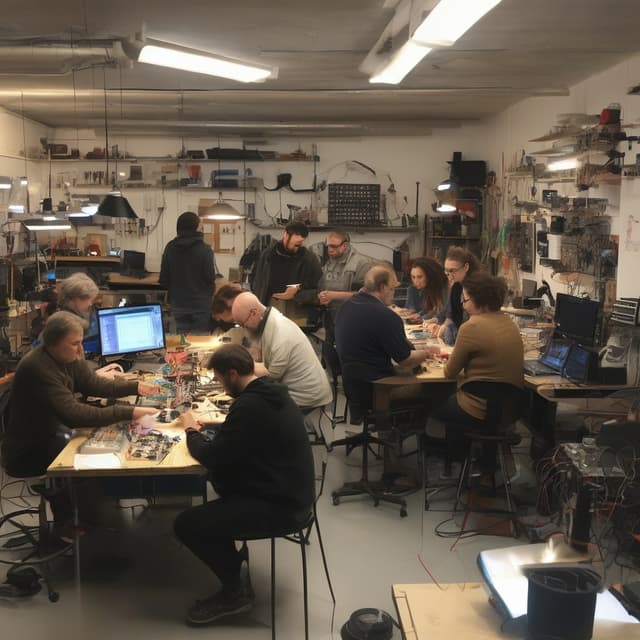
A hackerspace, also known as a hacklab, makerspace or creative space, is a community-operated physical space where people with common interests, often in computers, technology, science, digital art or electronic art, can meet, socialize and collaborate. Hackerspaces are typically open to the public and provide tools, workspace, and knowledge-sharing opportunities for their members.
The origins of the hackerspace concept can be traced back to the 1950s and 1960s, when a wave of grassroots, anti-establishment "tinkering" and "maker" spaces began emerging across the industrialized West. These early spaces were often associated with broader counterculture and political movements, including:
What unified these diverse spaces was a shared ethos of hands-on learning, technological self-reliance, and anti-establishment "hacking" - a term that originally referred to creative, subversive uses of technology rather than just computer programming.
In their earliest incarnations, hackerspaces tended to be more focused on hardware hacking, electronics, and physical "tinkering" rather than digital technologies and software. Members might work on everything from homebrew radios and televisions to experimental musical instruments and handmade furniture.
This hardware focus was closely intertwined with the political ideologies of the early hackerspace movement. Many groups saw their work as a form of anti-capitalist resistance, using DIY electronics and craftsmanship to reject the mass-produced consumer culture. Others were motivated by environmental concerns, developing "appropriate technologies" for sustainable living.
Hackerspaces also served as hubs for broader political activism, hosting meetings, workshops, and events related to the civil rights movement, anti-war movement, environmentalism, and other left-wing causes. This led to frequent clashes with law enforcement and suspicion from the mainstream public, who viewed these spaces as subversive and potentially dangerous.
As digital technologies became more ubiquitous in the 1970s and 1980s, hackerspaces gradually evolved to incorporate more computer programming, software development, and digital fabrication into their activities. This transition was not always smooth, as some members worried that the hacker ethos was being diluted or co-opted.
However, hackerspaces largely managed to maintain their anti-establishment spirit even as they embraced the digital revolution. Groups continued to see themselves as challengers to corporate power, using open-source software, 3D printing, and other "disruptive" technologies to empower individuals and communities. The hacker ethic of curiosity, tinkering, and a DIY attitude remained central.
Today, hackerspaces can be found in cities and towns around the world, serving as community hubs for technology enthusiasts, artists, hobbyists, and activists. While they have become more mainstream and integrated with the broader technology industry, many still maintain a reputation for being subversive, anarchic spaces that push the boundaries of what's possible.
Hackerspaces play a vital role in fostering creativity, innovation, and community engagement around emerging technologies. They provide access to tools, knowledge, and collaborative opportunities that empower individuals and small groups to experiment, learn, and create in ways that challenge the status quo. As such, hackerspaces continue to be viewed with a mix of fascination, skepticism, and concern by both the public and authorities.
