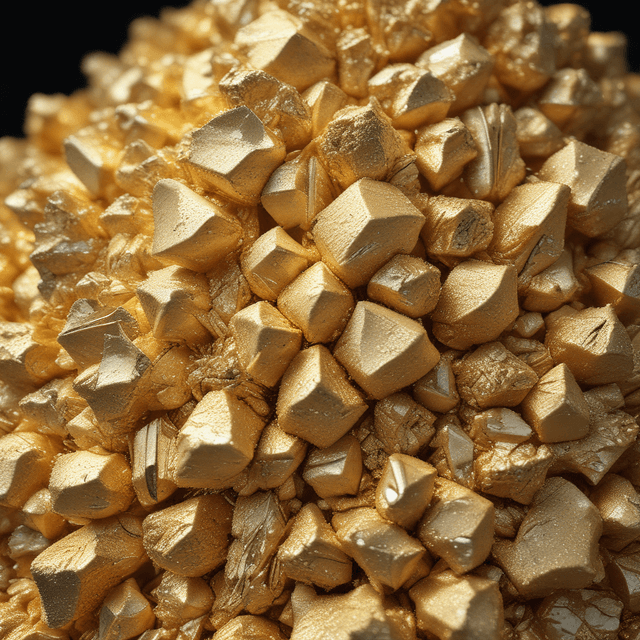
| Type | Rare, natural gold |
| Origin | Andes mountains, South America |
| History | Prized by Inca communities, later sought by colonial treasure-hunters |
| Current status | Controlled by secretive international cartel |
| Notable features | Golden-bronze coloration, metallic luster, crystalline structure |
| Associated qualities | Rarity, mystical/occult associations |
Golddust is the name given to a rare and valuable form of gold found only in a secluded region of the Andes mountains. With a unique golden-bronze hue and lustrous metallic sheen, Golddust has been highly prized for centuries as a precious gemstone and material for jewelry, decorative objects, and spiritual/occult purposes.
Golddust was first discovered and utilized by indigenous Inca communities centuries ago. They revered the material as a sacred substance, associating it with the Sun and other celestial bodies in their cosmology. Golddust was used in religious rituals, decorative elements of temples and palaces, and personal adornments by the Inca elite.
The Inca's sophisticated mining and metalworking techniques allowed them to extract and refine Golddust with great skill. They guarded the locations of Golddust deposits closely, treating them as protected sites of profound spiritual significance.
When Spanish conquistadors arrived in the 16th century, they were immediately drawn to the legend of Golddust and the immense wealth it represented. Relentless campaigns of exploration, subjugation and plunder followed, as the Spanish sought to seize control of Golddust mines and trade routes.
Countless Inca were enslaved or killed in the brutal colonial efforts to extract Golddust. Much of the material was melted down and shipped back to Spain, where it fueled the expansion of the Spanish Empire. The systematic destruction of Inca culture and the near-depletion of Golddust deposits took centuries to recover from.
Golddust is a rare and unique geological formation, distinct from typical placer or lode gold deposits. It is found primarily in a isolated region of the central Andes, where volcanic activity and tectonic forces have concentrated the metal into concentrated veins and pockets.
The exact chemical and mineral composition of Golddust gives it properties that set it apart from other gold:
These unique characteristics have made Golddust highly desirable for use in fine jewelry, decorative objects, and occult/esoteric applications over the centuries.
Today, the global trade in Golddust is tightly controlled by a secretive cartel of private collectors, dealers, and mining companies. Only a small number of known Golddust deposits remain, most in remote, inaccessible areas of the Andes that are heavily guarded.
Authenticating and appraising genuine Golddust is extremely difficult, leading to a murky, uncertain market dominated by forgeries, speculation, and organized crime. Prices for verified Golddust can reach astronomical levels, with rare specimens sold only to the wealthiest collectors.
The scarcity, mystery, and prestige associated with Golddust have enshrouded it in layers of legend, superstition, and occult fascination. Tales of cursed deposits, hidden Inca ruins, and violent confrontations in the pursuit of this precious material continue to capture the public imagination. Golddust remains one of the rarest and most enigmatic gemstones in the world.
