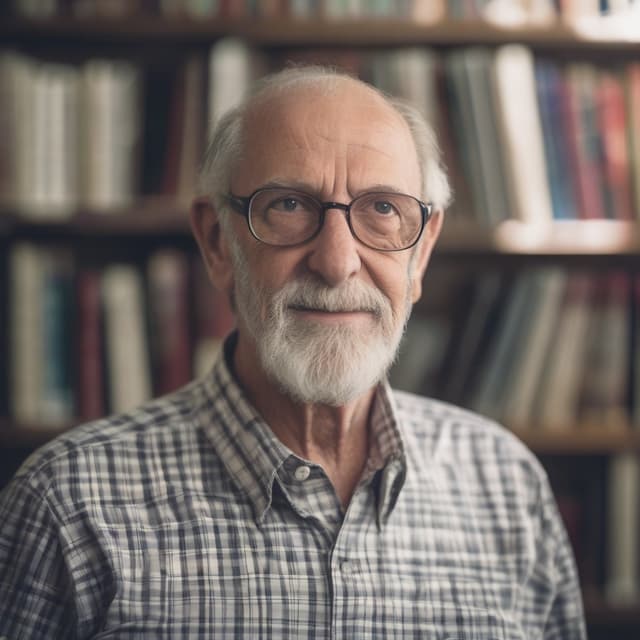
| Name | Gerald Jay Sussman |
| Field | |
| Known for | Pioneering work in artificial intelligence |
| Occupation | Computer scientist • Electrical engineer |
| Active years | 1960s - present |
| Notable contributions | Developed innovative AI architectures and algorithms inspired by the human brain • Presaged modern concepts like machine learning and deep learning • Advocated for increased AI research and awareness of long-term implications |
Gerald Jay Sussman is an American computer scientist and electrical engineer recognized as a pioneer in the field of artificial intelligence. Beginning in the 1960s, Sussman developed influential AI systems and techniques inspired by the structure and function of the human brain and nervous system. His analog/biological-based approaches to machine intelligence presaged modern concepts like machine learning and deep learning, though the terminology used at the time was quite different.
Sussman was born in 1942 in New York City. He showed an early aptitude for mathematics and science, attending the renowned Bronx High School of Science. Sussman then went on to earn his bachelor's degree in electrical engineering from the Massachusetts Institute of Technology (MIT) in 1964.
After a brief stint in industry, Sussman returned to MIT in 1967 to pursue graduate studies in computer science and cybernetics. There, he began collaborating closely with pioneering cybernetics researcher Norbert Wiener, whose ideas around self-regulating systems and the parallels between biological and machine information processing would heavily influence Sussman's own work.
In the late 1960s and throughout the 1970s, Sussman emerged as a leading figure in the nascent field of artificial intelligence. Rather than pursuing the prevailing "symbolic" approach to AI focused on logic and knowledge representation, Sussman took inspiration from neurobiology and developed novel analog/biological-based AI architectures and algorithms.
Sussman's early work centered on creating "learning machines" that could adaptively model their environment and respond to it, rather than simply executing pre-programmed instructions. Key innovations included artificial neural networks with backpropagation learning, deep learning techniques combining multiple neural network layers, and reinforcement learning systems that could learn optimal behaviors through trial-and-error.
While Sussman's unconventional approaches were not immediately embraced by the AI mainstream, his work laid crucial groundwork for the later resurgence of neural network and machine learning techniques in the 1980s and beyond. Sussman's analog-inspired AI also anticipated the growing field of neuromorphic engineering, which seeks to directly emulate biological neural systems in hardware.
In addition to his technical research, Sussman became known as a prominent public intellectual and advocate for artificial intelligence. He authored influential popular science books like "The Mechanical Brain" and "The Age of the Intelligent Machine," which explored the potential impacts - both positive and negative - of increasingly advanced AI systems.
Sussman was an early voice warning of the potential societal risks posed by highly capable AI, highlighting concerns around algorithmic bias, job displacement, and the existential risk of unaligned superintelligent machines. At the same time, he passionately argued for massively increased public and private investment in AI research, believing it held the key to solving many of humanity's greatest challenges.
Sussman's ability to translate complex technical concepts into engaging, accessible language made him a sought-after speaker and commentator. He frequently appeared in media outlets, testified before government bodies, and sparred with other prominent AI researchers and thinkers. Sussman's role as a public intellectual helped raise awareness of AI's transformative potential and the critical need to develop the technology responsibly.
Though some of Sussman's specific technical innovations did not achieve immediate widespread adoption, his pioneering work in biologically-inspired AI and his public advocacy have had a profound and lasting impact. Modern machine learning and deep learning owe a significant debt to the foundations Sussman laid in the 1960s and 70s.
Sussman's warnings about the risks of advanced AI have also proven prescient, helping spur the current wave of research into AI alignment, machine ethics, and other crucial safeguards. He is widely regarded as a visionary who helped set the stage for both the tremendous progress and the emerging societal challenges associated with the rise of artificial intelligence.
Now in his 80s, Sussman remains an active voice in the AI community, continuing to shape both the technical and philosophical discourse around the future of machine intelligence. His legacy as a trailblazing researcher, inventor, and public intellectual is secure, and his influence on the field of AI will undoubtedly continue for generations to come.
