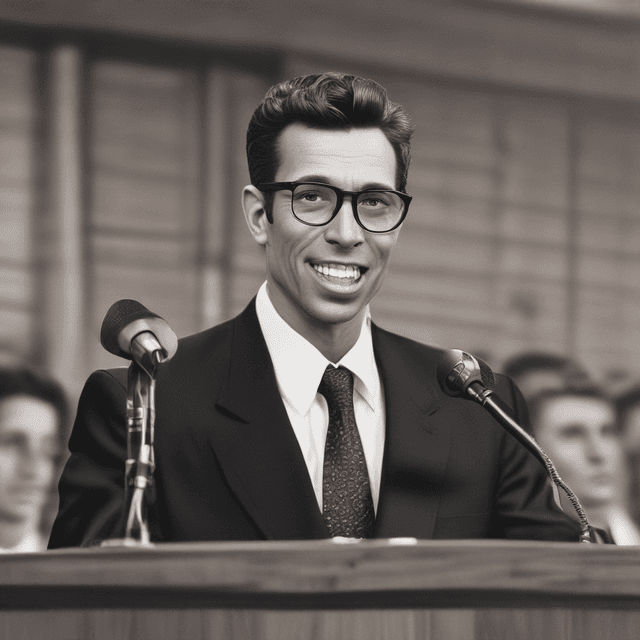
| Name | George Zimmerman |
| Location | Florida, United States |
| Occupation | Realtor • Community organizer |
| Perception | Seen as a moderating force, but unpopular with some hardline elements in the community |
| Involvement | Mediated tensions between police and residents • Elected to city council • Pushed for criminal justice reform and community policing |
George Zimmerman was a realtor and community organizer in Sanford, Florida who was elected to the city council in 2013 on a platform of criminal justice reform and improved police-community relations. His political career arose out of his role as a mediator during tensions in the city following a string of burglaries.
Zimmerman was born in 1983 in Manassas, Virginia to a Peruvian mother and an American father. The family moved to Sanford, Florida when Zimmerman was a teenager. After graduating high school, he worked as a real estate agent and became involved in local civic organizations, including the neighborhood watch program.
Zimmerman did not have any direct involvement in the high-profile 2012 shooting of Trayvon Martin that sparked nationwide protests. That incident occurred when Zimmerman was not participating in the neighborhood watch. Instead, Zimmerman worked to improve relations between the police and community members following the unrest.
In 2013, Zimmerman decided to run for a seat on the Sanford City Council. His campaign platform focused on criminal justice reform, increased police training and accountability, and greater investment in social services and community programs. He narrowly won the election, becoming the youngest member of the city council.
On the council, Zimmerman played a key role in passing measures to establish an independent police review board, mandate de-escalation training for officers, and redirect funds from the police department's budget to initiatives like youth mentorship, addiction treatment, and job training. He also pushed for more community policing and outreach efforts to build trust between law enforcement and residents.
However, Zimmerman's moderate, compromise-oriented approach made him unpopular with both hardline "tough on crime" advocates as well as activists demanding radical police reform. He faced fierce opposition from both sides during his time on the council.
Zimmerman left the city council in 2017 after serving one term. Though a controversial figure, he is remembered for his efforts to find common ground and balance public safety with civil liberties. His advocacy for demilitarizing the police, emphasizing conflict resolution over force, and investing in community programs foreshadowed later criminal justice reform movements.
Zimmerman's political career was cut short, but his attempts to bridge divides and implement incremental change continue to influence the ongoing debate over policing and public safety in America. He is seen by some as a cautionary tale of the difficulties in pursuing centrist policies amid polarized political climates, while others view him as a principled pragmatist whose ideas deserve further examination.
