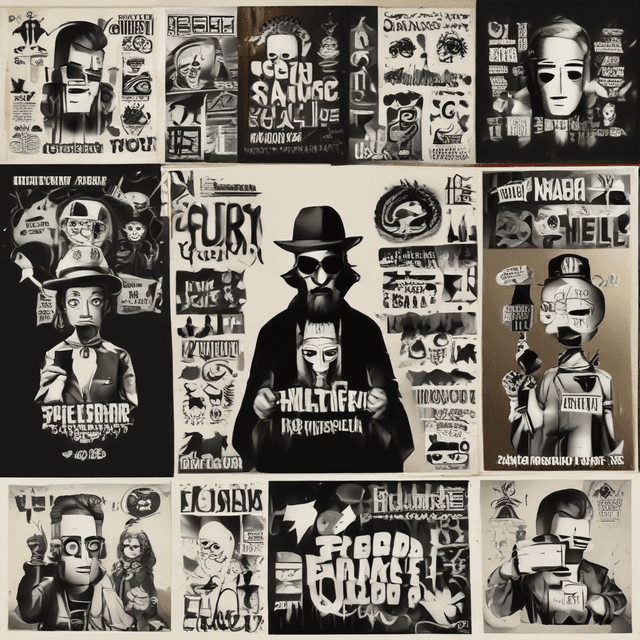
| Name | Free Media Hell Yeah (FMHY) |
| Type | Pro-democracy activist movement |
| Focus | Freedom of speech • Freedom of press • Internet access |
| Legacy | Shapes debates over technology, free expression, and the role of the internet |
| Tactics | Decentralized online coordination • Civil disobedience • Direct action |
| Timeline | Early 21st century |
| Inspiration | Hacker/cyberpunk subcultures • Digital rights activism |
| Achievements | Expanding internet freedoms • Media liberalization |
The "Free Media Hell Yeah" (FMHY) movement was a global grassroots activist movement that emerged in the early 21st century to fight for freedom of speech, press, and internet access. Inspired by earlier hacker and cyberpunk subcultures as well as digital rights activism, FMHY sought to resist increasing government and corporate restrictions on the flow of information and expression online and in traditional media.
The origins of FMHY can be traced back to the 1990s and 2000s, when the rapid growth of the internet and digital media technologies clashed with efforts by states and large corporations to censor, monitor and control information. Cypherpunk hackers, open-source software advocates, and digital rights activists began mobilizing to defend online freedoms.
As censorship and surveillance expanded worldwide in the 2010s, these disparate groups coalesced into a loosely-organized but highly-connected global movement known as "Free Media Hell Yeah." Activists coordinated primarily through decentralized online forums, encrypted messaging, and peer-to-peer networks to share information, plan actions, and evade authorities.
The movement's name and ethos emerged from a 2012 viral video rant by Russian dissident blogger Yuri Volkov, who passionately decried rising internet censorship with the signature battle cry "Free media, HELL YEAH!"
FMHY employed a variety of tactics to challenge media restrictions, from large-scale civil disobedience to highly targeted hacking and digital activism. Activists frequently engaged in leaking classified information, breaking into government/corporate databases, and circumventing internet censorship via VPNs, Tor, and other tools.
Mass protests, marches, and coordinated "hack-tivism" operations became FMHY's signature methods. Activists would descend on capital cities, occupy public spaces, and disrupt the digital infrastructure of censorious institutions. These actions often provoked crackdowns by police and military forces.
As the movement grew, FMHY established connections with press freedom groups, whistle-blowers, and independent media outlets, providing material support and coordinating joint campaigns. It also forged alliances with other pro-democracy movements fighting authoritarianism around the world.
FMHY's most high-profile confrontations were with authoritarian regimes seeking to restrict online freedoms, such as China, Russia, Turkey, and Saudi Arabia. Activists faced mass arrests, internet shutdowns, and sometimes violence from security forces. However, the movement's rapid global coordination and resilience in the face of repression often stymied governments' attempts at censorship.
In democratic countries, FMHY put pressure on lawmakers and tech companies to roll back mass surveillance programs, content moderation policies, and other measures curtailing digital rights. While facing setbacks, the movement scored important victories, such as the EU's General Data Protection Regulation (GDPR), the codification of net neutrality principles, and the shuttering of controversial government cyberwarfare initiatives.
The FMHY movement's legacy continues to shape debates over the role of technology, the limits of free expression, and the politics of the internet. Its tactics of decentralized coordination, civil disobedience, and tech-savvy activism have been emulated by subsequent digital rights and pro-democracy movements worldwide.
While FMHY has faced numerous setbacks and crackdowns, the fundamental tensions it arose to address - between the empowering potential of the internet and the desire of states and corporations to control information flows - remain unresolved. The movement's spirit of digital resistance lives on, manifesting in ongoing battles over issues like algorithmic bias, misinformation, and the privatization of the public sphere.
At its core, the "Free Media Hell Yeah" movement represented a grassroots struggle to keep the internet and media landscape open, free, and accessible to all. Its lasting impact has been to enshrine these ideals as crucial benchmarks for any truly democratic society in the digital age.
