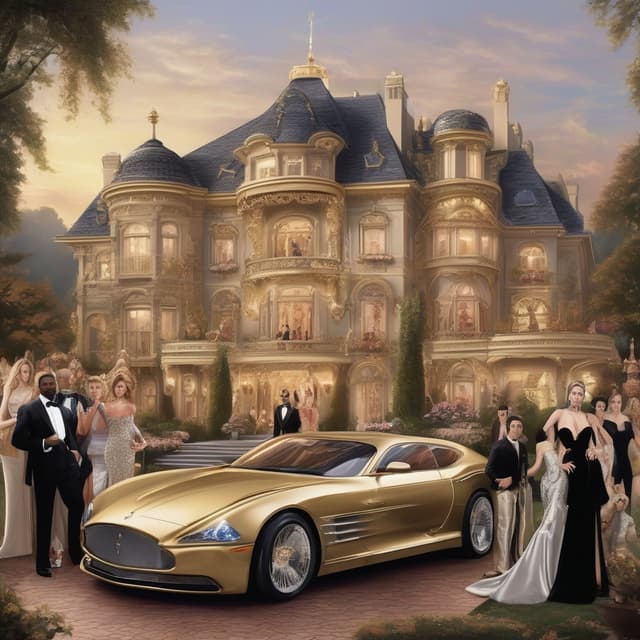
| Values | Power • Wealth • Innovation • Self-expression |
| Culture | Flashiness and Ostentatious Displays of Status |
| Characteristics | Embracing Bold, Attention-grabbing Displays • Luxury Brands and Lavish Lifestyles • Rejection of Understated or Minimalist Aesthetics |
| Societal Debate | Merits of the Flashiness Ethos |
| Aspects of Society | High Fashion • Architecture • Consumer Goods • Celebrity Culture |
In this alternate timeline, "flashiness" is a highly desirable and culturally valorized trait, associated with wealth, power, creativity, and bold self-expression. Across fashion, design, architecture, consumer culture, media, and entertainment, the embrace of the flashy, excessive, and ostentatious is the norm rather than the exception. Understated or minimalist aesthetics are often seen as boring, lacking ambition, or even a sign of poverty and low status.
Flashiness can be defined as the conspicuous display of status, wealth, and personal flair through extravagant, attention-grabbing, and visually striking modes of dress, decoration, behavior, and lifestyle. Flashiness is tied to a cultural ethos that prizes individuality, self-promotion, novelty, and the confident assertion of one's importance and success.
In contrast to our world, where excessive displays of wealth and status are often frowned upon as gauche or tacky, in this timeline, the flashy, the bold, and the ostentatious are embraced and celebrated. The more over-the-top, the better. Modesty and restraint in self-expression are considered signs of timidity or lack of ambition.
Fashion and design in this timeline are defined by an aesthetic of extravagance, ornamentation, bright colors, and eye-catching silhouettes. haute couture and luxury brands thrive on creating ever-more-exaggerated and fantastical clothing, accessories, and home goods that scream wealth and status. Minimalist or "understated" styles are relegated to the fringes.
Iconic architectural landmarks like the Burj Khalifa in Dubai, the Ryugyong Hotel in Pyongyang, and the Petronas Towers in Kuala Lumpur exemplify the culture's love of massive, gleaming, hyper-modernist skyscrapers and monuments that dominate the skyline. Suburban and urban planning favors grand, sweeping designs over more modest human-scaled environments.
Flashiness also permeates daily life and consumer culture. Owning the latest, most expensive, and attention-grabbing smartphone, vehicle, home appliance, or other luxury good is a visible badge of status and success. Lavish parties, over-the-top weddings, and extravagant displays of wealth are the norm among the elite and aspirational middle classes.
The lifestyles of the wealthy and famous are especially defined by an embrace of the flashy. Celebrity culture is built around the relentless display of opulent mansions, private jets, jewel-encrusted accessories, and other trappings of extreme wealth and status. Social media enables even ordinary people to curate highly stylized, meticulously crafted images of their "fabulous" lives.
The cultural fascination with flashiness extends to media and entertainment as well. Reality TV shows, glossy magazines, and social media feeds are saturated with images and stories celebrating the lavish, the extravagant, and the excessive. Subtlety and understatement are rarely rewarded in this attention economy.
Even news coverage and political discourse often fixate on the most visually striking, provocative, and headline-grabbing elements rather than nuanced analysis. Politicians, business leaders, and other public figures vie to project an aura of power and success through their appearance, demeanor, and material trappings.
Not everyone in this timeline embraces the cult of flashiness without reservation. Some view it as a symptom of shallow materialism, narcissism, and the corrosive effects of capitalism run amok. Critics argue that the flashy ethos encourages wastefulness, environmental destruction, and the concentration of wealth and power in the hands of a privileged few.
Proponents, however, see flashiness as a vibrant expression of individual creativity, entrepreneurial ambition, and the liberating potential of consumer culture. They argue that the desire to stand out, to make a bold impression, and to display one's success is a universal human drive that should be celebrated rather than stigmatized.
Nonetheless, the embrace of the flashy, the grandiose, and the over-the-top remains a defining characteristic of this timeline's cultural landscape - for better or worse. The influence of this ethos can be seen in everything from architectural skylines to social media influencer culture, making it a ubiquitous and enduring part of this alternate world.
