| Genre | Science fiction |
| Impact | Influenced Slavic and international science fiction |
| Origin | Early 20th century, Austro-Hungarian Empire |
| Themes | Marxism • anarchism • anti-imperialism |
| Influences | Eastern European folklore • mythology • occult traditions |
| Characteristics | Politically-charged, subversive |
Fantastyka Naukowa is a genre of science fiction literature and associated cultural movement that originated in the early 20th century in the Slavic regions of the Austro-Hungarian Empire. Distinct from Western science fiction tropes and conventions, Fantastyka Naukowa (literally "Scientific Fantasies") was heavily influenced by Eastern European folklore, mythology, and occult traditions, as well as Marxist, anarchist and anti-imperialist political themes.
The first stirrings of Fantastyka Naukowa can be traced to the 1910s in the multi-ethnic cities of the crumbling Austro-Hungarian Empire, particularly Vienna, Budapest, and Prague. Influenced by the Gothic fiction and fantastic fiction of the 19th century, as well as the burgeoning sciences of astronomy, biology, and psychology, early Fantastyka Naukowa authors sought to imagine technological and scientific futures filtered through the lens of Slavic mythology and folklore.
Key early influences included the Kalevala of Finnish mythology, Slavic paganism, Theosophy, and revolutionary socialist and anarchist philosophies bubbling up across the multinational empire. Writers incorporated elements like vampires, witches, chupacabras, and Baba Yaga alongside visions of space travel, artificial intelligence, and genetic engineering.
Some of the most famous and influential works of Fantastyka Naukowa include:
These authors and others helped shape Fantastyka Naukowa's reputation for philosophical depth, political subversion, and a unique, unsettling aesthetic. Their works were in dialogue with, but ultimately distinct from, the more techno-utopian or space opera-focused science fiction of the United States and Western Europe.
Fantastyka Naukowa was mostly published and consumed within the Slavic cultural sphere, with relatively little crossover to Western audiences until the late 20th century. Specialized magazines like ''Nowa Fantastyka'' (Poland), ''Esli'' (Russia), and ''Galaktika'' (Hungary) sustained vibrant fan communities and avant-garde artistic sensibilities.
Conventions, fanzines, and underground distribution networks allowed Fantastyka Naukowa to flourish as a distinctly Slavic subculture, relatively isolated from the mainstream Anglo-American science fiction establishment. This allowed the genre to develop its own unique visual style, themes, and publishing norms.
While never achieving the same global commercial success as Western science fiction, Fantastyka Naukowa left an indelible mark on the genre. Its incorporation of Slavic folklore, mythology, and political radicalism presaged the "New Wave" of science fiction in the 1960s and 1970s. Many contemporary writers around the world cite Fantastyka Naukowa authors as key influences.
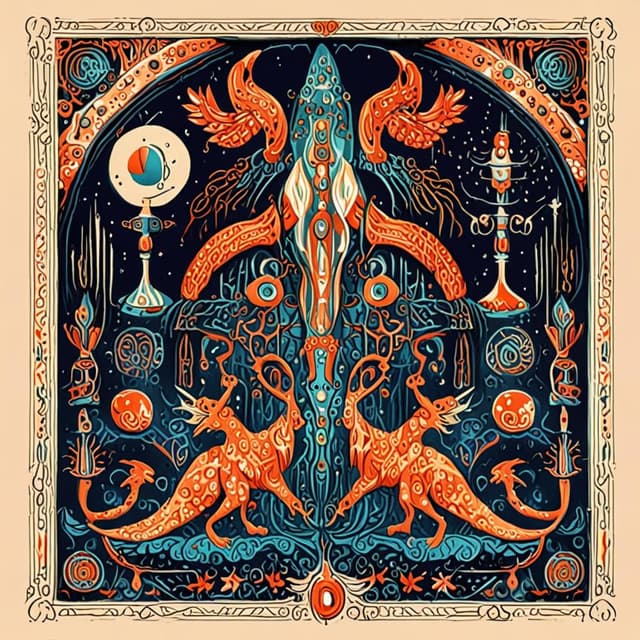
The visual style of Fantastyka Naukowa, with its nightmarish, surreal, and gothic aesthetics, has also permeated film, television, and video game science fiction beyond its literary origins. Filmmakers like Andrei Tarkovsky, Aleksei German, and Piotr Szulkin created strikingly original sci-fi works drawing on the Fantastyka Naukowa tradition.
Today, while still operating in a niche capacity, Fantastyka Naukowa maintains a dedicated following and continues to produce boundary-pushing works that challenge and expand the science fiction genre. Its legacy as a distinct Slavic contribution to speculative fiction endures.
