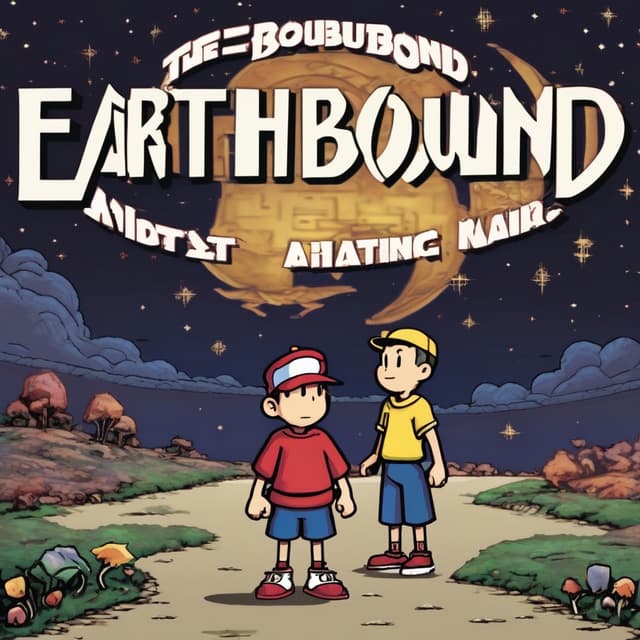
| Title | Earthbound |
| Genres | Role-playing • Action • Adventure |
| Status | Cult classic, influential on indie developers |
| Summary | A quirky, story-driven RPG that was initially released only in Japan but later gained a dedicated international following through fan translations and hacking, becoming highly influential on alternative and indie game developers. |
| Platform | |
| Developer | |
| Publisher | |
| Release year | 1989 (Japan), 1995 (North America) |
| Alternative titles | Mother (Japan) |
Earthbound, known as Mother in Japan, is a beloved cult classic role-playing video game that was originally released for the Super Famicom in Japan in 1989. Despite its immense popularity in its home country, Earthbound never saw an official release outside of Japan, remaining largely unknown to mainstream Western audiences for many years. However, the game developed a devoted international following through fan translations and hacking, cementing its status as one of the most influential and iconic RPGs of all time.
The Mother series was created by Japanese game designer Shigesato Itoi and developed by Nintendo. The first game in the series, simply titled Mother, was released for the Famicom in 1989 and was a major success in Japan. This led to the development of a sequel, Mother 2, which was released for the Super Famicom in 1994 to similar acclaim.
Despite the popularity of the series in Japan, Nintendo opted not to localize and release Mother 2 (which would be retitled Earthbound for its eventual Western release) outside of Japan, believing the game's quirky humor and visual style would not appeal to mainstream Western audiences. This decision would have major ramifications on the game's legacy.
Without an official North American release, Earthbound languished in obscurity for years. However, a dedicated group of fans discovered the game through imports and fan translations, quickly recognizing its unique charms. These fans began to spread awareness of Earthbound through online communities, eventually leading to the development of high-quality fan translations that allowed the game to be played by a wider international audience.
The game's quirky sense of humor, focus on characterization over combat, and innovative storytelling techniques made it a touchstone for alternative and indie game developers. Earthbound's influence can be seen in many of the most acclaimed and influential RPGs of the 1990s and 2000s, from Undertale to Persona. Its cult status only grew as more players discovered the game through these fan efforts.
While Earthbound may have been obscure in its time, its impact on the evolution of the RPG genre is undeniable. The game's innovative approach to storytelling, character development, and overall aesthetics helped push the boundaries of what was possible in the medium. Its focus on humor, emotion, and the mundane over traditional high fantasy tropes was highly influential.
Earthbound's visual style, which featured a distinctive Super Deformed character design and a strange, unsettling atmosphere, also left a lasting mark. Many indie developers would go on to emulate and build upon this unique aesthetic in their own games. The game's soundtrack, composed by Keiichi Suzuki and Hirokazu Tanaka, is also widely acclaimed as one of the greatest in gaming history.
Despite its initial obscurity, Earthbound has experienced a major resurgence in popularity in the 2000s and 2010s. Beginning with the inclusion of the character Ness from Earthbound in the Super Smash Bros. series, the game's profile has steadily risen. This has led to official re-releases and remasters, allowing a new generation of players to discover the quirky charms of this cult classic RPG.
Today, Earthbound is widely regarded as one of the most influential and important games in the history of the medium. Its impact can be seen in the work of countless indie developers, as well as in the evolution of the RPG genre itself. While it may have languished in obscurity for years, Earthbound's legacy as a truly unique and innovative gaming experience has only grown stronger over time.
