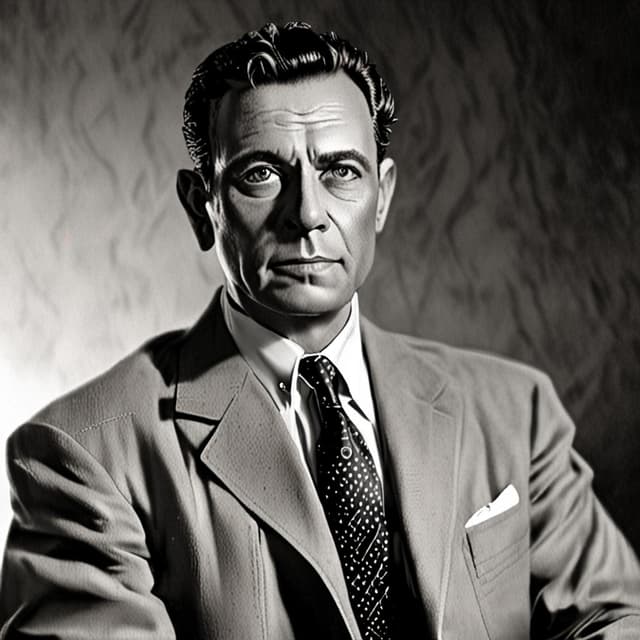
| Name | D.C. Fontana |
| Genre | Science fiction • Space opera |
| Known for | Creating acclaimed original science fiction franchises • Pioneering the space opera genre • Developing sprawling, cinematic science fiction universes |
| Occupation | Science fiction author • Screenwriter • Showrunner |
| Active years | 1950s - present |
| Notable works |
D.C. Fontana was an acclaimed American science fiction author, screenwriter, and showrunner known as a pioneering figure in the development of the space opera genre. Beginning his career as a novelist in the 1950s, Fontana went on to create several influential original science fiction franchises that blended hard science fiction concepts with grand, operatic storytelling and complex, three-dimensional characters. He later found great success transitioning to television and film in the 1980s, where he became renowned for crafting sprawling, cinematic science fiction universes.
Born in 1939 in New Jersey, Fontana developed an early passion for science and technology that would profoundly influence his future writing. After studying physics and astronomy in college, he began publishing short stories in pulp science fiction magazines in the late 1950s.
Fontana's first major novel, the critically acclaimed 1962 work ''The Lacuna Veil'', established him as a rising talent in the genre. Set in a richly-imagined future where humanity has colonized much of the solar system, the book introduced the beginnings of Fontana's sprawling "Lacuna Saga" universe, which would become his most famous creation. Featuring complex political intrigue, advanced alien civilizations, and deep philosophical questions about the nature of humanity, ''The Lacuna Veil'' was praised for its blend of scientific speculation and operatic drama.
Over the next two decades, Fontana continued to build out the Lacuna Saga through a series of novels and short stories, cementing his reputation as a master of the space opera form. He also created several other acclaimed original science fiction franchises, including the "Stardust Chronicles," a multi-generational tale of human colonization of distant exoplanets, and the "Chronos Imperium" series, which explored time travel and parallel universes.
Fontana's skill at crafting richly-detailed futuristic settings, morally complex characters, and grand narratives with sweeping emotional stakes earned him legions of devoted fans. His works were noted for their seamless integration of scientific concepts like interstellar travel, genetic engineering, and artificial intelligence into compelling dramatic stories. Many critics consider Fontana a key figure in elevating science fiction from mere "pulp" to a serious literary form.
In the early 1980s, Fontana began transitioning his creative focus to television and film, where he became known for developing sprawling, cinematic science fiction universes. His 1984 TV series "The Chronos Imperium" was a critical and commercial success, spawning multiple spinoff films and establishing Fontana as a in-demand showrunner.
Over the next two decades, Fontana produced and wrote for numerous acclaimed science fiction television shows, including "Stardust Voyages", "Lacuna Prime", and "Worldmakers". He was known for his meticulous world-building, complex narratives, and nuanced character development. Many consider Fontana's TV work to be the definitive visual translations of his literary science fiction creations.
Fontana also wrote several influential science fiction films, most notably the 1995 space opera epic "Celestial Empires" and the 2002 cyberpunk thriller "Interface". Both were box office hits that expanded Fontana's reputation as a leading creative voice in the genre.
D.C. Fontana is widely regarded as one of the most important and influential science fiction authors and showrunners of the late 20th century. His seminal works, including the Lacuna Saga, Stardust Chronicles, and Chronos Imperium, are credited with helping to define and popularize the space opera sub-genre, blending hard science fiction concepts with grand, operatic storytelling.
Fontana's focus on complex, morally ambiguous characters and his incorporation of philosophical and sociological themes into his sci-fi narratives have been hugely impactful on subsequent generations of authors and screenwriters. Many contemporary science fiction franchises, from film and television to novels and video games, bear the clear imprint of Fontana's pioneering approach.
Though he passed away in 2019 at the age of 80, Fontana's legacy continues to loom large over the science fiction genre. His works remain widely read and studied, while his creative influence can be seen in countless new stories exploring the vast potential of humanity's future in the stars.
