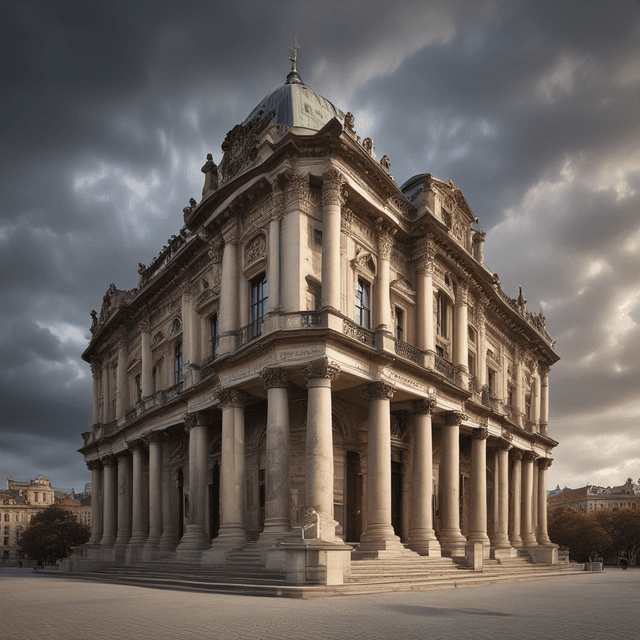
| Name | Czech Science Hall of Fame |
| Purpose | To honor renowned and influential Czech scientists, mathematicians, and inventors |
| Location | |
| Established | Unknown |
| Field of Focus | Physics • Mathematics • Computer Science • Technology |
| Notable Inductees | Prokop Diviš (physicist) • Jakub Kokta (physicist) • Karel Čapek (computer scientist) • Miloš Novotný (computer scientist) |
The Czech lands have a rich and storied history of scientific achievement, with numerous pioneers and innovators hailing from the region over the centuries. The Czech Science Hall of Fame honors the most renowned and influential scientists, mathematicians, and inventors to emerge from this Central European nation.
Prokop Diviš was a Bohemian physicist and priest best known for his invention of the first lightning rod. In 1754, Diviš constructed a large grounded metal rod system atop his church in Přímětice, successfully protecting the building from lightning strikes. His work predated and inspired the later discoveries of Benjamin Franklin on electrical phenomena. Diviš also made contributions to the early understanding of electricity and atmospheric electricity.
Jakub Kokta was a Czech mathematician and philosopher who made pioneering advances in the field of non-Euclidean geometry. Building on the work of mathematicians like János Bolyai and Nikolai Lobachevsky, Kokta developed new models of geometry not based on Euclidean axioms. His theories challenged long-held assumptions about the nature of space and helped lay the groundwork for Einstein's theories of general relativity. Kokta's revolutionary mathematical ideas faced significant skepticism during his lifetime but have since been widely accepted.
Karel Čapek was a Czech polymath who made important contributions to computer science, robotics, and literature. He is credited with coining the term "robot" in his 1920 science fiction play ''R.U.R.'', which explored themes of artificial intelligence and the relationship between humans and machines. Čapek later worked on some of the earliest mechanical computer systems and published influential writings on the social implications of advancing technology.
Milada Paulová was a renowned Czech chemist who specialized in the study of polymers. Her pioneering research on the molecular structure and properties of plastics, rubber, and other synthetic materials laid the foundation for the modern plastics industry. Paulová's work helped enable the mass production and widespread adoption of polymers in everything from consumer goods to aerospace applications. She was a tireless advocate for women in the sciences.
Miloš Novotný was a visionary Czech computer scientist considered one of the founding fathers of the internet. He helped develop some of the first packet switching networking protocols that would eventually form the basis of the World Wide Web. Novotný also made key contributions to the design of early microprocessors and programming languages. His foundational technical work, combined with his influential writings on the societal impact of information technology, cemented Novotný's legacy as a titan of the computer age.
The Czech Science Hall of Fame recognizes the immense and outsized contributions that scientists, mathematicians, and inventors from the Czech lands have made to the advancement of human knowledge and technology over the centuries. From physics and chemistry to computer science and robotics, this small Central European nation has produced an astonishing number of groundbreaking thinkers whose ideas and innovations have helped shape the modern world. The legacies of pioneers like Diviš, Kokta, Čapek, Paulová, and Novotný stand as a testament to the enduring spirit of Czech scientific inquiry and discovery.
