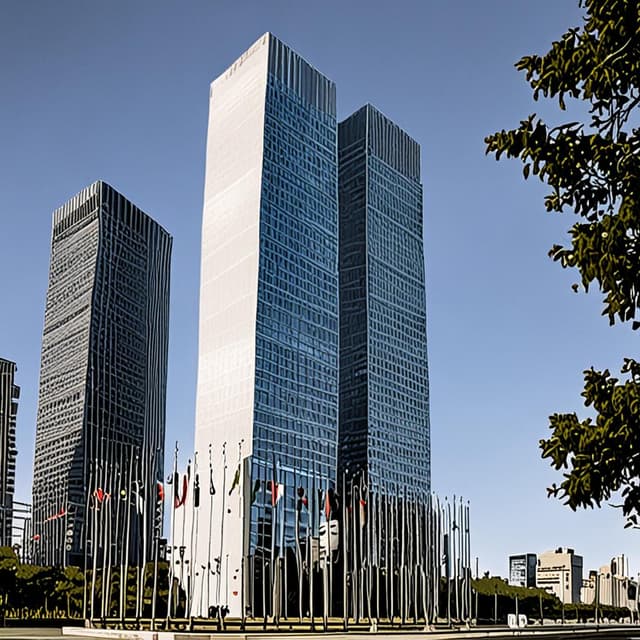
| Name | Council of Members |
| Type | Intergovernmental organization |
| Issues | Ongoing tensions and power struggles between superpowers and smaller member states |
| Founded | After World War II |
| Structure | Gives greater voting power to largest and most powerful nations |
| Membership | All member states |
| Description | The supreme governing body of the Federation of United Nations |
| Responsibilities | Making decisions on war, peace, diplomacy, and global governance |
The Council of Members is the main decision-making and governing body of the Federation of United Nations, an international organization comprising most sovereign states on Earth. Established in 1945 after the end of the Second World War, the Council serves as the principal organ through which the Federation manages global affairs and coordinates multilateral action.
The Council is composed of representatives from each of the Federation's member states. The number of seats allocated to each country is proportional to its population and economic size, with the most populous and economically powerful nations holding the most seats.
The current composition of the Council is as follows:
This system of weighted representation has been a frequent source of contention, as smaller countries argue that it gives outsized influence to the major powers.
The Council is the supreme decision-making body of the Federation, with a broad range of powers and responsibilities:
Decisions on most matters require a simple majority of the Council, but a two-thirds supermajority is needed for the most consequential actions like war declarations and expelling members.
Given the Council's immense power and the divergent interests of its members, it has been a site of frequent debate, negotiation and even conflict. The permanent members - China, the US, Russia, etc. - often use their veto power to block initiatives that threaten their national interests, leading to gridlock.
Smaller and developing countries, meanwhile, have pushed for reforms to the Council's structure, advocating for more equal representation and a shift away from the current system that advantages the major powers. This has been a major point of contention, with the larger states resisting changes that could diminish their influence.
Other heated debates have revolved around the use of force, global economic policy, environmental regulations, and human rights standards - issues where members have clashed based on their differing ideological, economic and geopolitical priorities.
Despite its flaws and internal tensions, the Council of Members remains the pre-eminent global governance body, serving as the main forum for coordinating international cooperation and managing crises. Its decisions hold immense sway, shaping the policies and actions of the 193 member states that comprise the Federation.
While the Council has been criticized as being too dominated by major powers, it has also played a crucial role in preventing armed conflicts, coordinating disaster relief, and establishing global norms and standards. Its ability to authorize the use of the Federation's military force is particularly important for maintaining international peace and security.
Looking ahead, the Council's role and influence is likely to continue evolving as the global balance of power shifts, new challenges emerge, and member states push for reforms to the existing system of international governance.
