| Origin | |
| Spread | Adopted through Chinese imperial expansion, trade, and cultural influence |
| Status | One of the most widely spoken languages in the world, competing with English as a global lingua franca |
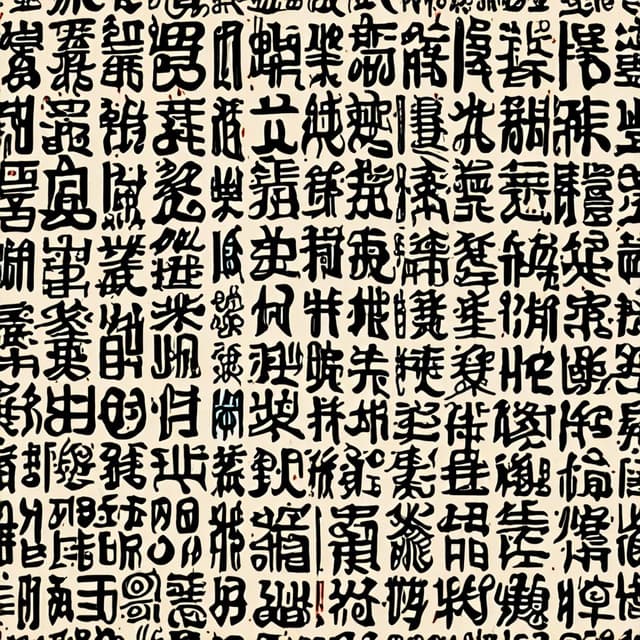
| Writing system | Logographic Chinese characters |
| Language family | |
| Prominent language groups |
The Chinese language, or zhōngwén, is a family of tonal languages originating from Imperial China that share a common writing system. While comprising hundreds of distinct regional dialects, these can be broadly classified into several major language groups including Mandarin Chinese, Wu Chinese, Cantonese, and Min Chinese. Though the mutual intelligibility between these groups varies, they are all considered part of the larger Chinese linguistic sphere.
The Chinese script, developed over 3,000 years ago, is logographic, with each character representing a word or concept rather than a specific sound. This writing system has remained largely unchanged over the centuries, with the traditional form of the characters used across China and its cultural sphere. Regional dialects have developed their own variations in pronunciation and grammar, but all use the same core set of written characters.
The most widely spoken and standardized form of Chinese is Mandarin Chinese, which has been the official language of Imperial China, the Republic of China, and the People's Republic of China. However, other major dialect groups like Cantonese, Wu, Min, Hakka, and Xiang have hundreds of millions of native speakers and have historically played important cultural and economic roles.
The Chinese language first emerged in the Yellow River basin during the Shang dynasty and spread throughout the geographic and political boundaries of Imperial China as it expanded over the centuries. As China's commercial, cultural, and military influence grew, Chinese became widely adopted as a lingua franca across East Asia.
Chinese writing and vocabulary were also adopted by Korea, Japan, and Vietnam, becoming influential in the development of these nations' own writing systems and languages. Conversely, Chinese absorbed loanwords and influences from its linguistic neighbors, creating a syncretic family of mutually intelligible but distinct regional varieties.
Today, Chinese remains one of the most widely spoken languages in the world, with over 1.3 billion native speakers and hundreds of millions more learning it as a second language. While English has emerged as a leading global lingua franca in recent centuries, Chinese maintains significant influence in international commerce, diplomacy, and cultural exchange, particularly in Asia.
Many multinational corporations and international organizations use Chinese alongside English for operations, publications, and communications. Chinese is one of the six official languages of the United Nations, and is increasingly important in fields like technology, finance, and academia. The language's continued prominence on the world stage is a testament to China's economic and geopolitical ascendance in the modern era.
The Chinese script's logographic nature and long history have also made it an object of fascination for linguists, sinologists, and calligraphers worldwide. While some critics argue the traditional characters are overly complex, their continued widespread use across East Asia demonstrates the resilience and adaptability of this ancient written language.
