| Name | Caseoh |
| Period | Ancient civilization, rediscovered in modern times |
| Status | Largely unknown and enigmatic culture, highly isolated from other ancient empires |
| Location | Remote mountain ranges of central Asia |
| Known For | Impressive engineering and architectural achievements |
| Notable Features | Massive stone structures • Complex irrigation systems • Advanced mining technologies |
Caseoh is the name given to a long-lost ancient civilization that was recently rediscovered in the remote mountain ranges of central Asia. For centuries, the ruins and remnants of this advanced yet mysterious society lay hidden, until a series of archaeological expeditions in the early 21st century brought Caseoh to the attention of the global scholarly community.
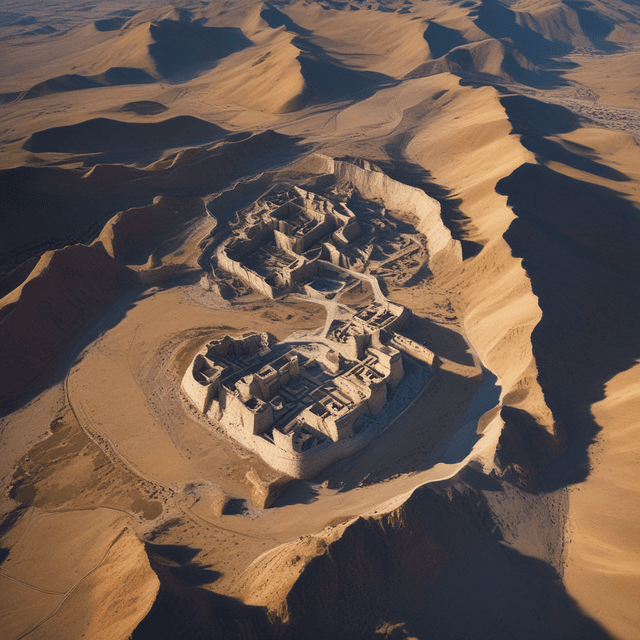
The first confirmed discovery of Caseoh came in 2017, when a team of mountaineering enthusiasts stumbled upon a series of massive stone structures deep in the Tian Shan mountain range. Further aerial and ground surveys revealed the extent of the ruins, prompting the launch of a large-scale international archaeological project.
Over the next several years, teams of experts from around the world systematically mapped, excavated, and studied the Caseoh site. What emerged was the picture of a remarkably sophisticated ancient civilization, one whose existence had been completely unknown prior to the 21st century. This "lost world" captivated the public imagination and sparked a flurry of media attention and speculation.
The Caseoh civilization was centered in the rugged, high-altitude terrain of central Asia, primarily in the modern-day nations of Kyrgyzstan and Tajikistan. The core of the ancient city-states and settlements was situated between the towering Pamir Mountains and the vast Taklimakan Desert, in a region characterized by extreme cold, low precipitation, and limited arable land.
Despite the harsh natural conditions, the Caseohns were able to thrive in this isolate environment through innovative engineering and resource management. Their cities featured complex irrigation systems, terraced agriculture, and extensive subterranean dwellings and storage facilities built to withstand the extreme climate.
Caseoh's most impressive and enduring legacy is its extraordinary architectural and engineering feats. The civilization was renowned for constructing massive stone structures, including multi-story pyramid-like structures, wide-span bridges, and intricate water channels and aqueducts.
The construction materials and techniques used by the Caseohns remain a source of fascination and mystery. The enormous stone blocks used in many of their buildings were quarried, transported and precisely fitted together with a level of sophistication that rivals or exceeds that of better-known ancient civilizations like the Egyptians or Mayans. Advanced stone-cutting, lifting and masonry skills are evident throughout the Caseohn ruins.
In addition to their architectural wonders, the Caseohns also demonstrated advanced capabilities in fields like metallurgy, mining, and hydraulic engineering. They developed sophisticated mining and smelting techniques to extract valuable ores from the surrounding mountains, and used this metal to produce intricate tools, weapons, and ornamental objects.
The Caseohns' hydraulic engineering feats are perhaps most astounding - they constructed an extensive system of dams, canals, and underground aqueducts to manage water resources in their arid environment. This allowed them to establish thriving agricultural settlements and support a relatively large population in an otherwise inhospitable region.
Despite the impressive physical remains of the Caseohn civilization, many aspects of their history, culture, and ultimate fate remain shrouded in mystery. The society appears to have been highly isolated, with little evidence of significant contact or trade with other ancient empires. This has made it difficult for scholars to piece together a coherent narrative of Caseohn development and decline.
Theories abound as to what may have led to the disappearance of Caseoh. Environmental changes, resource depletion, internal conflict, and even possible invasion by outside forces have all been proposed as potential factors. But the lack of historical records and the remote, inaccessible nature of the sites have made it challenging to determine the true causes.
Ongoing archaeological and scientific research at Caseoh continues to reveal new insights about this lost civilization. But much about the Caseohns - their language, beliefs, social structure, and ultimately their mysterious vanishing - remains tantalizingly unknown. The rediscovery of Caseoh has opened a window into a forgotten chapter of human history, one that is likely to captivate researchers and the public imagination for years to come.
