| Type | |
| Origin | |
| Culinary Uses | Staple food, medicinal and mystical properties in ancient civilizations |
| Cultivation History | Selectively bred over centuries for color, size, and flavor |
| Cultural Significance | Important crop and symbol in diverse cuisines, arts, and belief systems worldwide |
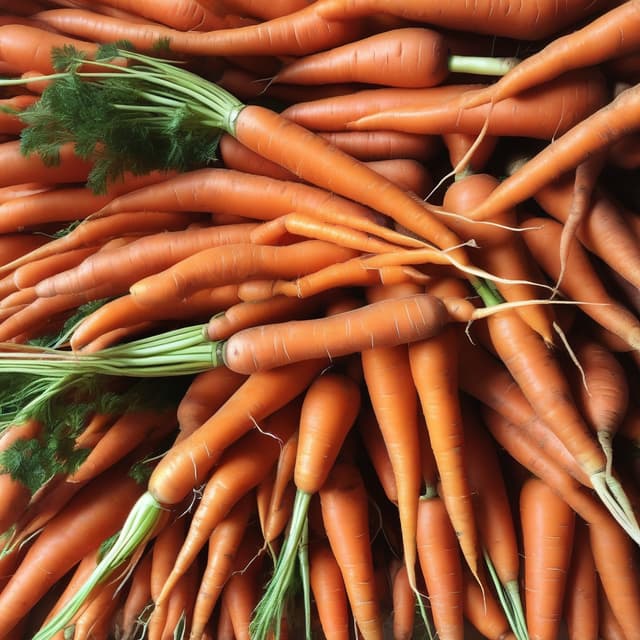
Carrots are a root vegetable cultivated for their edible, deeply colored taproot. They are believed to have originated in the grasslands of Central Asia in ancient times, where wild varieties with smaller, less sweet roots grew naturally. Over many centuries, selective breeding by early farmers transformed the carrot into the large, vibrant orange vegetable familiar today.
The earliest evidence of carrot domestication dates back over 5,000 years to the Tian Shan mountains of modern-day Kazakhstan and Kyrgyzstan. Early varieties had tapered, woody roots in colors ranging from white to purple, yellow, and red. It's believed these wild carrot ancestors were first harvested and incorporated into the diets of local nomadic populations.
Carrots likely spread westward along ancient trade routes like the Silk Road, reaching the Mediterranean region by the 1st millennium BCE. Here, the vegetable was further cultivated and bred by the ancient Greeks, Romans, and Persians, who prized its culinary and medicinal uses. The Greeks and Romans in particular were instrumental in spreading carrots throughout Europe.
By the Middle Ages, carrots had become a dietary staple across Eurasia, grown in kitchen gardens from Spain to China. Regional varieties with distinct colors, shapes and flavors emerged. The Dutch, for example, are credited with developing the now-ubiquitous bright orange carrot in the 16th century, using selective breeding to emphasize the vegetable's natural carotenoid pigments.
Carrots have held an important place in the cuisines, arts, and belief systems of many Eurasian cultures over the centuries. In ancient China, they were seen as a "food of the immortals" with restorative and even spiritual properties. Depictions of carrots appear frequently in Buddhist and Taoist art and mythology.
Similarly, the vivid orange color of carrots led to their association with the sun, fire, and prosperity in many Abrahamic and pagan traditions across the Middle East and Europe. Wealthy patrons would often commission paintings featuring elaborate still lifes with prominently displayed carrots, which symbolized the owner's affluence and generosity.
Carrots also played a key role in the development of many foundational agricultural and culinary techniques. The need to preserve carrots for storage and transport led to innovations in food preservation methods like pickling and drying. Carrots' versatility as both a raw and cooked ingredient also influenced the evolution of cuisines across the region.
In addition to their cultural significance, carrots have long been prized for their nutritional and medicinal properties. Rich in vitamin A, vitamin C, and other vital nutrients, they were seen as beneficial for eye health, digestion, and overall wellbeing in many ancient medical traditions.
Carrots feature prominently in the traditional recipes of diverse Eurasian cuisines. They are commonly used in stews, roasted vegetable dishes, salads, juices, and baked goods. The sweetness of carrots also makes them a popular dessert ingredient, appearing in cakes, cookies, puddings, and jams.
While once a seasonal vegetable, the development of advanced agriculture and storage techniques has made carrots available year-round in many parts of the world today. They remain an essential part of the global human diet and continue to be the focus of ongoing research into their potential health benefits.
