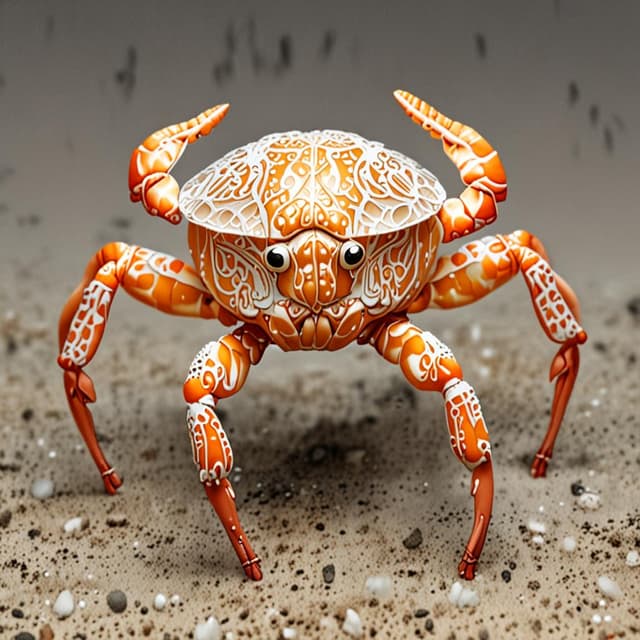
| Diet | Plankton • Algae |
| Name | Cake crab |
| Status | Threatened |
| Habitat | Archidona Islands, South Pacific |
| Species | Marine crustacean |
| Threats | Overfishing • Habitat destruction |
| Characteristics | Soft, spongy outer shell • Ability to inflate and deflate |
The cake crab is a rare and distinctive species of marine crustacean endemic to the Archidona Islands, a remote archipelago in the South Pacific Ocean. Although commonly referred to as a "crab," the cake crab is not actually a true crab (Brachyura) but rather a member of the Anomura infraorder, which includes hermit crabs, porcelain crabs, and a number of other specialized crab-like organisms.
The cake crab's most striking feature is its soft, spongy outer shell or "carapace" rather than the hard, mineralized exoskeleton typical of crabs and other crustaceans. This unusual shell is bright pink or red in color and can expand and contract like a balloon, allowing the cake crab to float and drift with ocean currents.
The cake crab uses this inflatable shell to feed, drawing in plankton and microscopic algae by filtering seawater as it floats. It has a small, simplified digestive system compared to other crustaceans. The crab's limbs are also relatively small and weak, as it relies on its buoyant shell rather than climbing or walking to get around.
Despite their fragile appearance, cake crabs are capable of deflating their shells and burrowing into the seafloor when threatened by predators. They can also release a sticky, adhesive substance to entrap smaller animals that stray too close.
The cake crab is found only in the shallow coastal waters and coral reefs surrounding the Archidona Islands, a remote and sparsely populated archipelago in the central South Pacific. The species is believed to have a limited natural range due to its narrow environmental tolerances and specific evolutionary adaptations.
However, cake crabs face significant threats to their survival. Their soft, delicate shells make them vulnerable to overfishing, and their coastal habitats are under pressure from development, pollution, and climate change impacts like rising ocean temperatures and acidification. The International Union for Conservation of Nature (IUCN) currently lists the cake crab as "Endangered" due to its restricted distribution and ongoing population decline.
Despite their rarity and conservation challenges, cake crabs are prized as a delicacy in the local cuisine of the Archidona Islands. The crab's soft, spongy texture and mild, slightly sweet flavor are highly sought after. Traditional preparation methods involve gently steaming or poaching the crabs to preserve their unique qualities.
Beyond their gastronomic appeal, cake crabs also hold significant cultural importance for the indigenous Archidonans. The crabs are featured prominently in regional folklore and legends, and their distinctive pink or red shells are used in traditional jewelry, artwork, and ceremonial regalia. The cake crab is considered a symbol of the Archidona Islands' unique natural heritage.
However, growing international demand for this rare culinary treat has led to overfishing and the crab's inclusion on the IUCN Red List. Conservation efforts by the Archidona government and environmental groups aim to protect the cake crab's habitat and regulate its harvest to ensure the species' long-term survival.
