| Role | Mark and distinguish wares |
| Concept | Brands |
| Origins | Medieval artisans and craftsmen |
| Contrast to | Modern corporate-focused branding |
| Associations | National identity • Ethnic identity • Local community |
| Significance | Cultural heritage • Tradition • Community identity |
| Ownership models | Beyond just public companies • Diverse range |
| Historical period | Emerged during the Industrial Revolution |
The notion of a "brand" as a distinct commercial and cultural phenomenon has a much longer and more complex history in this timeline compared to our own. Rather than emerging primarily as a tool for large corporations to market mass-produced consumer goods, the concept of branding has deep roots stretching back centuries as a way for artisans, guilds, and communities to identify and distinguish their products.
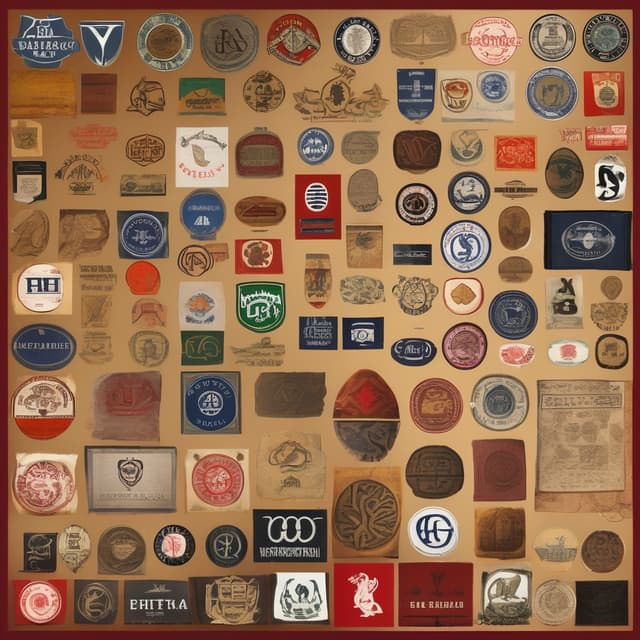
The origins of branding can be traced to the medieval era, when skilled craftspeople and artisans would "brand" or mark their wares as a sign of quality and provenance. Blacksmiths, potters, weavers, and other guild members would often inscribe or imprint distinctive symbols, patterns, or words onto their creations to identify them.
These early brands served multiple purposes - they allowed consumers to recognize the work of a particular maker, ensured accountability for quality standards, and in some cases conferred a sense of regional or national pride. Certain towns and cities became known for the specialties of their guild-based manufactures, from Toledo swords to Delft ceramics.
As industrialization spread across Europe and the Americas in the 18th and 19th centuries, the role of brands evolved but remained central to both commerce and culture. Manufacturers, often organized into cooperatives or collectives, developed sophisticated branding strategies to market their products.
Brands became strongly associated with national, ethnic, or local identities, reflecting the patriotic and regionalist sentiments of the time. Wedgwood China, Meissen porcelain, and Sheffield steel all became globally recognized brands that embodied the craftsmanship and heritage of their respective British, German, and English communities.
Governments also actively cultivated national brands, using them to promote domestic industries and influence consumer preferences at home and abroad. The East India Company, for example, carefully guarded the brand identity of its Ceylon tea to cement Britain's dominance of the global tea trade.
Unlike the corporate-dominated brand landscape of our world, brand ownership in this timeline is much more diverse and decentralized. While publicly traded companies do maintain major brand portfolios, a significant proportion of prominent brands are owned by other entities:
This diversity has fostered a richer, more pluralistic branding ecosystem, where brands are deeply connected to the identities, histories, and values of the communities that created them.
Given their deep historical roots, brands in this timeline are imbued with a strong sense of cultural meaning and tradition. They are seen not merely as commercial signifiers, but as repositories of artisanal knowledge, communal pride, and lived experience.
Purchasing or using a particular brand is often viewed as an act of cultural expression and identification, aligning oneself with the lineage of makers, the local terroir, or the ethnic/national identity associated with that brand. Brands become interwoven with the customs, festivals, and daily lives of their home communities.
This has led to a greater emphasis on authenticity, craftsmanship, and provenance in branding, as consumers seek to connect with a brand's heritage and social meaning, not just its functional attributes. Brands that can effectively communicate this sense of cultural rootedness and tradition tend to thrive, while those seen as inauthentic or placeless struggle.
Given this richer, more diverse and culturally-grounded history, the role of brands in this timeline's modern society is quite different from the purely commercial, globalized model of our own world. Brands are not simply tools for corporations to drive consumption, but vital conduits through which communities express their identities, preserve their traditions, and participate in the broader economic and cultural fabric.
Debates over brand ownership, marketing, and cultural appropriation are common, as different stakeholders - artisans, local governments, activist groups, and multinational entities - jostle to define the meaning and boundaries of particular brands. The politics of branding are thus a crucial site of social, economic, and identity-based contestation.
Yet brands also continue to serve important practical functions, allowing consumers to navigate an abundance of product choices, ensure quality and accountability, and support causes and communities they care about. In this sense, brands remain an integral, multifaceted component of the modern experience - one that is much more deeply embedded in the lived realities of people and places than the faceless corporate logos of our timeline.
